JTI Newsletter – August 2026
Contents
Welcome
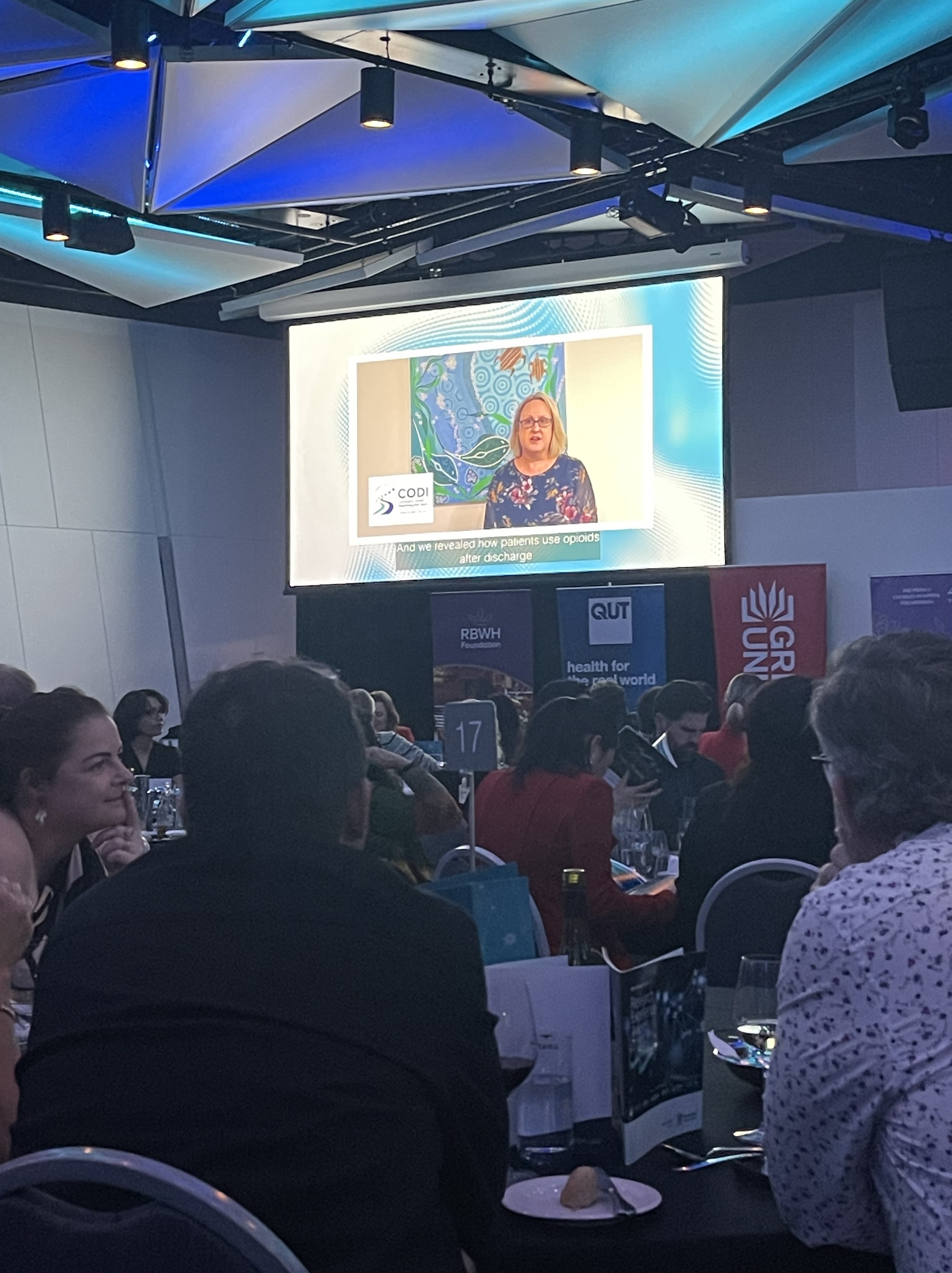
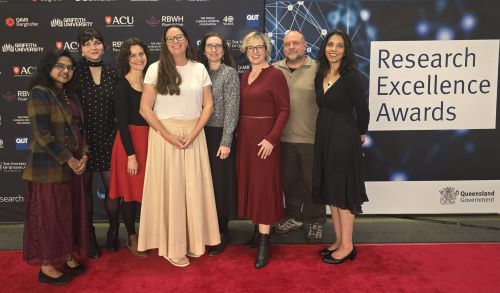
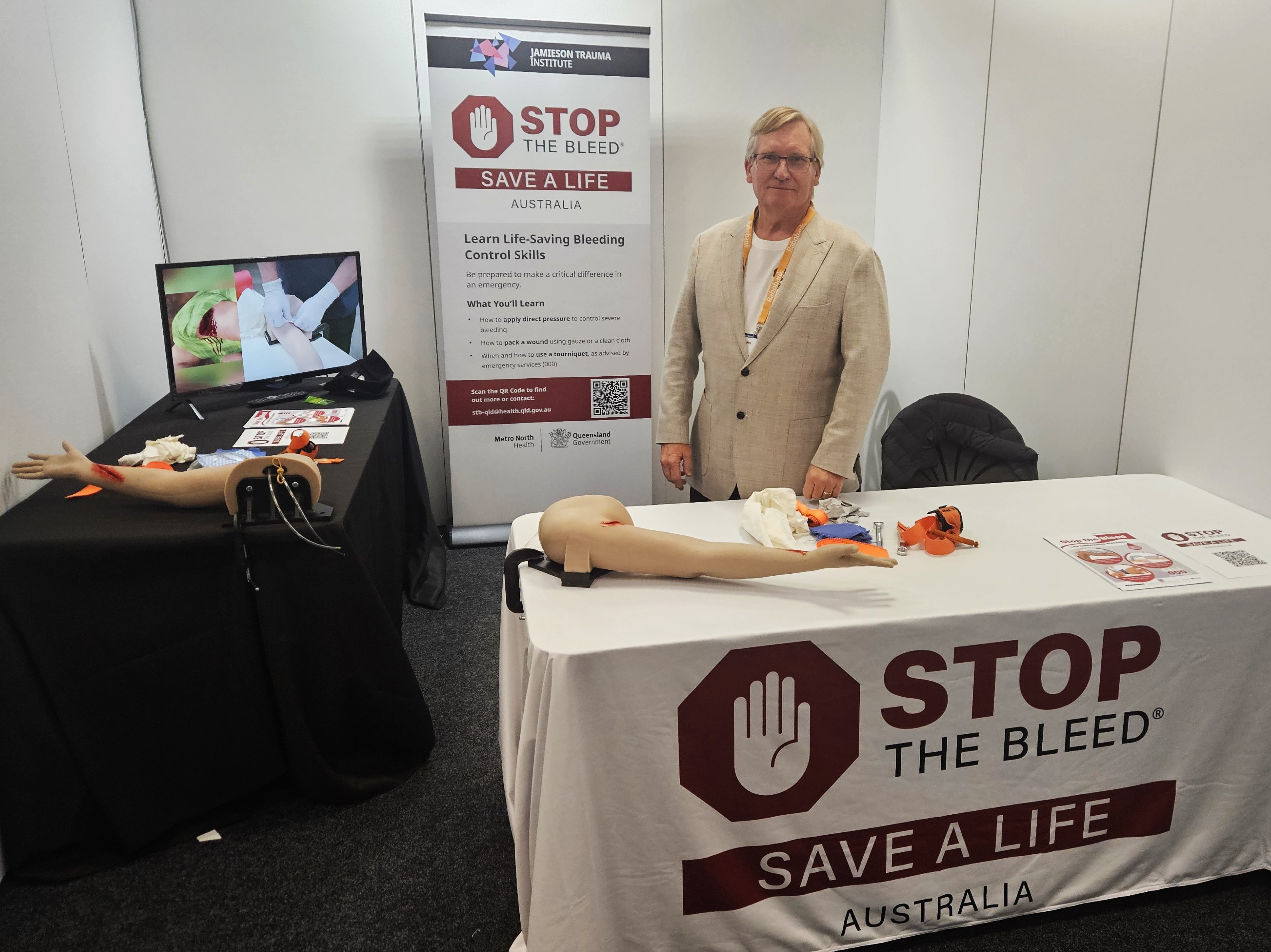
June and July have been busy months for the team. As winter set in, JTI researchers have been hard at work preparing and submitting several grant and fellowship applications. Kim Ballinger has commenced in the role of Nurse Educator for TraumaQ and STOP THE BLEED®, and will add enormous capacity to enable the expansion of both trauma education initiatives. We also had several opportunities to recognise the achievements of our postgraduate students as they completed key academic milestones. Importantly, registrations are open for four events in this year’s local trauma scene: the Queensland Trauma Symposium, the annual Kenneth Jamieson Lecture the Trauma Care in Regional, Rural and Remote Queensland Research Symposium and the Southeast Queensland Health Disaster Readiness Alliance Symposium. JTI staff attended the Metro North Health Research Summit and the Research Excellence Awards ceremony on 30 July, where the Community Opioid Dispensing after Injury (CODI) study, led by Cate Cameron, was a proud finalist. Although CODI was not successful on this occasion, we are proud to have been recognised alongside so many outstanding researcher teams. Congratulations to all the award winners and fellow finalists for their game-changing work and commitment to improving clinical care.
Upcoming trauma events
Registration is open for four major events taking place in August and September 2026. These events bring together clinicians, researchers, and healthcare leaders to advance emergency trauma care across the state.
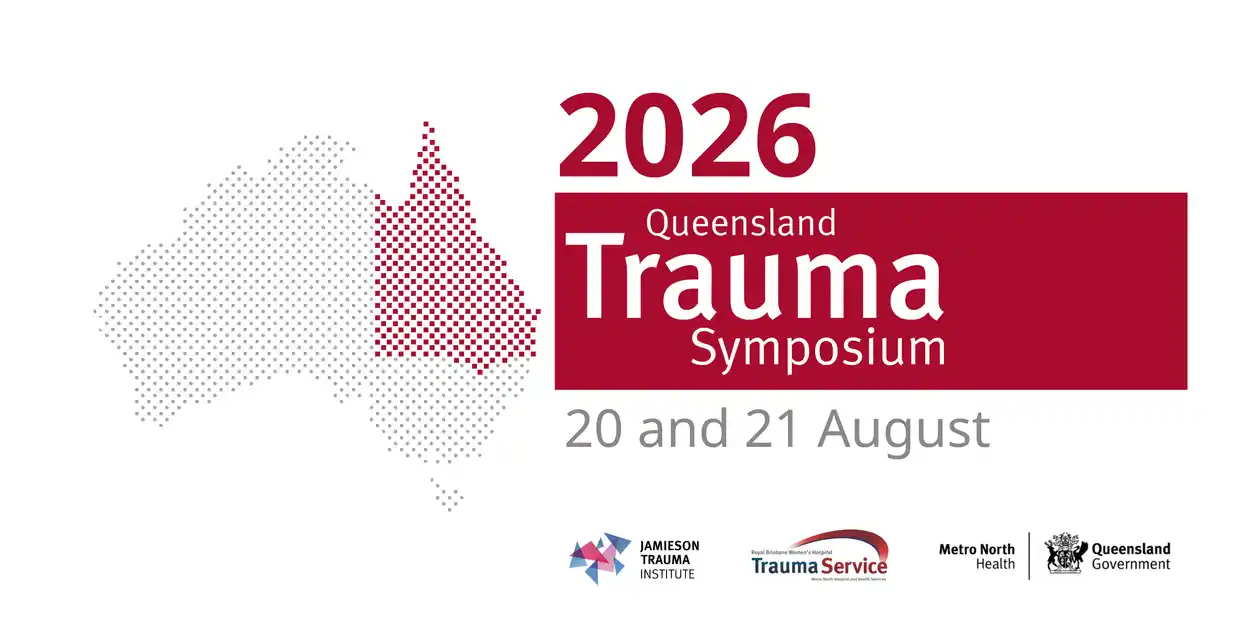 Co-hosted with the Royal Brisbane and Women’s Hospital (RBWH) Trauma Service, this multi-disciplinary forum focuses on contemporary practices and emerging trauma care systems and will be held on 20-21 August at the RBWH Education Centre.
This year’s program features a full day of pre‑symposium workshops offering multiple specialised sessions to choose from, followed by a comprehensive, full‑day symposium. Together, the two components create an immersive learning experience that blends small group learning and skills development with broader discussions and presentations.
Learn more here.

Dr Kenneth Jamieson
A key feature of this year’s Queensland Trauma Symposium will be the Kenneth Jamieson Lecture on 20 August, at 5:15 pm in the RBWH Education Centre Auditorium. Attendance is free.

Join JTI and the Emergency Medicine Foundation, together with clinicians, researchers and stakeholders, to discuss how research can improve emergency trauma care in rural and remote Queensland.
The program will include project reports, including recipients of the EMF Trauma Care in Regional, Rural and Remote Queensland grants, and a panel discussion on research priorities and goals to improve access and quality of emergency trauma care in Queensland.
The event will be held alongside the Queensland Trauma Symposium, on 20 August, however, is a separately registered event. A networking lunch will be offered between 12:00 and 1:00pm. Attendance is free.
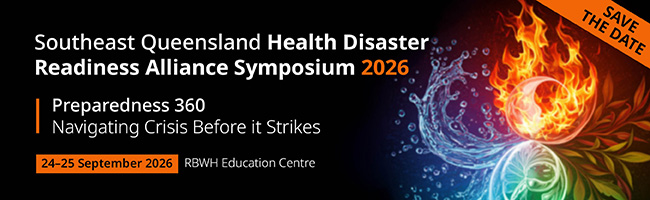
Join industry leaders, researchers, clinicians and emergency management professionals at the inaugural Southeast Queensland Health Disaster Readiness Alliance Symposium, taking place 24-25 September at the RBWH Education Centre. This two-day event will explore the latest approaches to disaster risk reduction, preparedness, response and recovery through keynote presentations, interactive discussions, case studies and hands-on learning opportunities. Designed to foster collaboration and strengthen disaster resilience across Queensland, the symposium offers a valuable opportunity to share knowledge, build partnerships and contribute to shaping the future of disaster management.
Learn more here.
Findings from the SafeAge project presented at the ACCC National Consumer Congress
Last month, Dr Catherine Niven shared findings from the SafeAge project at the ACCC National Consumer Congress, highlighting how consumer voices can help reveal hidden product safety risks for older Australians.
During the panel discussion, Catherine noted that current cost-of-living pressures are leading many consumers to look for ways to stretch every dollar, including when purchasing assistive products. While lower-cost online options may improve access, SafeAge has identified nearly 1,500 safety concerns across 14,400 online product reviews of assistive products.
Reported issues include shower chairs that collapse, grab bars with inadequate fastening mechanisms, ramps with razor sharp edges, and walking sticks with integrated seats that fail during use. What is striking is that many of these are not obscure or highly technical failures, but fundamental product integrity and design issues in products that people rely on every day for mobility, bathing and safe access around the home.
As the project enters its final phase, the SafeAge team is continuing to share evidence to improve understanding of product safety risks and help ensure older consumers are not overlooked, so everyday products support safe and dignified ageing.
Read here to learn more about the SafeAge Project.
For more information about SafeAge, please contact Catherine Niven at nivenc@qut.edu.au.
Catherine Niven at the ACCC National Consumer Congress.
Why trauma care must shift to patient-reported outcomes
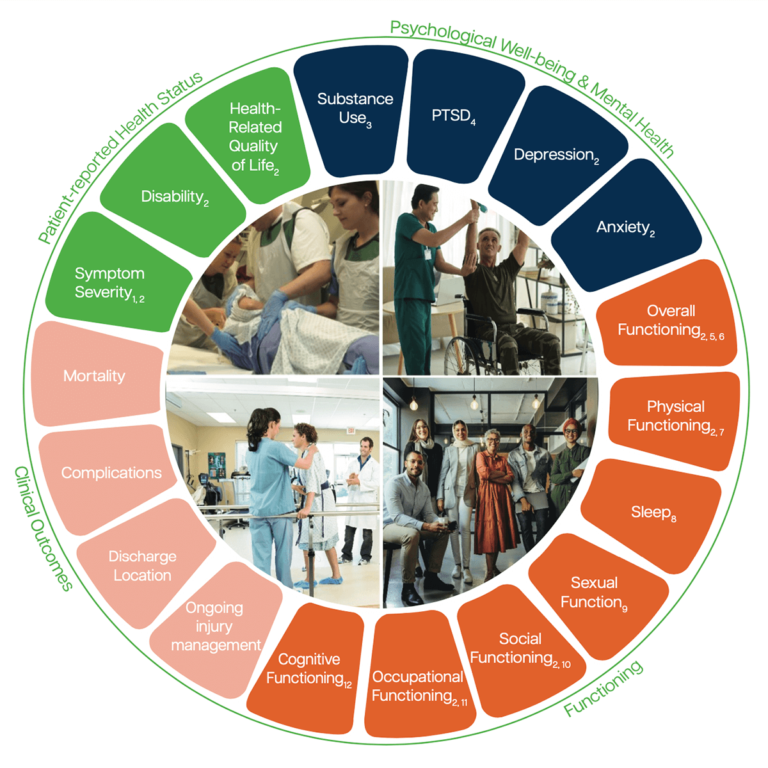
Patient-centred outcome measures. Taken from the ICHOM outcome set for major injury website.
Elizabeth Studley, JTI PhD student, and Michael Schuetz published an editorial in Injury arguing that modern trauma care must shift from focusing solely on in-hospital survival to long-term patient recovery metrics. In this article they explained why current metrics are incomplete and called for integrating Patient-Reported Outcome Measures (PROMs) into routine clinical audits to better capture functional, economic, and mental health outcomes post-discharge. By collecting and analysing PROM data, healthcare systems can transition toward a more comprehensive, value-based approach where treatment success is measured by the trauma survivor’s quality of life. For more detailed insights, you can review the full editorial here. Their article follows from the successful development of a patient-centred outcome set for major injury developed by the International Consortium for Health Outcomes Measurement (ICHOM).
Celebrating Binuri Perera’s final PhD seminar
We are thrilled to congratulate Binuri Perera, a doctoral student at the Queensland University of Technology (QUT) co-supervised by researchers at the Australian Centre for Health Services Innovation (AusHSI), the RBWH Intensive Care Unit, and JTI, on the successful delivery of her final PhD seminar on 18 June.
Bloodstream Infections, including sepsis, represent a critical healthcare challenge. When a bloodstream infection occurs following an injury, it impacts patient recovery times and drives up healthcare costs. Binuri’s work quantifies and maps geographic variations in injury-related bloodstream infections across Queensland and identifies populations at higher risk. The insights from her thesis will inform more effective interventions, improve patient outcomes, and help reduce the burden of disease on regional communities.
Binuri will now wrap up her doctoral journey and continue her impactful work in public health equity.
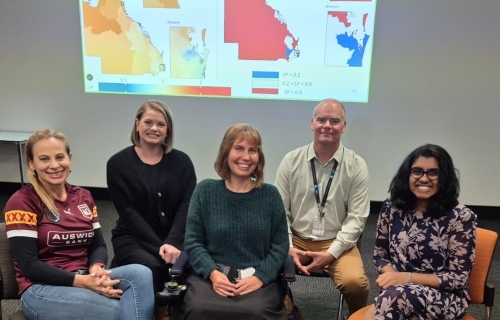
Binuri’s final seminar. From L-R: Prof Kirsten Vallmuur, Felicity Edwards, A/Prof Susanna Cramb, Prof Kevin Laupland and Binuri Perera.
Congratulations Dr Sam Borg!

Dr Samantha Borg
Sam Borg, a student of JTI and AusHSI, has been granted her higher degree award of Doctor of Philosophy, closing a brilliant journey dedicated to exploring people’s opioid use following spinal cord injury.
Living with a spinal cord injury often means coping with persistent, severe pain, with opioids commonly prescribed as part of pain management. Combining large-scale data analysis with in-depth patient interviews, Sam examined patterns of opioid prescribing and explored the lived experiences of people with spinal cord injury. Her findings provide important insights to support safer prescribing practices and improved rehabilitation care, helping to inform better outcomes for people living with spinal cord injury. Sam’s work highlights the patient groups most at risk of long-term opioid use and identifies key healthcare barriers that contribute to this reliance.
Sam’s work has been exceptional and makes a strong contribution to the field which was recognised by one examiner stating her thesis was a “tour de force on the topics of opioid use…”
Sam is continuing her work in the Community Opioid Dispensing after Injury (CODI) research program as a Postdoctoral Research Fellow.
Read more about Sam’s journey on the AusHSI website.
Shoutouts
- Dr Akmez Latona, winner of the Cliff Pollard Award 2026, has published his innovative research work in the European Journal of Acute Surgery.
- On 4th June, as part of his Graduate Certificate in Health Services Innovation, Alejandro Melendez-Calderon had the opportunity to pitch the project RITA (Rehabilitation Innovation and Technology Assessment service) to the Metro North Executive. You can learn more about RITA here.
- Dylan Flaws was the keynote speaker at The Common Good Research Showcase, on 3rd August, where he spoke about his involvement in research across The Prince Charles Hospital and Caboolture Hospital. He shared his perspective on why research matters in healthcare, the value of collaboration, and how fostering a strong research culture helps to improve patient care and outcomes. Dylan also gave an engaging talk on post-ICU syndrome to The Prince Charles Hospital Transplant Mental Health Peer Review Network on 23 July. He highlighted the importance for mental health clinicians to connect with patients, and discussed new therapies currently being trialled in the research setting.
- Senior Sergeant Jay Pickard presented his MPhil Articulation Seminar at QUT on 16 July. Jay’s degree is underway under a QUT, JTI and Queensland Police Service (QPS) collaborative agreement, and is being supervised by Esben Strodl (QUT), Luke Ney (QUT), Peter Heck (QPS) and Tanya Smyth (JTI). Drawing on his experience as the State Mental Health Program Coordinator for QPS, Jay is exploring police officers lived experiences of responding to community mental health crises. His research examines how these encounters influence decision-making, the growing role of police in mental health response, and the potential cumulative psychological impacts of repeated exposure.
Publication: Distinct mental health recovery pathways after burn injury
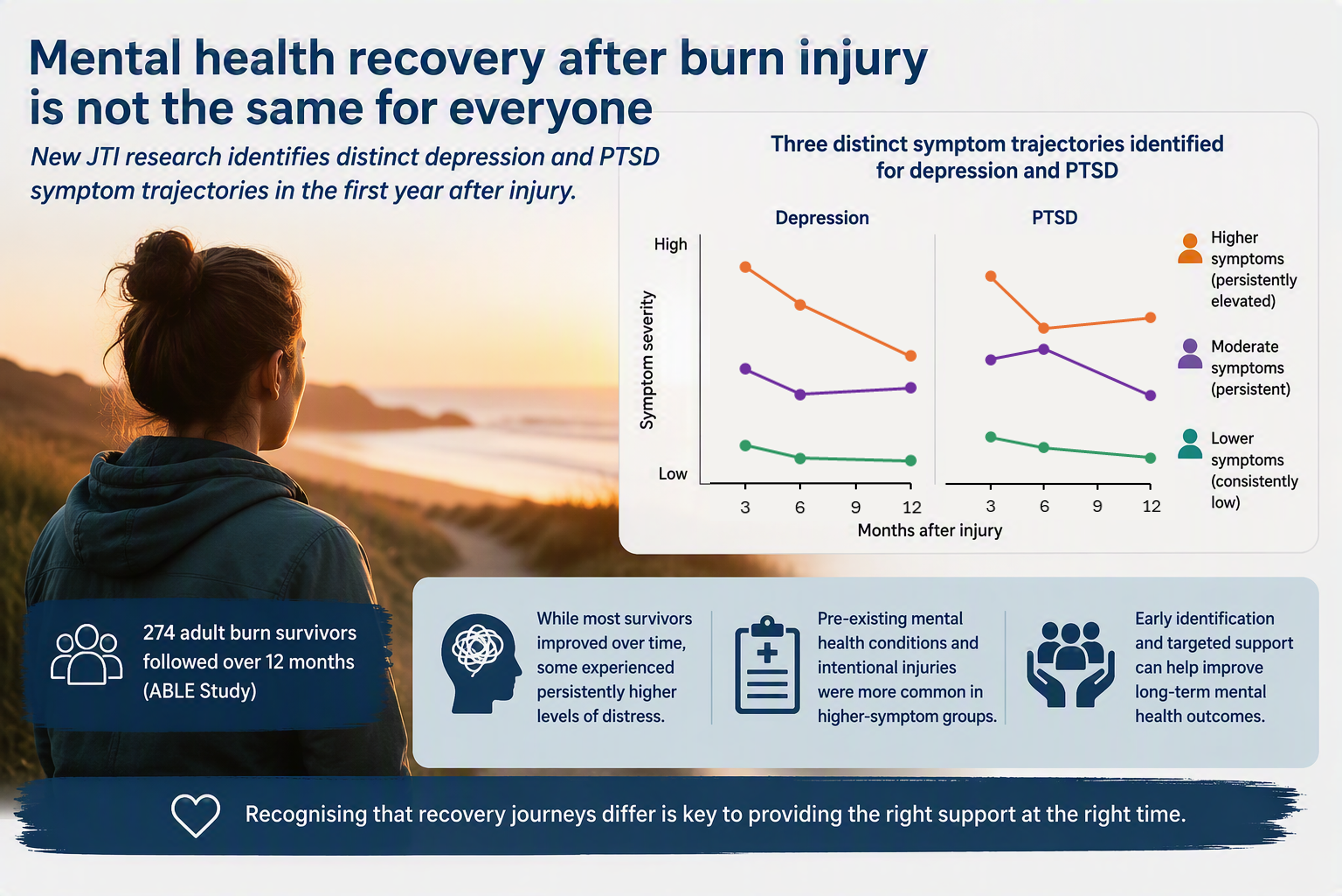
A new study published by JTI in collaboration with The University of Queensland has shown that recovery from depression and post-traumatic stress disorder (PTSD) following a burn injury is not the same for everyone. Lead by Dr Martha Druery, the study tracked 274 adult burn survivors over 12 months and found that, although symptoms generally declined over time, participants followed distinct recovery trajectories.
The study identified three symptom trajectories for both depression and PTSD, including groups with consistently low symptoms, persistently moderate symptoms, and initially high symptom levels that improved over time. Pre-injury mental health conditions and intentional injuries were more common among those with higher symptom burdens.
These findings highlight the importance of recognising patients at greater risk of ongoing psychological distress and providing targeted mental health support throughout recovery.