
Vascular Research Program
Cardiovascular and vascular diseases remain a leading cause of death and disability worldwide.
Complex aortic pathologies and small-diameter vascular disease continue to present major clinical challenges, with existing surgical and endovascular treatments limited by procedural complexity, device durability, thrombosis risk, infection, and poor long-term integration with native tissue. In parallel, surgeons still have limited access to realistic patient-specific procedural rehearsal and training platforms for highly complex vascular interventions. There is a significant unmet need for clinically translatable vascular technologies that improve both surgical planning and long-term vascular reconstruction outcomes.
Dr Lucy Guazzo, Staff Specialist, Vascular Surgery, RBWH
Dr Jason Jenkins, Clinical Lead, Vascular Surgery & Director, Vascular Surgery RBWH
This research is driven by a multidisciplinary collaboration between vascular surgeons, engineers, scientists, radiographers, and designers at HBI and partner clinical institutions, combining clinical insight with advanced biofabrication and manufacturing technologies, including:
- Patient-specific vascular phantoms developed from clinical imaging data for procedural planning, surgical training, and device evaluation under physiologically relevant pulsatile flow and fluoroscopic conditions.
- Advanced manufacturing and biofabrication approaches combining medical imaging, 3D printing, silicone molding, electrospinning, and biomaterial technologies.
- Development of tissue-engineered vascular grafts (TEVGs) and next-generation vascular biomaterials aimed at improving regeneration, compliance, integration, and long-term patency.
- Clinically embedded translational research supporting open and endovascular procedures, surgical education, and future regenerative vascular therapies.
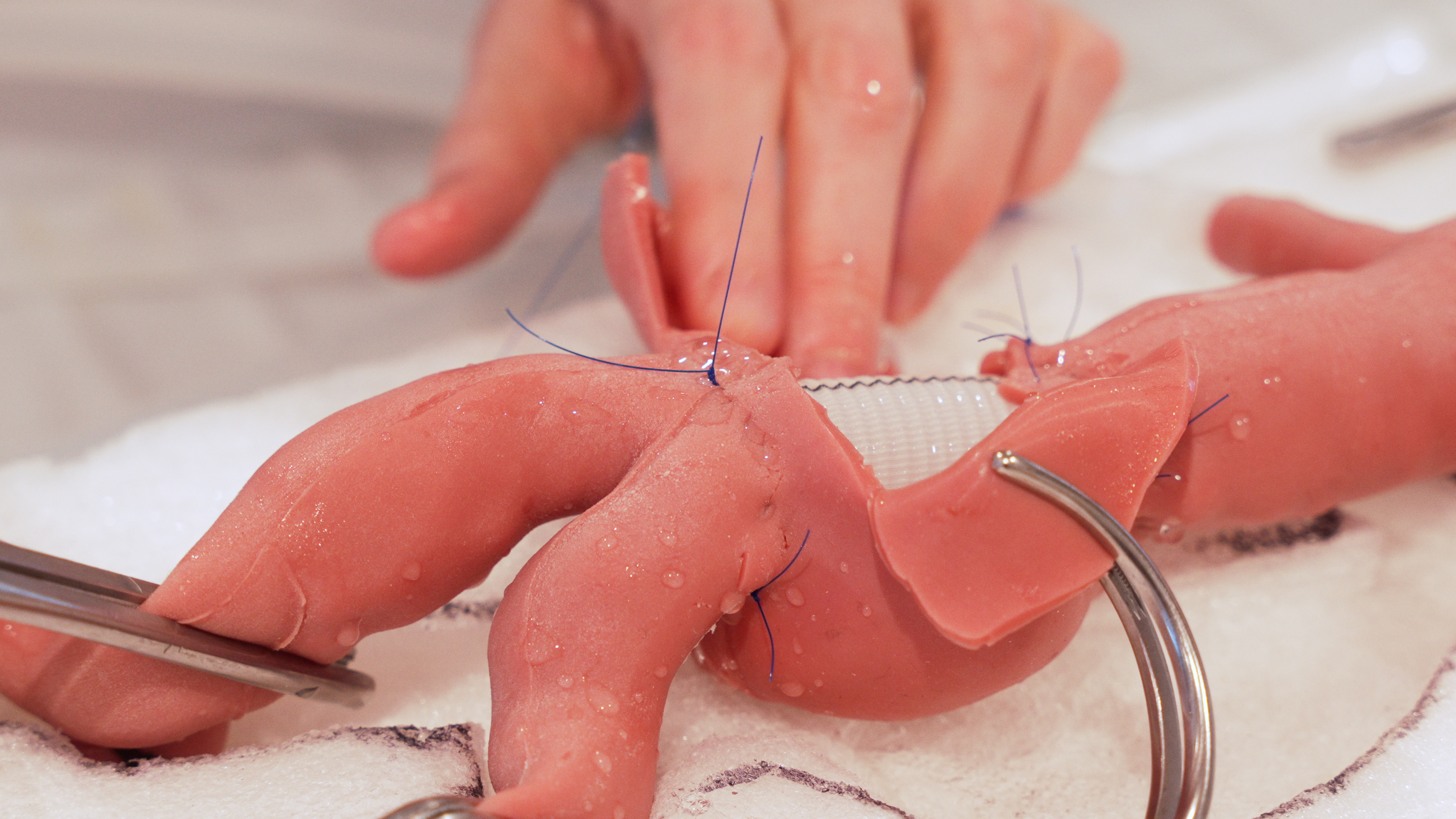
Figure 1 – A patient-matched silicone model used to rehearse a full anastomosis for an open aortic repair
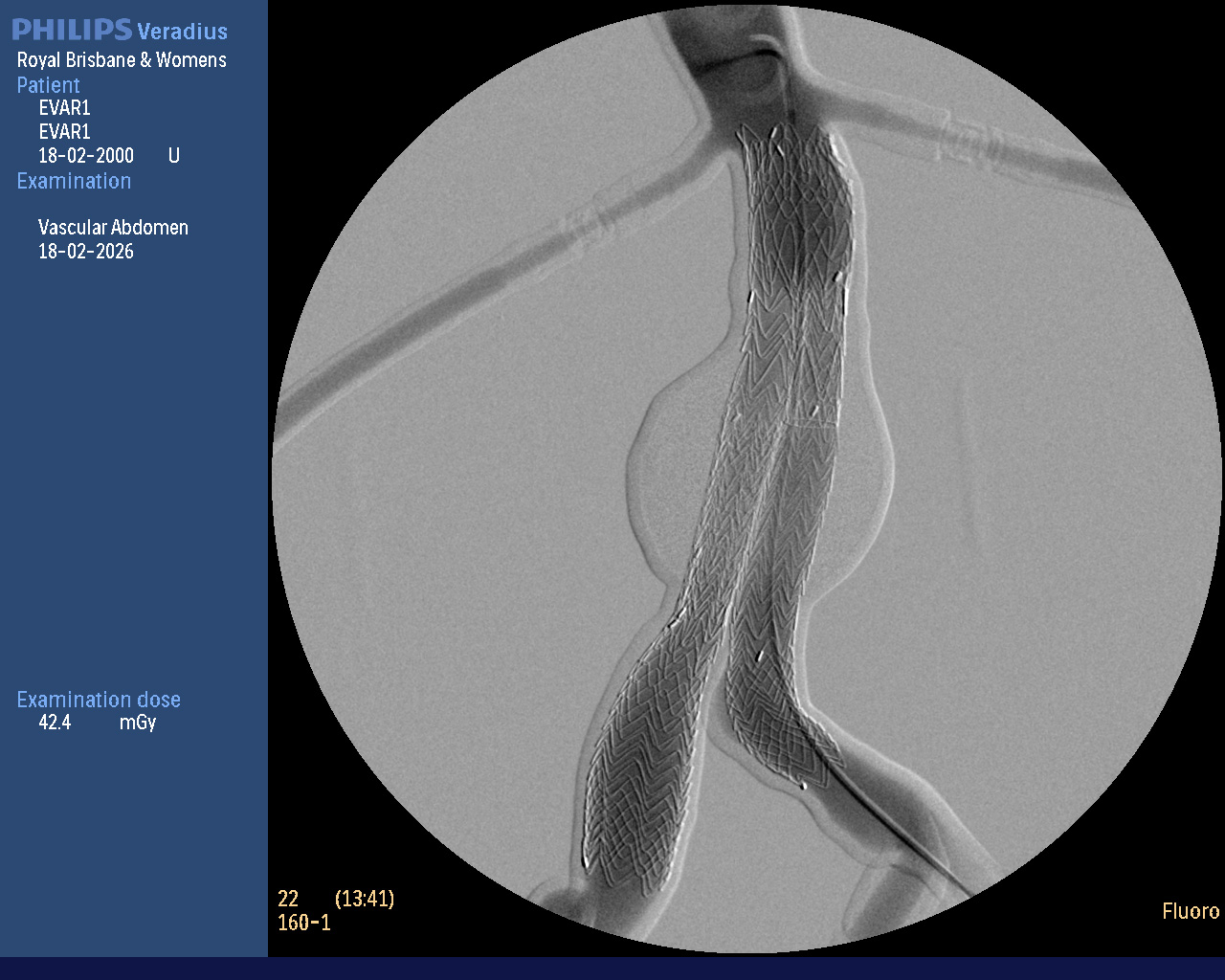
Figure 2 – A final angiogram of an endovascular repair performed on a patient-matched silicone aortic model under pulsatile flow
Publications
- Weekes, A., Davern, J. W., Pinto, N., Jenkins, J., Li, Z., Meinert, C., & Klein, T. J. (2025). Enhancing compliance and extracellular matrix properties of tissue-engineered vascular grafts through pulsatile bioreactor culture. Biomaterials Advances, 175, 214346.
- Weekes, A., Wasielewska, J. M., Pinto, N., Jenkins, J., Patel, J., Li, Z., … & Meinert, C. (2024). Harnessing the Regenerative Potential of Fetal Mesenchymal Stem Cells and Endothelial Colony‐Forming Cells in the Biofabrication of Tissue‐Engineered Vascular Grafts (TEVGs). Journal of Tissue Engineering and Regenerative Medicine, 2024(1), 8707377.
- Nguyen, P., Stanislaus, I., McGahon, C., Pattabathula, K., Bryant, S., Pinto, N., … & Meinert, C. (2023). Quality assurance in 3D-printing: A dimensional accuracy study of patient-specific 3D-printed vascular anatomical models. Frontiers in Medical Technology, 5, 1097850.
- Weekes, A., Wehr, G., Pinto, N., Jenkins, J., Li, Z., Meinert, C., & Klein, T. J. (2024). Highly compliant biomimetic scaffolds for small diameter tissue-engineered vascular grafts (TEVGs) produced via melt electrowriting (MEW). Biofabrication, 16(1), 015017.
- Weekes, A., Bartnikowski, N., Pinto, N., Jenkins, J., Meinert, C., & Klein, T. J. (2022). Biofabrication of small diameter tissue-engineered vascular grafts. Acta Biomaterialia, 138, 92-111
Metro North Health, Herston Biofabrication Institute (HBI)
Level 12, Block 7
Royal Brisbane and Women’s Hospital
HERSTON QLD 4029
For General Requests: hbi@health.qld.gov.au
For Clinical Trials: hbiclinicaltrials@health.qld.gov.au