
Students
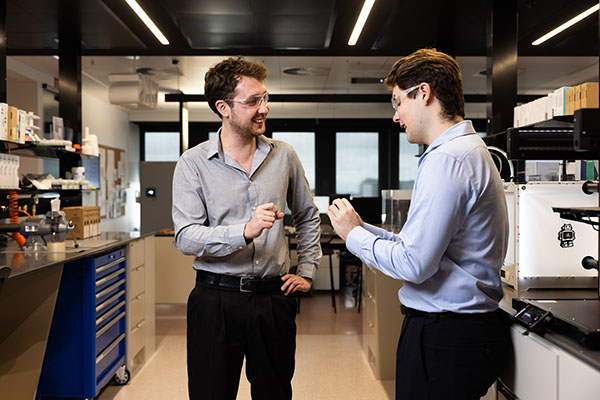 HBI contributes to student learning by hosting undergraduate and postgraduate students for course-related placements, subject to project availability. We have supported students from The University of Queensland’s bioengineering and medicine programs, providing hands-on exposure to research and real‑world applications. Learn more about our students’ experiences here.
How to check if you’re eligible for a placement
If you’re interested in doing a placement with HBI, your first step is to get in touch with your UQ Employability Team. They’re the best people to help you understand the requirements, guide you through the process, and match your interests with the right opportunity.
You can find your faculty’s contact details by visiting UQ Careers and Employability (Contact page)
Want to explore more opportunities? Visit UQ Careers and Employability
Next open day
Register for the 2027 HBI Open Day to receive updates and be notified when the next Open Day dates are confirmed
Discover how HBI is integrating innovation into clinical practice. Join us for a tour and showcases featuring personalised medical devices, surgical planning solutions, vascular applications, and clinical training technologies already supporting patient care.
Express your interest in attending by completing our open day registration form.
Placement opportunities at HBI
HBI supports a range of student placements and projects in partnership with The University of Queensland (UQ). As placement capacity is limited, HBI primarily supports students undertaking placements that are a formal requirement of their course.
Please review the information below to determine the pathway that applies to you.
Students are encouraged to regularly monitor these channels for available opportunities.
Where no opportunity has been advertised, HBI is unable to accept expressions of interest.
If you are unsure about the application process, please contact the UQ EAIT Employability Team at employability@eait.uq.edu.au.
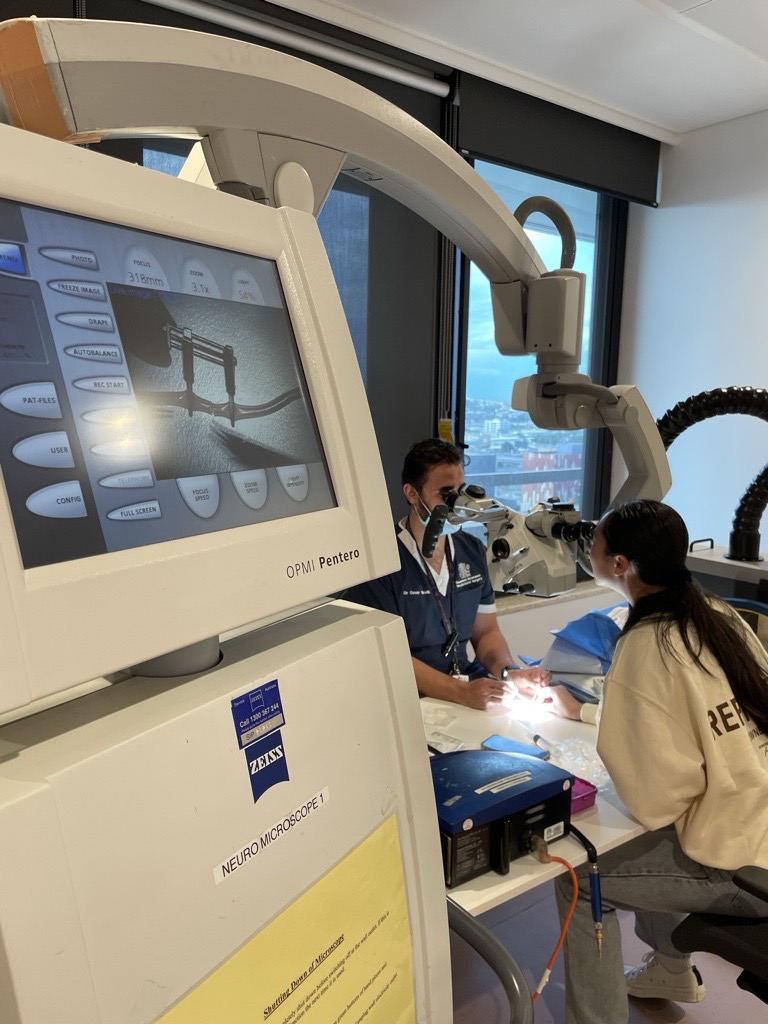
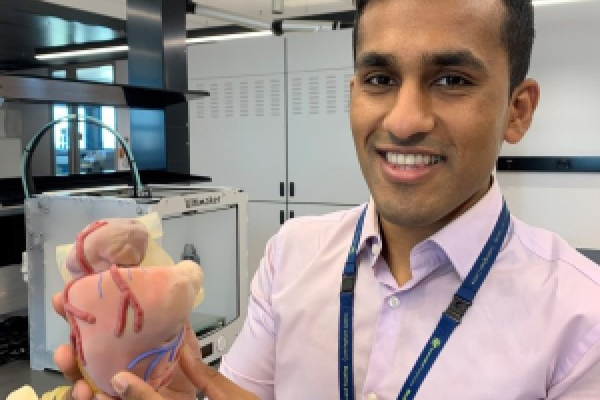
UQ Students Contribute to 3D Printed Surgical Training Models, Transforming Clinical Education

Dr. Balaram Ramagiri, MD MBA
The 3D‑printed ear and temporal bone surgical training model, developed at HBI in collaboration with UQ, has delivered significant impact by making specialist surgical education safer, more accessible and more scalable. Initiated by Dr Emma Kanaganayagam (UQ MPhil), the project produced a highly realistic multi‑material model with strong anatomical fidelity and procedural relevance, validated through use in Australian otolaryngology training programs.
The project received a trainee research award, recognising its innovation and contribution to surgical education. It addresses key limitations of cadaveric training by enabling repeatable, lower‑risk practice while improving access and flexibility for trainees.
Further development led by Dr Balaram Ramagiri (UQ MPhil) has expanded the platform to incorporate pathological variations, enhancing its ability to simulate diverse clinical scenarios. Collectively, the work has strengthened HBI’s capability in advanced multi‑material biofabrication and established a scalable platform for surgical training and procedural rehearsal.
Student stories
Tom Monckton

Tom Monckton
Tom is a Mechatronics Engineering student completing his BE/ME industry placement at the Herston Biofabrication Institute, where he is working on the design and development of a high-fidelity surgical training model for lateral canthotomy and cantholysis—an emergency, vision-saving procedure. His project focuses on applying design-for-additive-manufacturing principles to create an anatomically accurate and clinically relevant eye and facial model for surgical education.
Early in the placement, Tom has been learning how clinical needs, anatomical constraints, and manufacturing limitations intersect, and how rapid prototyping and clinician feedback drive iterative medical device development.
A key area of learning has been developing and applying Blender skills to design complex, organic anatomical structures that are not easily achievable through traditional parametric CAD modelling. Alongside this, Tom has been gaining exposure to a wide range of additive manufacturing processes used at HBI, building an understanding of their capabilities, limitations, and applications within the medical space.
Highlights of Tom’s placement include working alongside a highly skilled and supportive multidisciplinary team, exposure to the diverse and innovative projects developed at HBI, and seeing firsthand the breadth of what additive manufacturing can enable in medical and surgical applications.
Jonathan Basri

Jonathan Basri
Jonathan is a Mechanical and Aerospace Engineering (Honours/Masters) student at the University of Queensland currently undertaking an industry placement with the Herston Biofabrication Institute. As part of his placement, he is working on the mechanical characterisation of additively manufactured photopolymer materials used in biomedical devices and surgical guides.
His project focuses on investigating how stereolithography (SLA) printing parameters and post-processing conditions influence the tensile performance of cross-linked photopolymer resins. Through experimental testing and materials analysis, Jonathan is working to better understand how manufacturing variables affect properties such as stiffness, strength, and elongation at failure, helping inform the reliable use of additively manufactured components in biomedical applications. From this project Jonathan has developed a strong interest in the SLA process and its potential to enable the rapid fabrication of complex, high-fidelity components for medical and surgical applications.
Through this work, Jonathan is gaining hands-on experience with additive manufacturing workflows, mechanical testing, and material analysis within a research-driven biomedical engineering environment. A highlight of the placement has been working alongside HBI’s multidisciplinary team and gaining insight into how advanced manufacturing technologies are translated into practical solutions for healthcare and surgical aids.
Nhien Nguyen
Project title: Development of a low-cost open-source microvascular training model
 Throughout this project, I was very grateful to be working in a team at HBI focussed on educating and helping me make progress through my project even though I was very new to the research world. My role involved using different types of silicones with varying shore-hardness to create high-fidelity microvascular models that could be used for microsurgical training for practicing anastamoses. I enjoyed working with Omar from the maxfac team under the supervision of Danilo to trial models and be able to refine them into microvascular structures that could accurately resemble microvasculature. I appreciated how knowledgeable the HBI team was about the materials we were using, and their ability to navigate any obstacles I came across in making these models. It was because of this input and advice that I was able to develop more complex models for the maxfac team to work with.
I look back on my time at HBI with a lot of appreciation, and am continuing to build on the project that was started back in 2023 alongside my degree with Danilo and Omar. I would strongly recommend those keen on doing research in the biomedical engineering realm to consider HBI.
Peter Storeshaw
UQ Engineering Student Develops Custom Photogrammetry Equipment for Design, Manufacturing and Quality Assurance of Personalised Medical Devices
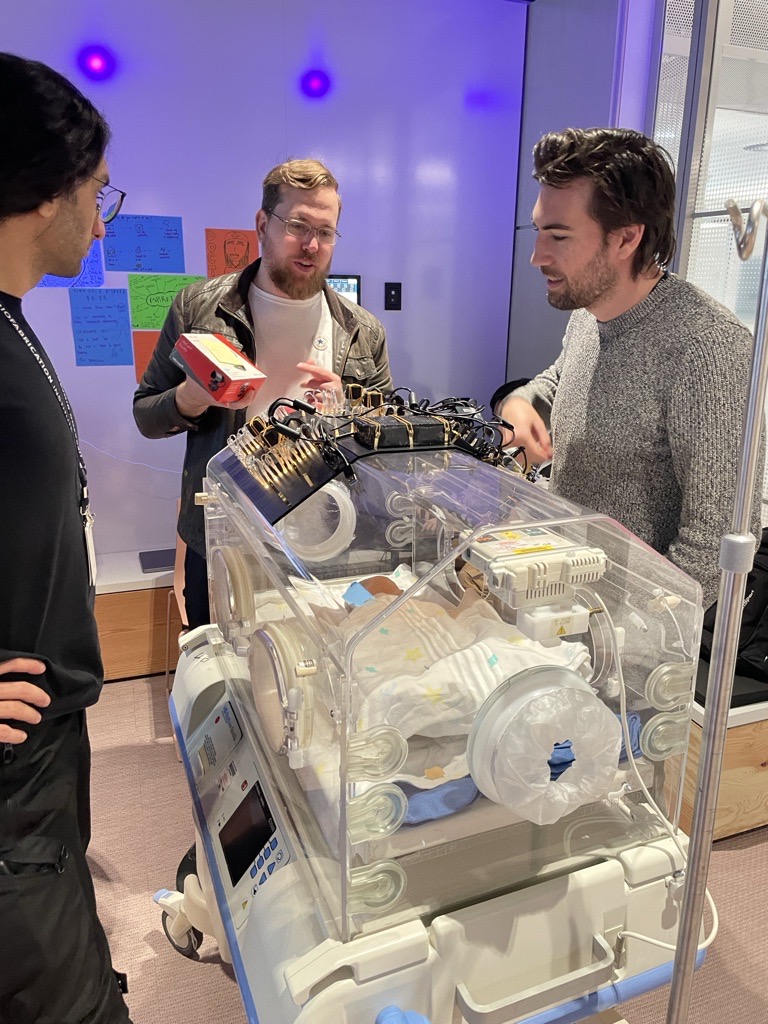
Project Title: Custom Photogrammetry Equipment for Design, Manufacturing and Quality Assurance of Personalised Medical Devices.
I spent six months at HBI as part of my Masters industrial placement. As an electrical and biomedical engineering student I was excited to use and improve my skills on a real-world project that could affect the care of patients in the future.
The project involved the design and implementation of a modular photogrammetry rig tailored for biomedical applications, to assist HBI in capturing and producing accurate 3D models. Current methods have significant limitations when used for certain applications. The device was designed for easy modification and manipulation, allowing for rapid adaptation to various medical applications where current methods are not sufficient.
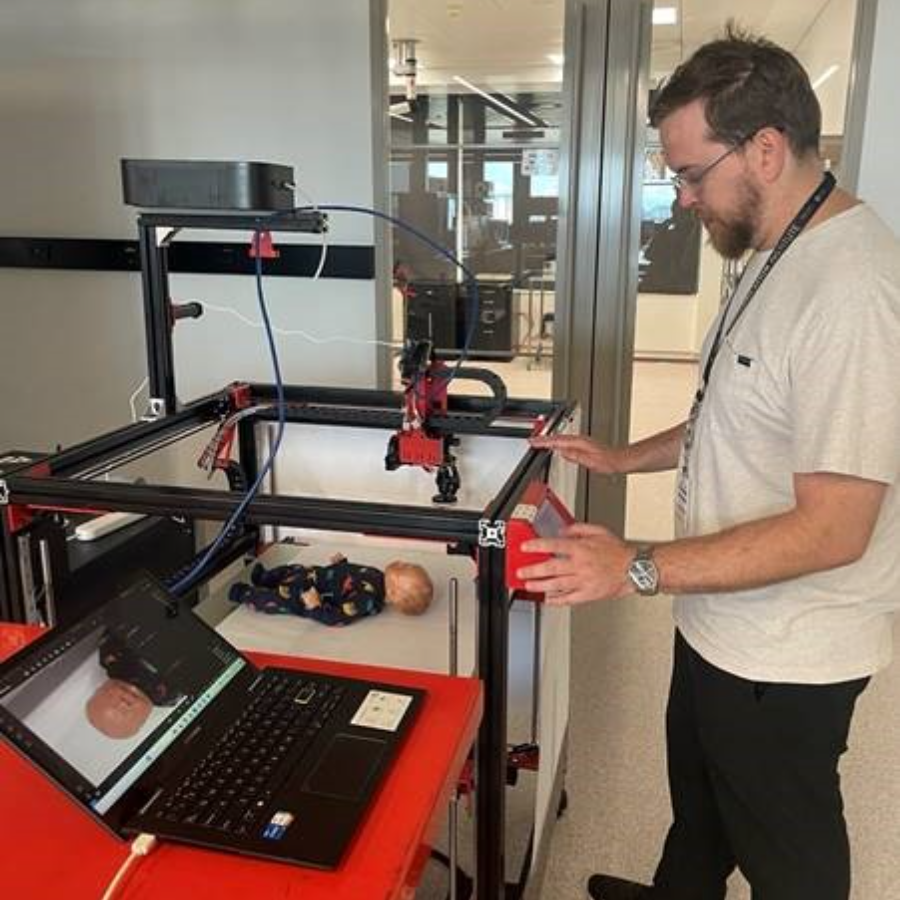 The device consists of a number of Raspberry Pi’s that each control a camera and connect to a central computer. The system has been designed such that the number of Raspberry Pi’s is determined by the specific application and can be easily modified. A GUI was developed to control the capture of images, image processing and collection of images from each camera. The image set can then be inspected and used by one of two chosen photogrammetry programs to produce 3D models with removable texture files.
The system was developed and tested using a 3D printer as a platform, enabling the testing of cameras in any orientation and quantity within the printer’s workspace. Camera number, camera quality, lighting, image orientation, photogrammetry program, camera settings and depth cameras were all investigated or tested using this platform. The system produces 3D models that have a deviation of less than 0.3mm from the initial computer model, in less than ten minutes, with 24 cameras, which is much better than initial requirements.
 My experience with HBI was very rewarding. I have gained invaluable insight into the design and development of biomedical devices, including ensuring compliance with medical standards and regulations. Furthermore, the exposure to HBIs printing lab has improved my knowledge of 3D printing technology. Being in control of the scope, and development of the project has also seen my project management, communication, research and programming skills improve beyond the levels of what a standard university course provides. All of which will aid greatly in my future engineering career.
I would like to thank all the team members of HBI who were always available to help and whose insights were vital to the end product.
Metro North Health, Herston Biofabrication Institute (HBI)
Level 12, Block 7
Royal Brisbane and Women’s Hospital
HERSTON QLD 4029
For General Requests: hbi@health.qld.gov.au
For Clinical Trials: hbiclinicaltrials@health.qld.gov.au
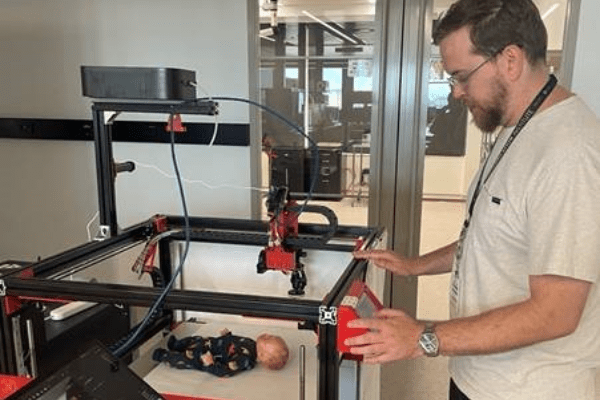
UQ Engineering Student Develops Custom Photogrammetry Equipment for Design, Manufacturing and Quality Assurance of Personalised Medical Devices
University of Queensland Engineering student works on project involving the design and implementation of a modular photogrammetry rig tailored for biomedical applications.
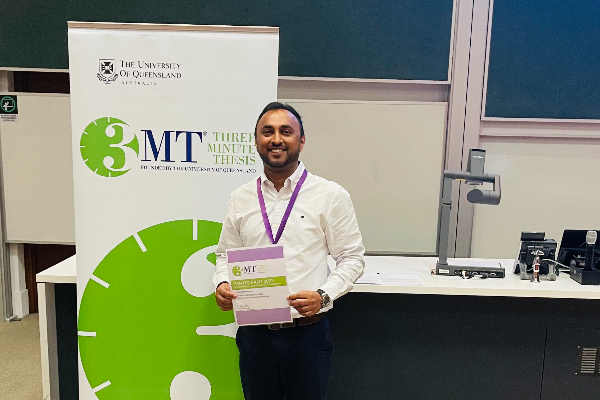
Congratulations on 3 Minute Thesis success Nalinda Dissanayaka
HBI PhD student is runner up at UQ 3MT competition.
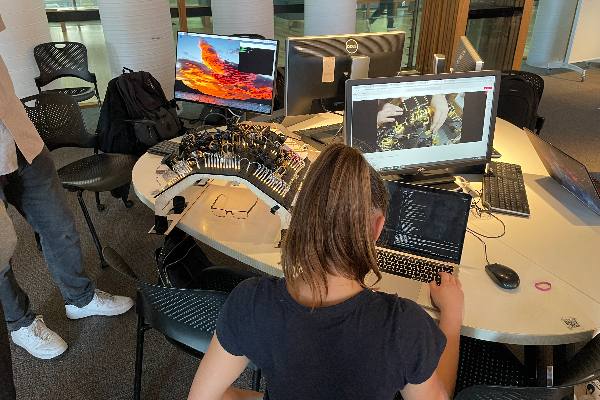
HBI project outcomes with UQ Medical Device Engineering Students
University of Queensland Engineering students enrolled in BIOE6901 present their project outcomes.
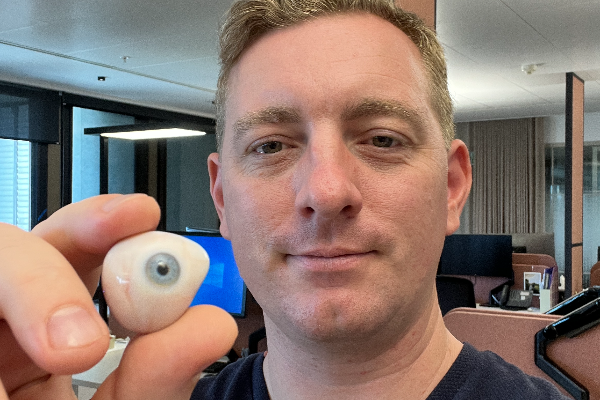
Student Project: Aid in the Development of 3D Printed eye prosthetic
Griffith University Industrial Design student Jesse Pickering reflects on his placement at HBI.
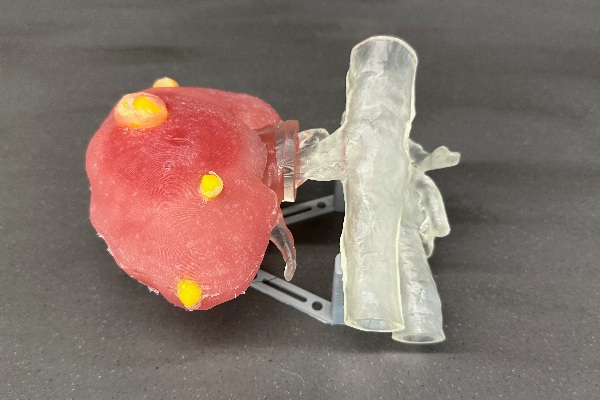
Student Project: Aid in the Development of Patient Matched Kidney Training Models
QUT Industrial Design Student, Christina Chan reflecting on her placement with HBI Urology
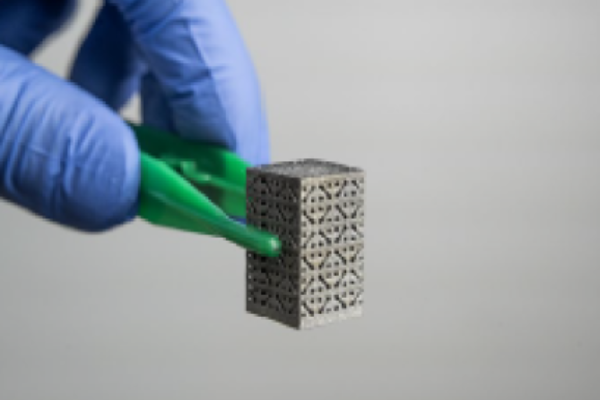
Connecting UQ Engineering students with HBI Orthopaedic Surgery & Biofabrication
HBI Orthopaedic Surgery & Biofabrication - Projects for UQ Mechanical and Mining Engineering, Semester 1, 2022
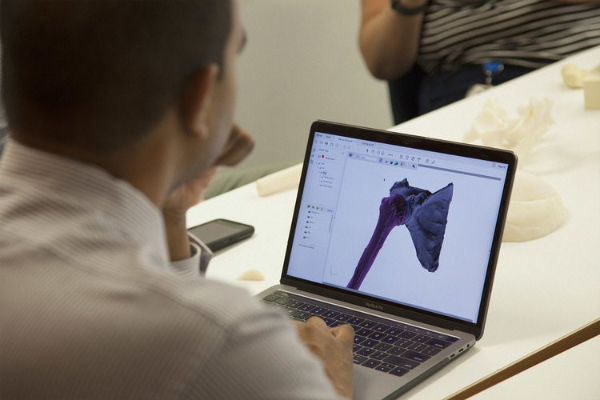
QUASR-HBI PhD scholarships (2) with HBI Orthopaedic Biofabrication
QUASR-HBI PhD scholarships (2): HBI Orthopaedic Biofabrication
UQ-HBI PhD scholarship with HBI CranioFacial Biofabrication
UQ-HBI PhD scholarship: HBI Orthopaedic Biofabrication
Connecting UQ medical students with HBI Clinical Programs
Connecting UQ medical students with HBI Clinical Programs
UQ-HBI PhD scholarship with HBI Orthopaedic Biofabrication
UQ-HBI PhD scholarship: HBI Orthopaedic Biofabrication
Higher Degree by Research candidates (PhD, MPhil, Masters, Honours)
The opportunities for HDR candidates are ongoing.