

JTI Newsletter – June 2026
Contents
Welcome
Last month, we were thrilled to celebrate Trauma Survivors Day with an exciting milestone: the official launch of MISC+ (Major Injury Survivor and Supporter Community), which has been designed to fill a vital gap in psychosocial care for patients and their families.
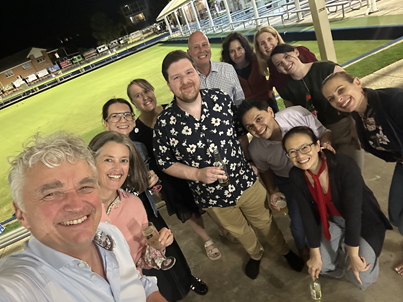
Beyond this milestone, this newsletter edition highlights our ongoing efforts to improve care pathways and patient outcomes. Read about our latest STOP THE BLEED® digital training research, insights from the recent QUT Real Health Panel on navigating recovery roadblocks, and global perspectives on building sustainable trauma care. We also celebrate several outstanding academic milestones and staff achievements… and we also know how to have a bit of fun along the way!
We thank you for your continued support as we work together to advance trauma care along the continuum from acute treatment to long-term recovery.
Marking Trauma Survivors Day with the Launch of MISC+: a Community for Trauma Survivors
Recovering from a major injury involves challenges that extend far beyond physical healing. On Trauma Survivors Day, 20th May, we proudly announced the official launch of the Major Injury Survivors and Support Community (MISC+). This initiative introduces the new Royal Brisbane and Women’s Hospital’s peer support network, specifically designed for traumatic injury survivors, their families, and caregivers.
Funded by the RBWH Foundation and the Motor Accident Insurance Commission, MISC+ addresses a vital gap in psychosocial and family support for trauma survivors.
The network has been built through close collaboration between trauma survivors, psychology experts, rehabilitation specialists, and frontline trauma clinicians. By establishing strong consumer leadership from the outset, the program ensures long-term sustainability and relevance. You can read more here.
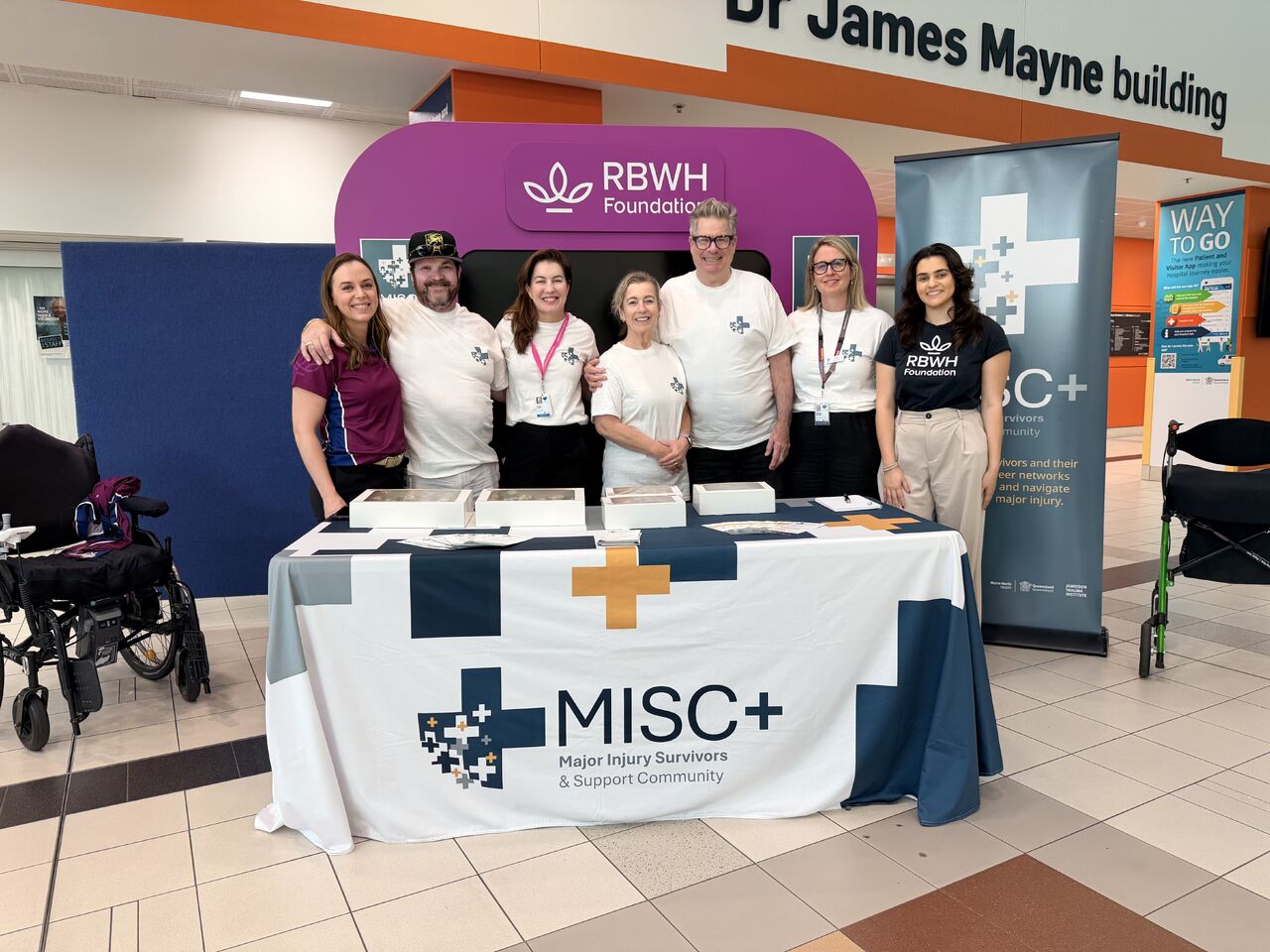
Introducing MISC+: A Community for Trauma Survivors.
STOP THE BLEED®: Using research to improve training
Led by JTI and the RBWH Trauma Service, and funded by the Motor Accident Insurance Commission, the STOP THE BLEED® research study evaluated an e-learning package compared with in-person training. The findings showed that digital learners matched the knowledge and confidence of those in traditional training. While digital participants required more guidance during physical simulations than those trained in person, overall skills were high, demonstrating the effectiveness of accessible training methods. We are currently using participant feedback and data from the study to refine these materials to optimise this life-saving education.
You can register your interest in Stop The Bleed® training here.
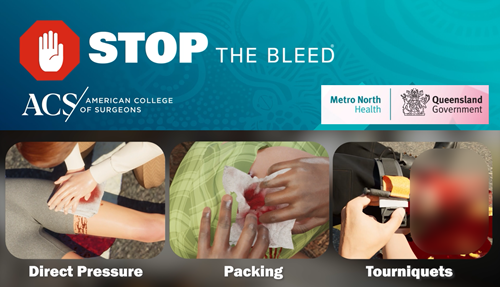
Screenshots of the STOP THE BLEED® digital training materials.
JTI joins MAIC and NIISQ at QUT to discuss collaborative solutions to trauma care challenges
On 29th April experts from JTI, the Motor Accident Insurance Commission (MAIC) and the National Injury Insurance Scheme Queensland (NIISQ) tackled the challenges of traumatic injury care at the QUT Real Health Panel discussion. Panellists discussed known pinch-points along the acute treatment to long-term recovery pathway, and ways to increase efficiency in the system. The panel was chaired by Matt Jennings, JTI consumer representative, whose lived-experience perspective was vital to the discussion.
Important discussion centred around ‘recovery roadblocks’, particularly those faced by patients when they leave the hospital system, which may increase their vulnerability to adverse physical and mental health outcomes.
The panel discussed the role of innovation to improve connectivity between care pathways, and the need for organisations to embrace controlled risk to accelerate progress.
The session featured Gaenor Walker (Acting Insurance Commissioner, MAIC; Acting Chief Executive Officer, NIISQ), Michael Schuetz, Kirsten Vallmuur, Alejandro Melendez-Calderon, Frances Williamson and Dylan Flaws.
Did you miss the live session? The full discussion recording is now available.
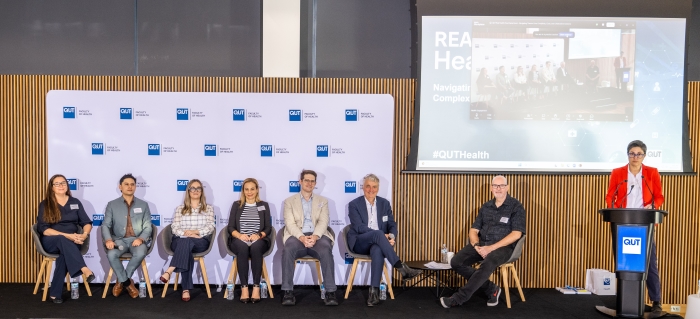
(L-R) Frances Williamson, Alejandro Melendez-Calderon, Gaenor Walker (Acting Insurance Commissioner, MAIC), Kirsten Vallmuur, Dylan Flaws, Michael Schuetz, Matt Jennings and Jen Williams (Head of School of Medicine, QUT), at the Real Health Panel.
Building sustainable trauma care in the Solomon Islands
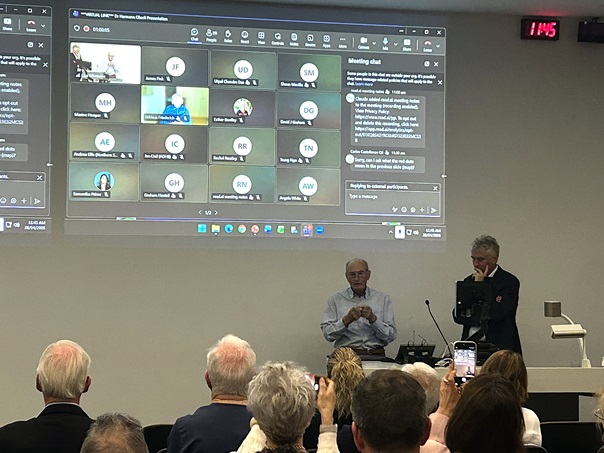
Dr Hermann Oberli’s presentation “The Ingredients for Sustainable Trauma Care in the Solomons: Lifelong Learnings”.
Dr Hermann Oberli delivered an engaging presentation hosted by the Jamieson Trauma Institute, sharing over 30 years of experience improving trauma and orthopaedic care across the Solomon Islands and Pacific region.
Through compelling clinical stories, he highlighted the real challenges of working in low-resource, geographically dispersed settings, including delayed access to care, limited infrastructure, and workforce shortages.
A key message was the power of persistence. Dr Oberli’s long-term commitment demonstrates what can be achieved over time when building systems, skills and local leadership is prioritised rather than relying on short-term interventions.
Central to this success are three pillars: infrastructure, local training, and data systems to support continuous improvement. Programs such as the Pacific Islands Orthopaedic Association have helped develop local clinicians into leaders, ensuring sustainable, locally driven care.
Despite resource constraints, innovative and practical approaches have led to trauma and orthopaedic care in the Solomon Islands being regarded as among the best in the Pacific – a testament to the impact of sustained partnerships and commitment.
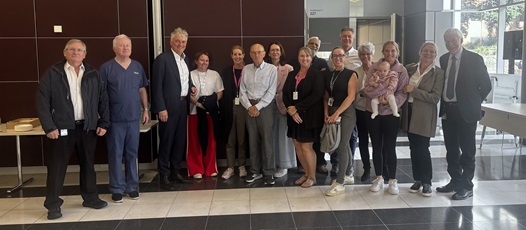
Shoutouts
- Our team co-lead in Rehabilitation and Outcome Measurement, Alejandro Melendez-Calderon, has been appointed Honorary Associate Professor by the School of Health and Rehabilitation Sciences at The University of Queensland, strengthening our established collaboration with UQ Faculty of Health, Medicine and Behavioural Sciences.
- In May, JTI’s rehabilitation engineer, Dr Lucas Cardoso, was awarded his PhD from The University of Queensland under the supervision of Alejandro Melendez-Calderon. His thesis, “Immersive recovery: exploring virtual reality to advance neurorehabilitation”, investigates sensorimotor integration and body representation in VR, and its application in rehabilitation practice.
- Kirsten Vallmuur, JTI’s Data and Analytics Theme lead and QUT Chair of Trauma Surveillance and Data Analytics, moderated a panel on “Data and digital roadmaps for better health service delivery in Queensland” at the Health Delivery QLD Conference presented by CEDA – Committee for Economic Development of Australia on 21st Find out more here.
JTI celebrates PhD milestone for student Rabeya Basri
On 12th May, we celebrated Rabeya Basri’s academic achievement as she successfully presented her confirmation of candidature seminar. Rabeya, supervised by Kirsten Vallmuur and Clifford Afoakwah, is addressing a critical gap in understanding the true societal and financial impacts of workplace trauma.
Historically, quantifying the economic burden of these injuries has been difficult, and most studies rely on single data sources and focus only on the acute treatment phase. Rabeya’s thesis, titled “The economics of work-related injuries in Australia: a population-based cohort study,” aims to change this. Her research links Queensland administrative health and compensation data, and this allows for a comprehensive, longitudinal analysis of both direct and indirect economic burdens. By measuring health-related quality of life after an injury, Rabeya aims to generate evidence that will inform tailored interventions and improve long-term patient outcomes.
We congratulate Rabeya on reaching this milestone and look forward to the insights her research will bring to Australian trauma care and workplace policy.
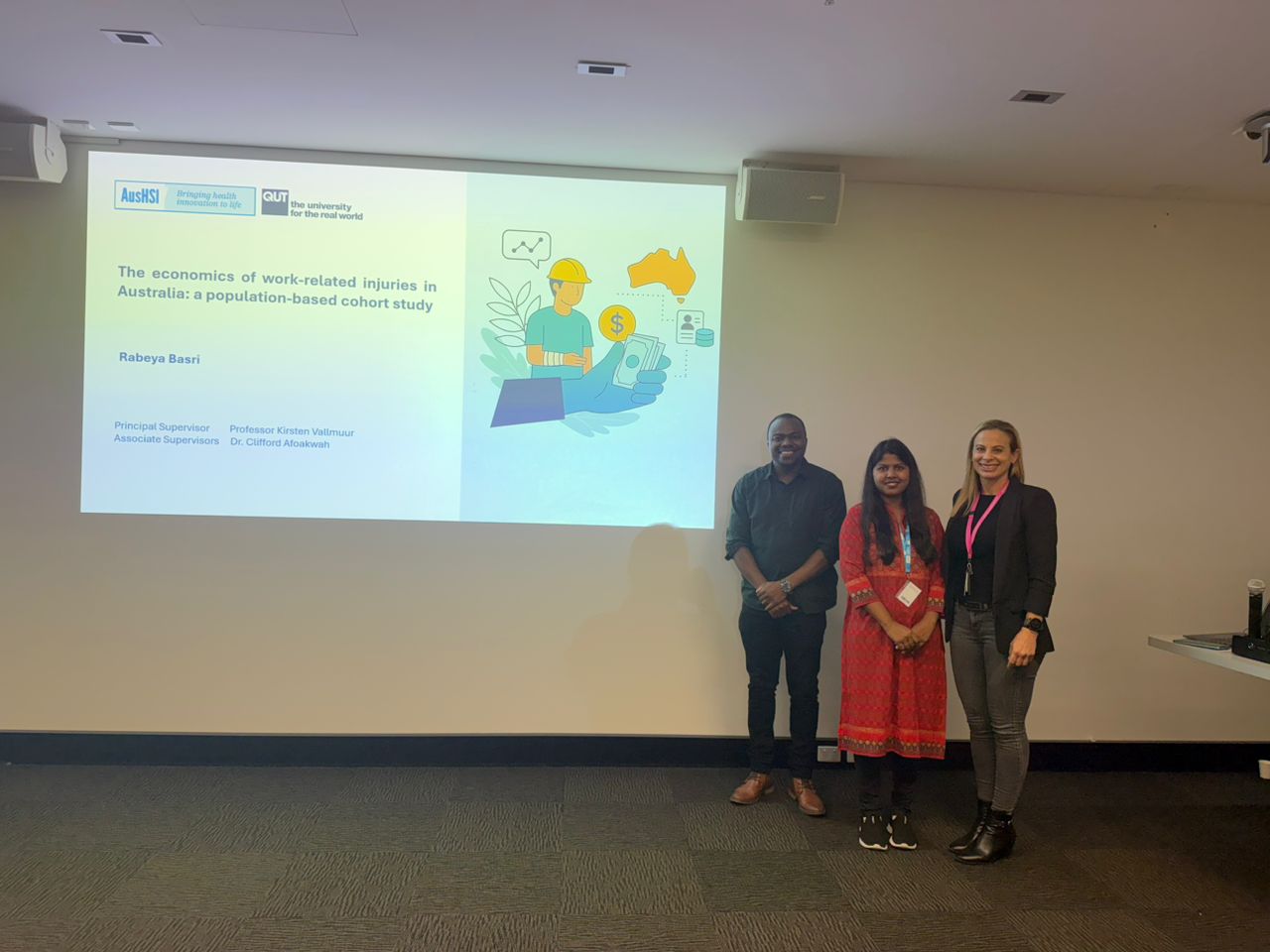
Rabeya Basri with her supervisors, Kristen Vallmuur and Clifford Afoakwah.
Introducing Dr Christoph Lahr, RBWH Spine Fellow
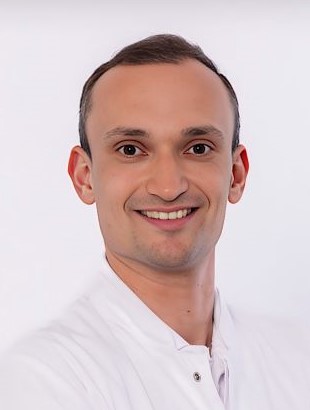
Dr Christoph Lahr, RBWH Spine Fellow working with JTI.
We welcome Dr Christoph Lahr as the current RBWH Spine Fellow. Originally from Germany, Christoph completed specialist training in orthopaedics and trauma surgery before pursuing further specialisation in spine surgery. Besides his AO Global Spine Diploma certification, Christoph brings to JTI a strong academic background, including a PhD from QUT in the field of Regenerative Medicine and Tissue Engineering, supported by multiple peer-reviewed publications and presentations at national and international conferences. In his role with JTI, Christoph is leading the development of a comprehensive spine registry and database to capture all RBWH spine patients. This initiative will enable robust monitoring and analysis of clinical outcomes, drive high-quality spine research, and support ongoing quality improvement in spine care.
Beyond Acute Care: New Insights into Injury-Related Hospital Readmissions
Our recent journal article, “Beyond acute care: A time-to-event analysis of injury-related readmissions after a transport-related injury”, has shed new light on what happens to transport-injured patients after they are discharged from hospital.
Published in the journal Injury, the data-linkage study analysed over 89,000 transport-related admissions across a 10-year period. The research reveals that a patient’s specific injury characteristics—rather than sociodemographic factors—are the strongest predictors of readmission.
The findings show that the journey to recovery does not end when a patient leaves the hospital doors, as 17.2% of transport-injured patients were readmitted for an injury-related condition within one year of discharge. The initial weeks following hospital discharge represent the highest risk window. Out of all patients readmitted within a year, half returned to the hospital within just 14 days of leaving. Within the first 31 days alone, 7.2% of the entire patient cohort required readmission.
These findings offer a powerful tool for hospitals to improve discharge planning, design tailored early interventions, and ultimately reduce the long-term burden on both patients and the healthcare system.
This study examines trauma readmissions in Queensland hospitals.