
Simulating Code Stroke for faster and better care
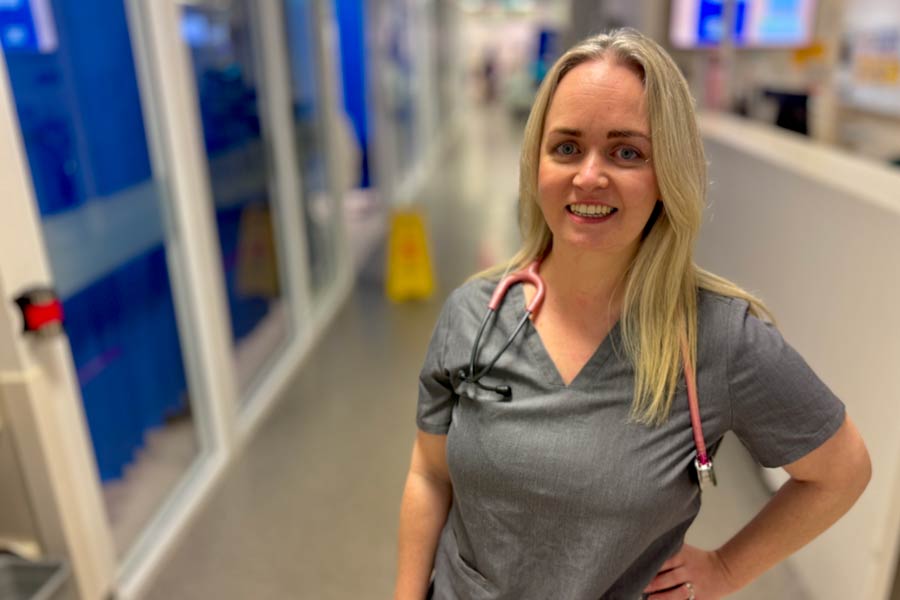
Redcliffe Hospital emergency doctor, Dr Claire Gordon
Redcliffe Hospital’s emergency doctors and clinicians are conducting realistic training simulations to sharpen their skills and shorten response times for when the minutes really matter.
Dr Claire Gordon is an emergency department doctor who has been arranging weekly training in the hospital’s emergency department, including the latest large-scale simulation, which practised the hospital’s Code Stroke pathway.
“Code Stroke is a pathway that’s enacted when a patient presents to the emergency department with stroke-like symptoms,” Dr Gordon said.
“With a stroke, time is critical. The faster we can get a stroke patient through medical imaging and to definitive treatment, the more brain tissue we can save and the better the patient’s outcome is likely to be.”
Dr Gordon says a Code Stroke response can start even before a stroke patient arrives at the hospital, when paramedics have a patient on the way to the hospital.
“We activate a Code Stroke alert across the hospital that calls together the right clinicians, putting them in the right place to assess and care for the patient quickly.
“There’s even a designated area in the emergency department’s triage area specifically for Code Stroke patients when the come through our doors.”
“On arrival, a rapid assessment of the patient is done, assessing their symptoms and condition, before getting them to medical imaging where a CT scanner is waiting, as part of the Code Stroke activation.”
Dr Gordon said the Redcliffe emergency department may call a Code Stroke several times a day, with more than 200 patients presenting to the department on any given day.
“Previous large-scale simulations have been based around paediatric and obstetrics emergencies. This time, it was the Code Stroke pathway with a multidisciplinary response involving the full emergency department team, including doctors, nurses, radiology, and administration and operational staff.”
Even after 12 years of medical and clinical education, Dr Gordon says the simulation environment makes doctors and clinicians better at their jobs.
“We can always do better. Doctors never stop learning.”
“Learning can be from medical colleagues, from nurses and allied health clinicians, or any of the team members we work alongside,” Dr Gordon said.
Redcliffe Hospital has previously been recognised by the Australian Stroke Foundation for excellence in stroke care.