
Don’t let the ham get you this Christmas!
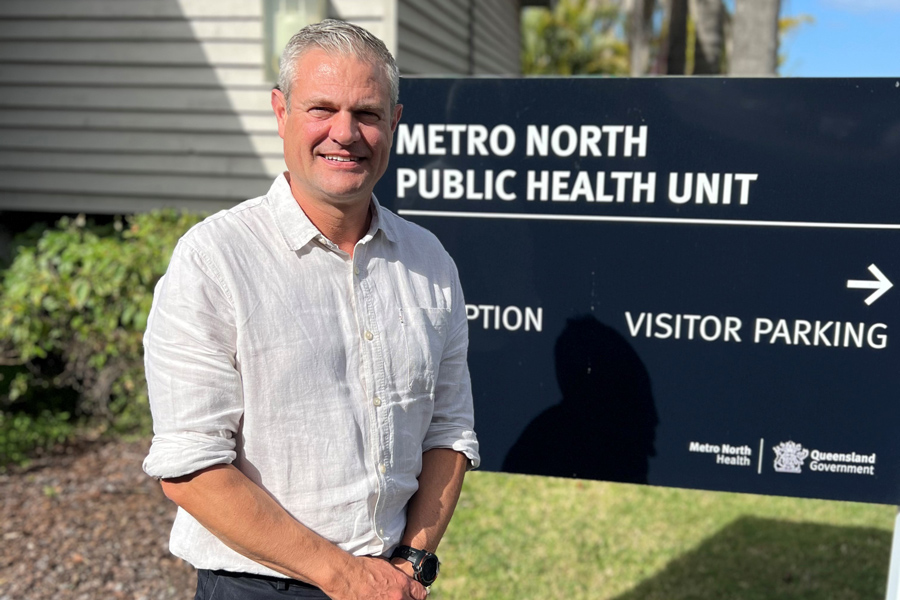
Metro North Health Public Health Unit Physician Dr James Smith
Each year over the festive season, the Metro North Health Public Health Unit sees an uptick in notifications of gastro bugs like Salmonella and Campylobacter. They also tend to see an increase in reports of outbreaks of suspected foodborne illness at this time of year.
Metro North Health Public Health Unit Physician Dr James Smith said there are two key reasons for this, the first being that there are more gatherings around Christmas meaning people are more likely to link an illness to a common event like a party, and secondly, as the weather warms up, unrefrigerated food spoils faster.
“Perishable foods like meat, chicken, seafood and cheeses, as well as food prepared in advance that have been left out of the fridge at temperatures between 5-60 degrees for more than four hours are at particular risk of causing gastro illnesses. We call this temperature range the danger zone,” he said.
“Undercooked poultry like turkey and chicken is a high risk for Campylobacter gastro.
“Those who are immunosuppressed, very young, very old or pregnant need to be particularly careful as they are often at greater risk of more severe illness. Pregnant women need to be particularly aware of the risk of listeriosis, meaning infection with Listeria bacteria. Foods at high risk of Listeria contamination include deli meats, soft cheeses, pre-made salads, raw vegetables, pate, and shellfish.”
James and the Public Health Unit have shared their top tips for staying food-safe this festive season:
- Never store food outside of the temperature danger zone of 5 degrees to 60 degrees. It needs to be either refrigerated or piping hot.
- Don’t overload the fridge. Allow airflow around food and try to keep cold drinks in a separate fridge or Esky to avoid opening the food fridge unnecessarily.
- Defrost frozen foods in the fridge or in the microwave, rather than allowing them to defrost on the kitchen bench.
- Return uneaten food to the fridge as soon as possible and eat leftovers within three days.
- Keep stored foods covered, both in and out of the fridge.
- Don’t eat perishable food that has been sitting out of the fridge for over 4 hours.
- Never reheat food more than once.
- Thoroughly wash your hands before handling, eating and preparing food, and people who are ill should not prepare food for others.
- If in doubt, throw it out!