
Supporting patients through ovarian cancer
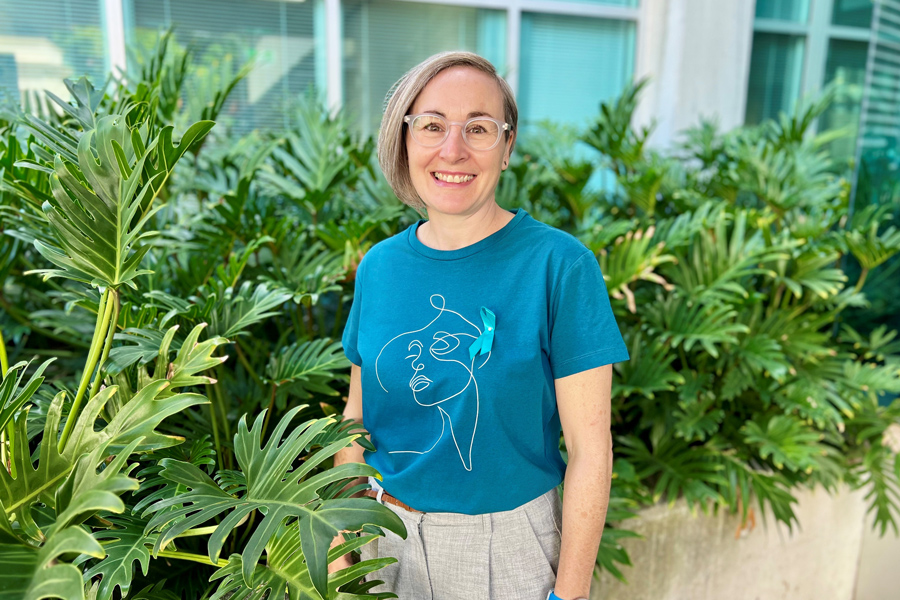
RBWH Clinical Nurse Consultant and Cancer Care Coordinator Vicky Lear
Throughout Ovarian Cancer Awareness Month, Cancer Care clinicians at the Royal Brisbane and Women’s Hospital (RBWH) are encouraging people to be aware of the symptoms of the disease and to proactively seek medical advice should they have any concerns.
Around 1,800 Australian women are diagnosed with ovarian cancer annually, with approximately 1,000 deaths occurring each year. It is the sixth most common cause of cancer death among females in Australia and sadly has a five-year survival rate of just 49%, largely because 70% of cases are diagnosed at an advanced stage.
Fortunately, early detection provides a significantly improved prognosis with approximately 80% of patients with early-stage disease recurrence-free at five years.
Early-stage symptoms can be vague and similar to other common conditions, including pressure, pain, discomfort or swelling in the abdomen, changes in appetite, changes in toilet habits, indigestion, nausea, unexplained weight changes and pain when having sex.
RBWH Clinical Nurse Consultant and Cancer Care Coordinator Vicky Lear said there are several tests a general practitioner (GP) can perform to help diagnose ovarian cancer or to help decide whether symptoms may be due to other causes.
“While there is currently no accurate and reliable early detection test and cervical screening does not detect ovarian cancer, GPs can still request blood tests and ultrasounds which help ascertain whether further investigation is required,” she said.
Women over the age of 50 are most at risk, with factors including increasing age, infertility, endometriosis, polycystic ovarian syndrome and cigarette smoking, as well as genetic factors increasing risk.
“Once diagnosed, there are a range of treatment options available which are closely managed by a highly specialised team. We work with our patients to not only provide treatment, but to support them through the physical, mental and emotional changes that come with the disease.”
“Thankfully, there are many incredible minds nationally and internationally conducting research to develop tests to detect ovarian cancer at earlier stages and carrying out clinical trials using targeted drugs and novel treatment hoping to improve outcomes.”
RBWH ovarian cancer patient Cathy Evans-Howard was first diagnosed with ovarian cancer in 2015 after she began experiencing frequent urination.
“Once I received by diagnosis, I was rushed to surgery quite quickly to have everything in the area removed. I commenced chemotherapy shortly after and was fortunate to have no evidence of disease for three years,” she said.
“I’ve has relapses since then but have thankfully responded well to treatment and have been able to continue living my life, including commencing a full-time university degree in social sciences.
“People can be quite negative when they hear you have ovarian cancer and I have definitely been lucky. However, I want to remind other women with the diagnosis that it doesn’t have to live in your head rent free and rule your life. Yes, it is life limiting, but you can still do things that make you happy.”