
Therapeutic meal ordering improves patient’s meal choices with a side of speech therapy
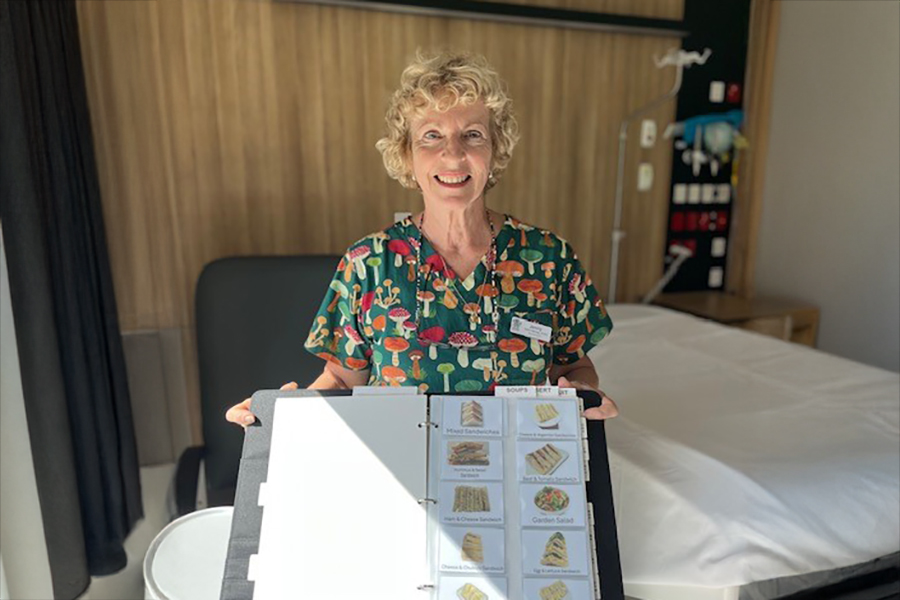
Interprofessional Clinical Assistant (IPCA) Jenny with some of the therapeutic meal ordering resources.
Imagine you are patient in hospital after a significant injury that has impacted your ability to communicate. You’re presented with many different options for breakfast, but you aren’t able to remember them all and can’t easily communicate what you like and dislike. You end up with scrambled eggs. Eventually, the other breakfast options aren’t suggested anymore as everyone thinks you like eggs so you receive scrambled eggs, every single day for your hospital stay.
This is a real-life experience of a patient at STARS and informed a joint speech pathology and dietetics pilot project.
STARS senior speech pathologist Lauren Wright explains how a new interprofessional clinical assistant (IPCA) role is addressing the issue for patients with a communications deficit.
“Patients with communication difficulties require additional time and support to complete functional everyday tasks, including meal ordering,” Lauren said.
“Difficulty communicating choices and preferences can not only lessen patient autonomy and mealtime experience but also increase the risk of malnutrition.
“The new IPCA roles provide dedicated time for therapeutic meal ordering support and communication therapy for patients with a communications deficit.”
IPCA Jenny Heller uses a variety of visual aids to assist patients to order their meals.
“We have pictures of all the menu options and other tools to help patients indicate yes or no to different choices,” Jenny said.
“The IPCA role is not just about helping patients order their meals—the meal ordering is used as an opportunity to provide speech therapy. I may get the patient to work on saying a word or writing a word from the menu, for example. We also use a picture of a particular food and ask patient question such as ‘what does it rhyme with’, ‘what is the sound it starts with’ and ‘what does it make you think of’.”
The response from patients and their families has been overwhelmingly positive.
“Many of the patients have had a life-changing injury or medical event so ensuring the receive something they like to eat while in hospital gives them back one small pleasure. Being able to do that while also progressing their speech therapy is so rewarding,” Jenny said.
Following the implementation of the pilot, all participating patients reported an increased confidence with communicating their preferences. Additionally, the number of patients that were rated as well-nourished also increased.
The success of the pilot has resulted in therapeutic meal ordering becoming a permanent feature at STARS. It is believed the interprofessional initiative is the first of its kind in Australia.
Funding for the original pilot was provided by the Metro North’s Helix Support Program.