
TPCH Clinical Trials Centre opens with pioneering pulmonary fibrosis research
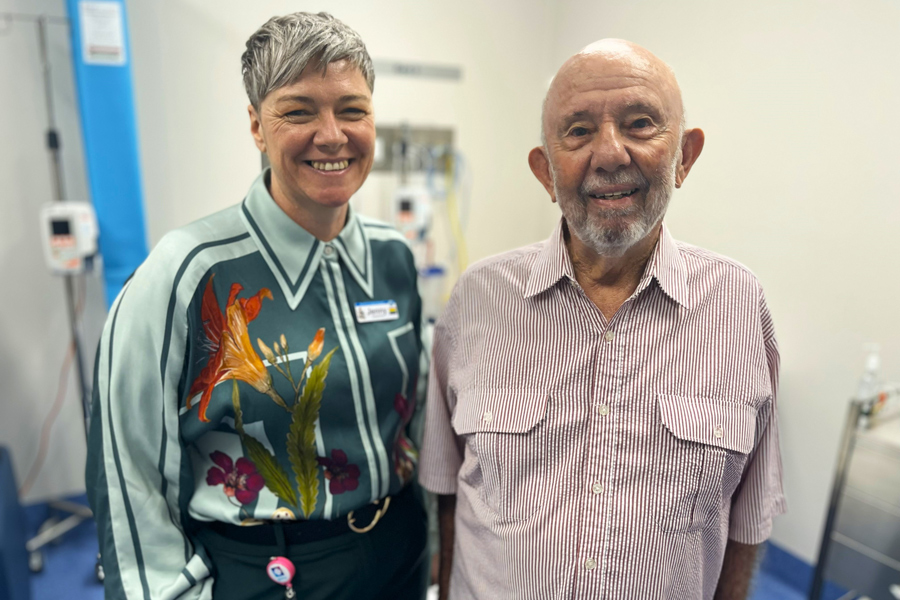
Jenny pictured with patient, Jeff, in the new Clinical Trials Centre.
A new Clinical Trials Centre at The Prince Charles Hospital is helping patients access innovative treatments, providing hope for those living with illness.
Jeff is one of eight patients with pulmonary fibrosis at The Prince Charles Hospital (TPCH) participating in the ALOFT study at the new centre, a global clinical trial running in over 30 countries.
The ALOFT study has 1,125 participants internationally and is one of the first clinical trials to christen the halls of TPCH’s brand-new centre.
Pulmonary fibrosis is a progressive lung disease that causes shortness of breath and fatigue, with patients like Jeff experiencing impacts on their quality of life.
The trial is set to investigate whether a new drug is safe and effective in adults living with idiopathic pulmonary fibrosis (IPF) or progressive pulmonary fibrosis (PPF), promising hope of slowing the progression of the disease.
Jeff, who is one of the first patients to join the trial, said he was hopeful for himself but also for others who live with pulmonary fibrosis.
“I’m ecstatic to be a part of something so important for future generations,” he said.
“So having a comfortable and dedicated space to go for treatment has made a world of difference for me.”
The new centre at The Prince Charles Hospital is the first in-hospital clinical trials centre established in Queensland and only the second such facility in Australia.
Assistant Nursing Director, Clinical Trials, Jenny Peek said the co-location of the centre in the main hospital, featuring purpose-built clinic rooms and specialist trial staff, meant greater access to clinical trials for patients.
“It’s incredible that clinical trial patients now have a dedicated space where they can access new therapies and medical devices they would not otherwise be able to receive,” she said.
“Patients are no longer spread throughout the hospital but rather cared for in a dedicated space.
“This frees up hospital capacity and helps with patient flow, too.”