
Preventing hearing loss begins long before old age
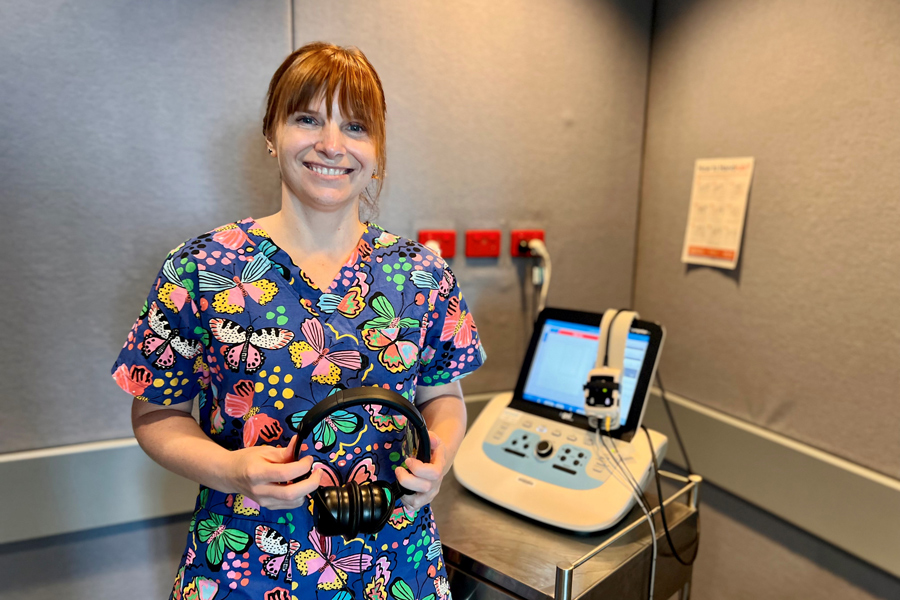
RBWH Audiology Team Leader Carla Rose
Think hearing loss is an old age problem? Think again. New data from The World Health Organisation warns that one billion young people (aged 12-25) globally are now at high risk of noise induced hearing loss from recreational noise.
Almost half of the 3.6 million Australians living with hearing loss are of working age (16-64 years), with overall numbers of people with hearing loss increasing year-on-year. Currently, one in six Australians lives with some form of hearing loss, with this number predicted to reach one in four by 2050.
The most common causes of hearing loss in young people are noise induced hearing loss, infectious ear diseases, genetic/congenital conditions, traumatic injury, systemic illnesses and ototoxic hearing loss.
Royal Brisbane and Women’s Hospital (RBWH) Audiology Team Leader Carla Rose said that thankfully, the most common cause of hearing loss in young people, noise induced hearing loss, is preventable.
“Excessive expose to loud music has permanent consequences for hearing and tinnitus. It can happen at any age and is cumulative, which means that while the damage done after a single exposure may be small and insignificant, the damage builds upon itself with every additional exposure across a person’s lifespan,” she said.
“The main risks are around the volume you choose to listen to music and how long you choose to listen. For example, the average volume recorded in nightclubs/live concerts is so loud that you may be at high risk of causing permanent damage if you stay for longer than 15 minutes.
“I think most people can relate to this and have had the experience of dulled hearing and tinnitus following a night out. This is a sign you may have caused permanent damage to your hearing.”
Carla said that for young people, it is possible to reduce your risk of permanent hearing damage while still enjoying live music events and loud bars and clubs.
“There are a range of ear protection options available which help protect the ears while out and about, including more aesthetically pleasing ones” she said.
“The most important thing to consider when purchasing ear protection is ensuring a proper fit to your unique ear shape, which could mean purchasing an option with different sized silicone tips to choose from. Most people don’t realise their ears are different sizes, so you may require different sizes for each ear.
“Hearing protection also has a rating, so it is important to choose protection with the appropriate rating for the types of environments you plan on being in.”
In addition to protecting hearing in loud environments, the way people use headphones to listen to music is equally important.
“A good rule of thumb is a volume under 60% of the maximum range, for no more than 60 minutes at a time, with a rest time of at least 60 minutes,” Carla said.
“Irrespective of whether the headphones are in-the-ear and over-the-ear designs, the most important thing is to ensure they fit and seal well. If headphones don’t fit well, more sound escapes and the user is more likely to make the volume louder so they can hear well.
“Generally, if someone next to you can hear the music, it is too loud!”
Top tips for protecting ears against noise damage
- Turn it down: where possible, reduce the volume of the noise/music you are exposed to and reduce extraneous/background noise so that you don’t need the music so loud to be able to hear it. Noise cancelling headphones are a great way of doing this.
- Give your ears a break: remember that duration is a big factor too, not just volume.
- Wear hearing protection: we can’t always control the volume of the noise but we can control the volume reaching our inner ears by using well-fitting and appropriate hearing protection. You can even layer plugs and muffs for extra protection!
3 March 2026 is World Hearing Day, a day to raise awareness on how to prevent deafness and hearing loss and promote ear and hearing care across the world. For more information, visit World Hearing Day.