
AI scribe pilot supporting patient-centred care
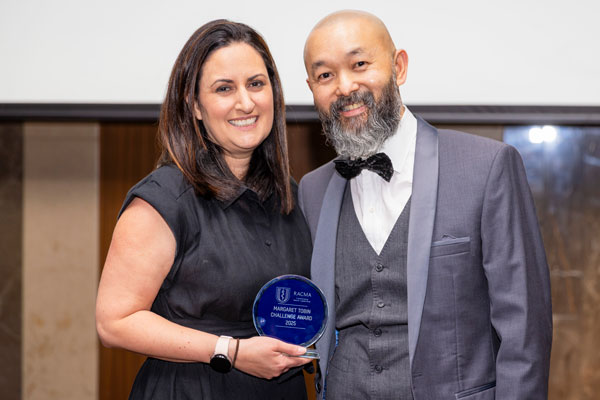
Dr Jill Gardner accepts the Margaret Tobin Award from Royal Australian College of Medical Administrators (RACMA) Professor Erwin Loh
While artificial intelligence (AI) can’t provide kind and compassionate care to patients, a recent trial at The Prince Charles Hospital (TPCH) has shown it can be a great help for the clinicians that do.
A six-month AI scribe pilot project in TPCH paediatric outpatient department has reduced the average letter turnaround back to referring GPs from 44 days to within one day, significantly cutting documentation time for hospital doctors.
Most letters are now distributed on the same day with the GP regularly receiving them prior to the patient getting home from their appointment.
An AI scribe can automate parts of the clinical documentation process for a medical practitioner, which is checked for accuracy and incorporated into the patient’s health record.
TPCH Medical Administration Registrar Dr Jill Gardner, who recognised by the Royal Australasian College of Medical Administrators for her work with the trial, said as well as great time savings, the trial results included improved document quality, doctors having more time with patients and working less overtime:
- 60 per cent of doctors felt their documentation had improved with the AI scribe
- 60 per cent of doctors saved 15-30 minutes per four-hour session, 20 per cent saved 31-60 minutes per session and 20 per cent saved more than an hour per session
- 40 per cent of paediatricians reported reduced overtime, saving up to 60 minutes per day and reducing fatigue
- 85 per cent reduction in workload for the unit’s typist
TPCH Paediatrics Acting Clinical Director Dr Francesca Arcidiacono said using AI in the paediatric outpatient clinic had markedly improved clinic efficiency.
“It has given those clinicians who want to increase appointment numbers in a clinic some ability to do this without substantial workload increase,” Dr Arcidiacono said.
“The other benefits are in the utilisation of clinical rooms and an availability perspective – we can now run afternoon clinics in a timely and efficient way.
“Being able to create additional letters, referrals and paperwork instantly – and to finalise and send a GP letter the same day, means that when clinic is finished, the team gets to walk away from the clinic and know there is not additional workload waiting.”
Following the successful trial in paediatric outpatients, TPCH is now investigating the widespread rollout of the AI scribe technology across the hospital.
Dr Gardner’s work reinforces TPCH’s commitment to embracing new technologies responsibly with patient safety and dignity always front of mind.