
‘Magic table’ improving care for older patients
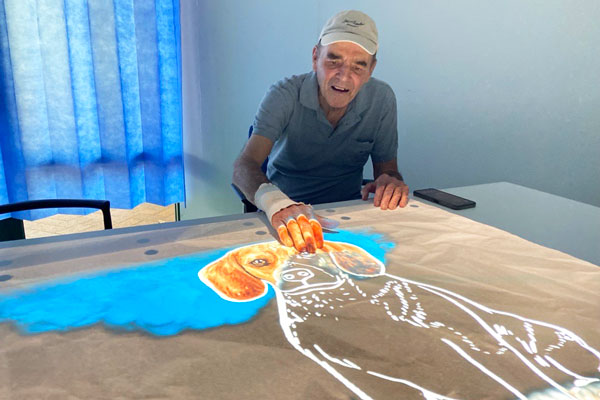
Patient Robert enjoys the interactive ToverTafel AI system at The Prince Charles Hospital Cognitive Assessment and Management (CAM) Unit
A ‘magic table’ at The Prince Charles Hospital (TPCH) is harnessing the power of artificial intelligence to help care for older patients experiencing change behaviours associated with cognitive impairment.
The ToverTafel AI system, which means magic table in Dutch, was installed in TPCH Cognitive Assessment and Management (CAM) unit in mid-2025. The unit provides highly specialised care for individuals with behavioural and psychological symptoms of dementia that are not usually able to be managed at home or in a residential aged care facility.
TPCH was the first acute hospital in Australia to install a ToverTafel table. It projects flexible, interactive games onto a regular table surface that allows patient to engage with the system through hand movements and touch.
It features more than 40 cognitive, sensory and social interactive games for patients that help to reduce agitation, increase joy, provide meaningful distraction and reduces the need for medication that can have side effects and cause harm such as falls.
Its movement-based interactions are specifically tailored for older adults and include activities designed to promote reminiscence, curiosity and social connection.
CAM Nurse Unit Manager Vijay Pillai said the table has been highly effective in addressing one of the main challenges of the unit, which is engaging patients with diversional therapy.
“Most challenging behaviours for patients arise from their inability to regulate stress, un-met needs and boredom,” Vijay said.
“Diversional therapy engagement is a way to encourage individuals to engage in meaningful activities that allow them to reminisce on their past.
“Our patients were in awe the first time they saw the ToverTafel table and very inquisitive.
“The games have been very appealing to their cognition as they try to make sense of how images are moving on the table as they interact.”
Evidence gathered in the first six months after installation shows measurable and meaningful outcomes for patients, staff and families from the ToverTafel.
These include:
- 35 per cent reduction in behavioural incidents
- 18 per cent reduction in antipsychotic medication use
- 85 per cent engagement of patients with 100 per cent activity completion during facilitated sessions
- Improved Behavioural Activity Rating Scale and Pittsburgh Agitation Scale scores (average reduction of 2–3 agitation points)
- Enhanced staff confidence and family satisfaction (average rating of 4.8 out of 5)
- Reduced reliance on pharmacological interventions is lowering the risk of medication-related harm.
Building on this success, CAM now integrates the ToverTafel table into the unit’s daily activities program and as a tool for patient engagement.
Next steps may include extending use of the ToverTafel table across geriatric and rehabilitation wards. TPCH is also exploring using it as a non-pharmacological therapy tool for cognitive engagement with patients with delirium.
Overall, the ToverTafel initiative has significantly enhanced patient engagement, well-being and behavioural outcomes, while reducing reliance on medication.