
Improving access to disability passports
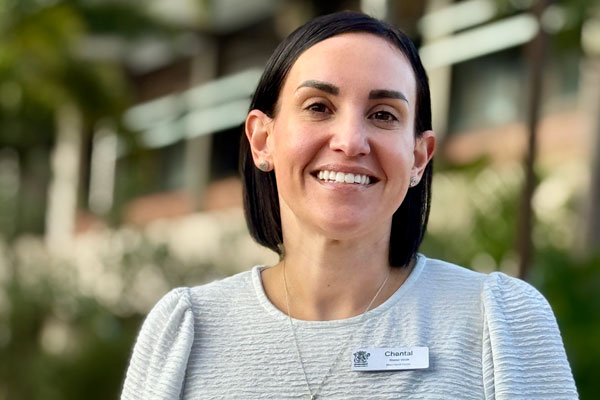
Redcliffe Hospital’s Disability Specialist Social Worker Chantal Fichera
Health passports, such as Julien’s Key, are an important tool for patients to communicate their needs to healthcare staff.
A quality improvement project at Redcliffe Hospital has assessed how many patients with disabilities are using health passports, and how Metro North can better connect health passports with the integrated electronic medical record.
Redcliffe Hospital’s Disability Specialist Social Worker Chantal Fichera said that health passports are like a map for how to provide care in the way the person needs when they come to hospital.
“Health passports provide individual and nuanced information, like what their care needs are, how they like to be cared for, what can make them anxious, who they want involved in their care, and how we can adjust the way we deliver care to best meet their needs,” Chantal said.
“They’re a great tool for any exchange or interaction between a clinician and a person who might have complex care or communication needs.
“Awareness of health passports is definitely growing. There’s been a huge uptake in community settings, but there’s still more work do to in hospital settings.”
Chantal said building awareness among nurses and clinicians was a key part of her quality improvement project, together with looking at how many patients were using health passports, and how existing passports could be integrated within ieMR using the Statewide Health Passport Chart Summary.
“Redcliffe Hospital has the second highest number of NDIS patient presentations in Metro North. The ward we focussed on for our project was 5 East, a medical ward that regularly sees high presentations of patients with disabilities,” she said.
“The project looked at how many patients with complex communication and/or care needs had come to hospital with a version of a health passport. For patients who didn’t have one, we looked at if they would benefit from the Statewide Health Passport Chart Summary.”
Chantal said the summary is a two-page document designed to condense passports like Julian’s Key into something storable and compatible with ieMR.
At the end of the three-month project, Chantal said all patients involved had benefited from the trial, including some who had their care needs more directly addressed.
She says nurses and clinicians on the ward also now had a better understanding of the benefits of health passports.
“We know that there’s benefit to having health passports to inform clinical care,” Chantal said.
“We know they contribute to greater patient satisfaction and improve the working relationship between health staff and a patient.”