
Metro North Health Deepens Connection to Country Through Kabi Kabi Engagement
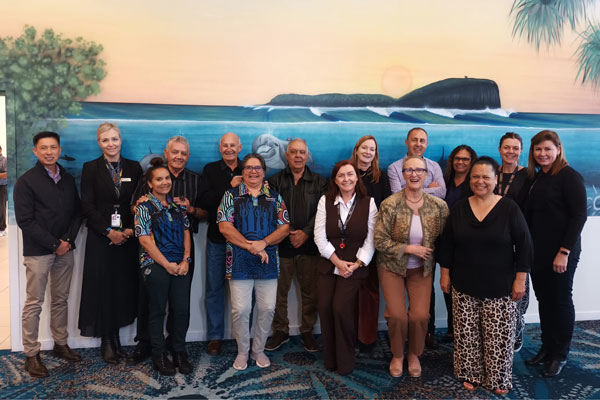
Metro North Health Executives and staff pictured with Kabi Kabi Traditional Owners
Metro North Health is committed to fostering strong, respectful relationships with Traditional Owners through meaningful cultural engagement and deep connection to Country, recognising their vital role in shaping the places where services and facilities are located on Brisbane northside.
Traditional Owners hold deep cultural knowledge and enduring connections to Country that are vital to the health and wellbeing of Aboriginal and Torres Strait Islander peoples. Their leadership and guidance are essential in shaping healthcare services that are culturally safe, respectful, and responsive to needs.
To foster connection, collaboration and shared learning, Metro North Health executives and staff gathered informally with Kabi Kabi Traditional Owners, welcoming Elders and representatives from the Kabi Kabi Peoples Aboriginal Corporation (KKPAC) and the Kabi Kabi Housing Corporation.
Metro North Health Chief Medical Officer Dr Liz Rushbrook was among the senior leaders who attended the gathering, expressing her appreciation for the opportunity to connect with the Kabi Kabi community.
“It was a privilege to meet with the Kabi Kabi community and deepen our connection,” Dr Rushbrook said.
“This event represents an important step in strengthening our partnerships with Traditional Owners and working together to ensure culturally safe healthcare for Aboriginal and Torres Strait Islander communities.”
By embedding Traditional Owner perspectives into healthcare planning and decision-making, Metro North Health can foster trust, strengthen partnerships, and improve access to culturally safe care, reflecting the ongoing commitment to partnering with Aboriginal and Torres Strait Islander peoples.
Strong partnership ensures that services are aligned with community values and priorities, while also playing a critical role in advancing health equity and creating more inclusive, responsive health systems.