
New heart valve technology helping patients avoid invasive surgery
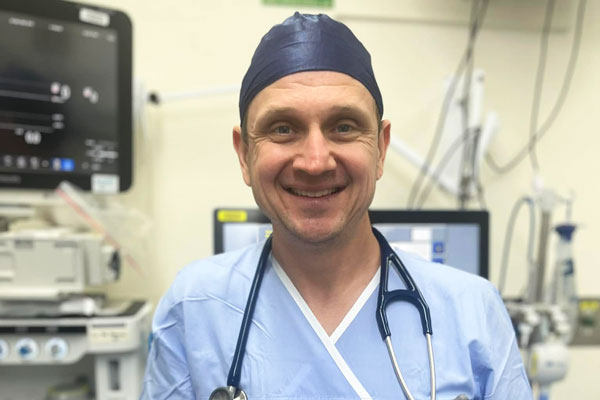
Dr Dale Murdoch, Clinical Lead of The Prince Charles Hospital Heart Valve Program
Patients with a common form of heart valve disease now have access to a new treatment option that prevents the need for open heart surgery.
The SAPIEN M3 System, delivered by The Prince Charles Hospital (TPCH) Cardiology program as part of the international ENCIRCLE clinical trial, is a minimally invasive heart valve replacement system used to treat patients with mitral valve regurgitation, a condition affecting more than ten thousand Australians, many over the age of 75.
Mitral regurgitation occurs when a person has a diseased, damaged or malfunctioning mitral valve caused by degeneration (wear-and-tear), cardiomyopathy (enlarged heart) or a previous heart attack, among other causes. This affects the normal function of the heart, as the mitral valve acts as a one-way gate between the left atrium and left ventricle, ensuring blood flows forward through the heart and out to the body.
With the new system, cardiologists place a prosthetic mitral valve replacement into the native mitral valve position between the left atrium and left ventricle via a catheter inserted into the groin’s femoral vein. The prosthetic valve is carefully guided into the correct position using real-time X-ray imaging and echocardiography and placed within the native mitral valve, where it anchors securely via the device’s dedicated docking system.
The new valve immediately corrects the blood flow by replacing the faulty valve and restoring one-way forward flow of blood through the heart. The prosthetic valve opens to allow blood to move forward and closes tightly to prevent backward leakage.
Cardiologist and Clinical Lead for TPCH Heart Valve Program Dr Dale Murdoch said the new system is a gamechanger, giving many patients with limited treatment options, a chance for improved health.
“Patients with mitral regurgitation can experience years of shortness of breath, fatigue, reduced exercise tolerance and fluid retention before treatment. Many patients reach a point where their heart function deteriorates significantly and they require intervention to rectify their condition,” Dr Murdoch said.
“Unfortunately, not all patients with the condition are suitable for surgery for various reasons such as advanced age, frailty, significant co-existing medical conditions, or previous heart surgery that makes repeat operations high risk. This leaves them with no suitable treatment option and a poor quality of life moving forward.
“The new SAPIEN M3 valve system allows for a much quicker recovery compared with open heart surgery, with patients spending only two to three days in hospital before going home.
“As Queensland’s leading centre in transcatheter cardiac valve replacement, TPCH is pleased to be able to deliver this advanced treatment.”