
RBWH nurses armed with a new training tool
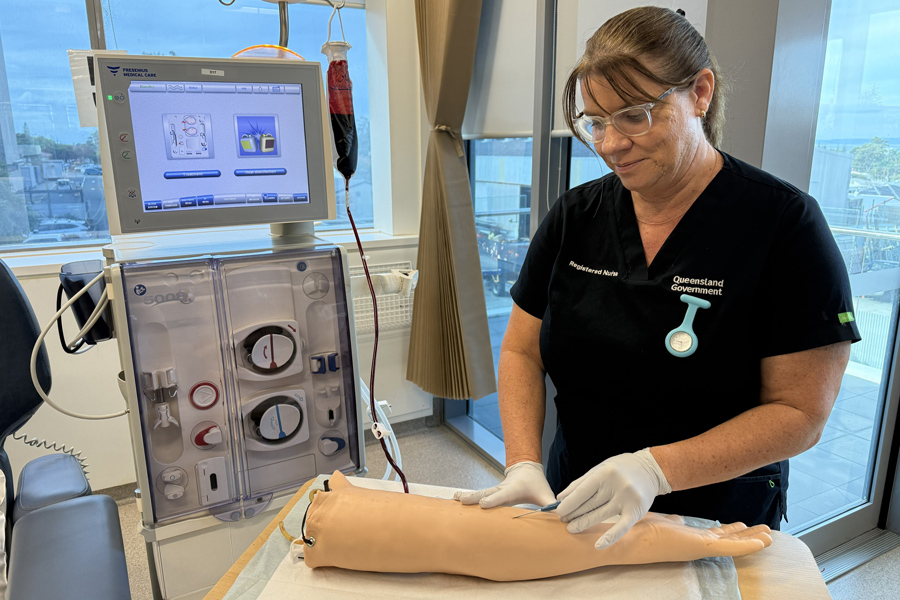
RBWH Clinical Nurse , Joanne Brown is one of the 150 nurses who have access to the new simulator arm
Nurses at RBWH now have access to a realistic simulator arm to help them practice and refine complex vascular access techniques for dialysis patients.
When kidneys fail, dialysis becomes a lifeline, and so does the skill of the nurses who manage the vascular access that makes treatment possible.
For Joanne Brown, one of around 150 nurses undertaking the training using the new arm, good cannulation is the key to better clinical outcomes, but it’s also about making an already difficult experience as gentle as possible for patients.
“Dialysis is life‑sustaining treatment that patients cannot simply ‘take a break’ from. However, repeated difficult cannulations can be very distressing,” she said.
“Psychologically, it can lead to anxiety before dialysis sessions, which can contribute to feelings of frustration.”
Joanne said mastering cannulation is critical to protecting patients’ fistulas, the surgically created connection between an artery and a vein that makes the vessel strong enough to support dialysis.
“Each needle insertion directly impacts a patient’s comfort, safety, and the long‑term viability of their fistula,” Joanne said.
“The practice arm is a valuable tool for supporting beginner cannulation, helping to develop dexterity, and appropriate insertion technique in a safe and controlled environment.”
Designed to feel like a human arm and featuring a vascular system pressurised with artificial blood, the anatomical training model will also support uptake of plastic cannulation, an evidence‑based technique shown to preserve fistulas.
Metro North Nurse Educator Claire Scoles says the arm, obtained through a grant from the RBWH Foundation, will strengthen capability across the Kidney Health Service at RBWH and its five satellite dialysis sites.
“For patients, this grant means safer, more reliable dialysis care — no matter which site they attend,” Claire said.
“Better‑trained nurses will be more confident and skilled in accessing fistulas and managing vascular access, reducing the risk of painful complications such as failed cannulations.”
“Fundamentally, the goal is to protect long‑term treatment access for patients and minimise unplanned hospital admissions or treatment disruptions.”