
RBWH leading emergency department sepsis research
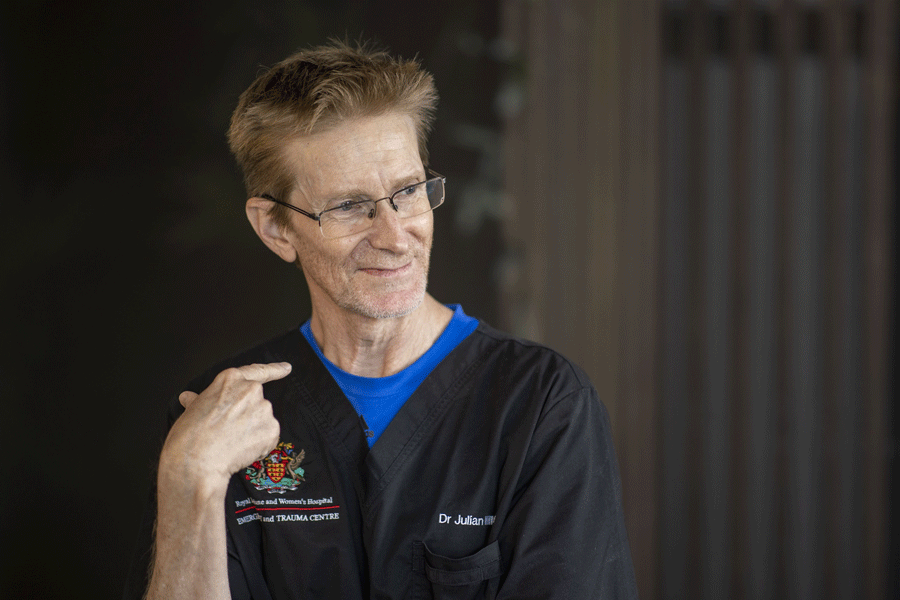
Dr Julian Williams
Sepsis is one of the leading direct causes of death in Australia and worldwide, representing 20 per cent of all global deaths. It is a medical emergency that must be treated immediately and can be difficult to recognise. Patients with sepsis are usually treated with antimicrobial medicines and intravenous fluids. Crystalloids are the most commonly used fluids.
However, RBWH Emergency Department Physician Dr Julian Williams has been investigating whether an early infusion concentrated albumin, a protein made by our liver, is the answer for patients diagnosed with sepsis, rather than crystalloids.
Albumin is already given to some sepsis patients, but it’s often in an intensive care unit or ward up to 24 hours after diagnosis. Dr Williams is investigating whether providing concentrated albumin in the emergency department immediately after diagnosis delivers the most benefit for patients.
Since 2008, Dr Williams has been part of a small team of Emergency Department researchers looking at various aspects of sepsis diagnosis and management, supported substantially with grants from the Emergency Medicine Foundation (EMF).
His paper published earlier this year titled Intervention with Concentrated Albumin for Resuscitation of Undifferentiated Sepsis in the Emergency Department (ICARUS-ED) highlighted outcomes from a pilot randomised control trial with 464 patients.
The paper outlined encouraging early results and determined the need for a more definitive multi-centre randomised controlled trial (RCT) to further examine whether early albumin influences outcomes.
A three-year Metro North Clinical Research Fellowship awarded in late 2025 will now enable Dr Williams to have several days per week to concentrate on research including the planned multi-centre trial.
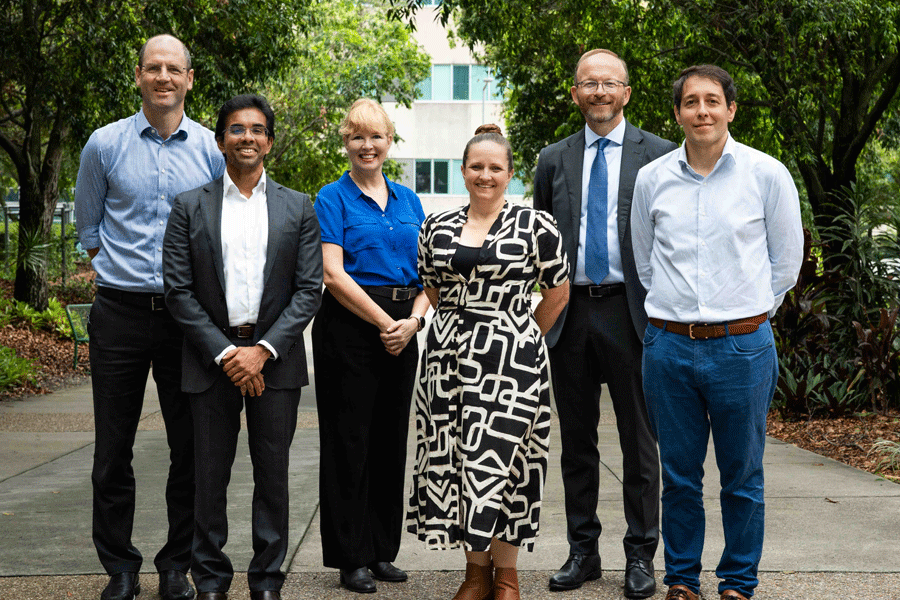
Metro North Research Executive Director Professor Steven Lane (left) and Acting Chief Executive Nick Steele (second from right) with 2025 Metro North Clinical Research Fellowship recipients (from left to right) Dr Menaan Palamuthusingam, Dr Michelle Roets, Dr Deanne August and Dr Gianluigi Li Bassi.
The ICARUS multi-facility randomised control trial (ICARUS MF-RCT) will investigate effects of concentrated albumin treatment commenced in the Emergency Department as soon as possible after the patient has been diagnosed with sepsis.
The ICARUS MF-RCT will start at RBWH and collaborate with staff in emergency departments across Metro North Health and throughout Queensland. About 20 centres will be included to meet target recruitment of more than 1600 patients. Involvement of all emergency department staff—including medical, nursing and pharmacy—will also be crucial.
Dr Williams said the last 5 to 10 years has seen a steady increase in emergency department clinicians being actively involved in research.
“At the RBWH Emergency and Trauma Centre, in particular, publication of world leading cardiac research and descriptive sepsis analysis has been published,” Dr Williams said.
“Clinical practice inevitably informs knowledge gaps, which drives relevant and practical research questions and informs improvement in clinical practice.
“I’m so grateful to receive the Metro North Fellowship, which recognises our work to date and provides the opportunity to improve outcomes for patients with sepsis at home and across the world.”