
Difficult to make and difficult to break: CNC Lily explains a motor neurone disease diagnosis
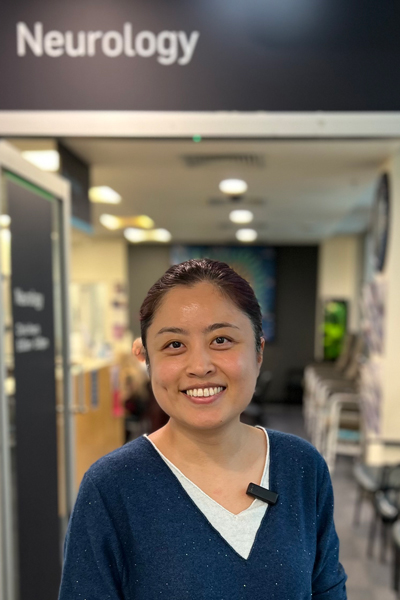
Lily is a Clinical Nurse Consultant at RBWH working with patients who have MND.
Motor Neurone Disease, commonly known as MND, has been in the spotlight of late – following the death of respected and much-loved AFL star Neale Daniher to the disease and the diagnosis of young NRL star Jai Arrow within a couple of weeks.
For Daniher, he had been living with slow progressive MND since 2013, dedicating his efforts to unrelenting advocacy for awareness and research to find a cure for the currently incurable disease.
Arrow however, who has received the harrowing diagnosis at just 30 years of age, is in the small number of young people affected by the disease.
RBWH MND Clinical Nurse Consultant Lily said while MND onset was mostly seen in the 50-70 years of age cohort, it did not discriminate.
“MND can affect people of all ages, and that does mean young people, but that is rare and accounts for less than 10 per cent of cases,” Lily said.
“It also is a term for a basket of diseases that affect the motor neurones, so while we know ALS which is what Neale Daniher had, there are other types of MND too – all of which see the motor neurones die over time, causing muscle weakness and paralysis.
“Symptoms will vary from person to person depending on the type of MND you have, and may including weakness, wasting, stiffness, emotional inability, speech, swallowing, and breathing difficulties.
“Because MND affects every patient so differently in terms of symptoms and also progression, it can be hard to diagnose and may take months and several visits to one or more neurologist to confirm.
“Once we make a diagnosis, we will see the patients in our multidisciplinary clinic to make a care plan.”
Lily describes an innovative ‘round-table’ care model where MND patients visit RBWH and sit around a table with all the required specialists for their individual needs, which in some cases may be up to seven clinicians in the one appointment.
“The team will consist of several professionals and may include a neurologist, MND nurse, speech pathologist, dietitian, palliative care consultant and/or respiratory physician – and we all work together to see the patient at that one appointment,” she said.
“This way we can answer all their questions in one go and form a care plan together, but we do have patients coming from all over Queensland, and as the disease progresses, they may have travel difficulties – so we can run the appointments via telehealth at home or at their local hospital suite if they prefer.”
Lily says MND is a difficult diagnosis to make, and a difficult diagnosis to break – currently with no cure, and an average life expectancy of two-three years from diagnosis.
“Even though MND is still considered a rare disease in Australia, each day, two people are diagnosed with this and sadly two people will pass away from the disease,” Lily said.
“We have a dedicated research team at RBWH who work closely with researchers locally and globally to ensure we have access to clinical trials and to try better understand the disease.
“Our MND team at RBWH are very passionate about research because we believe it can give us hope to find better treatment and a possible cure for the future.”