
Emergency care in the comfort of your own home: The Virtual Emergency Care Service
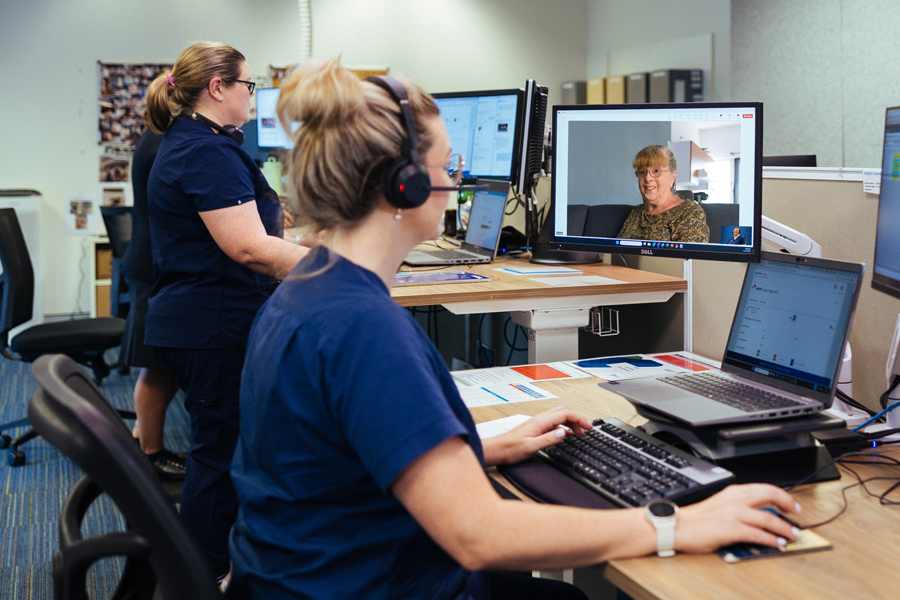
The Virtual Emergency Care Service (VECS) is run by highly experienced emergency trained health professionals.
For many of us a trip to the Emergency Department is something we would rather avoid. Being sick or injured is no fun and even less so when you have to travel to hospital, potentially pay for parking and wait to be treated.
There is, however, a very convenient alternative: the Virtual Emergency Care Service or VECS.
VECS is a free, Queensland-wide service for non-life-threatening emergencies for both adults and children. It is open seven days a week from 8am to 10pm, including public holidays.
Nursing Director of VECS Lisa Harvey would like all Queenslanders to know that VECS could be an option for them.
“VECS is for urgent health concerns that need quick medical attention but are not serious emergencies,” said Lisa.
“If you feel unwell, are in pain, or have an injury but it’s not life-threatening, you can contact VECS to help work out what to do next.
“It is a great option for everyone but especially parents with young children, those people who live further away from a hospital or health care centre or who have difficulty travelling.”
Lisa explains that one misconception about the service is that when people contact VECS they are only accessing a virtual assistant, like a chat bot.
“I can reassure you that we are real people! All of our doctors and nurses are highly experienced emergency trained health professionals,” she said.
“Many of them also work shifts in Queensland hospital emergency departments as well as with VECS.
“People may be hesitant to contact VECS believing we can’t provide a full service – but that’s not the case. If required, VECS can arrange pathology requests for urine or blood tests, provide an e-script for medication or refer you for imaging such as an x-ray or ultrasound.”
Lisa said an example of a health concern that would be really suitable for VECS is a parent of a child who has vomiting and diarrhoea but is unable to get an appointment with a GP for a few days.
“In this case, the doctor would review the child via video in real time, ask questions about fluid intake and urine output, their colour and how active they had been as well as the frequency of the vomiting and diarrhoea,” she said.
“They advise the parent on how to rehydrate the child at home and may also provide an e-script for an anti-vomiting medication. They can even ring back to check on how the child is doing and reassess, if required.”
For parents of young children, VECS is convenient and can be a real time-saver. They can access it in the comfort of their own home, without a challenging car ride or hospital wait.
On average, the wait time for patients to see a triage nurse is only three minutes and only 8 minutes after that to see a doctor.
You can access the Virtual Emergency Care Service via their webpage.