
‘Below 10,000 feet’ education at STARS examines the impact of noise in theatre
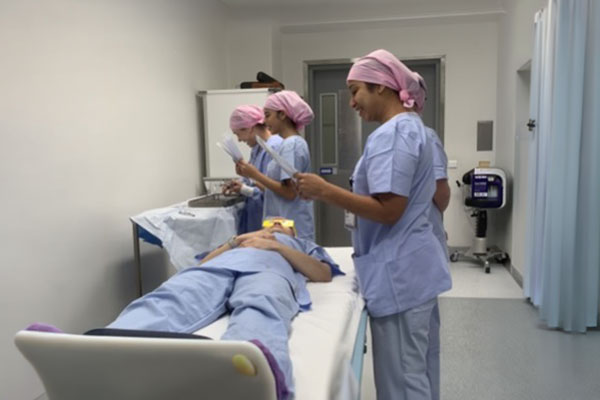
Below 10,000 feet’ education looked at the impact of noise in theatre including a simulation of the patient’s experience.
You might consider hospital environments to be relatively quiet places, where noise is kept to a minimum. The World Health Organization (WHO) recommends that background noise should be 35 decibels or less in patient areas and less than 40 decibels in general hospital areas.
What of a busy operating theatre though? The noise in operating theatres can exceeding 80-100 decibels, often due to the equipment being used. Even normal conversation at around 65-70 decibels is well in excess of the WHO recommendations.
Nurse Educator Surgery and Procedural Services Melissa Ramsay and colleagues recently led an education session for perioperative nurses at the Surgical, Treatment and Rehabilitation Service (STARS)on the impact noise can have on the theatre setting for both staff and patients.
“In a perioperative setting increased ambient noise can hinder effective team communications, obscure important clinical clues such as pulse oximeter tones and contribute to stress, fatigue and distraction in staff,” said Melissa.
“For patients, a noisy operating environment can increase stress and anxiety, especially when going under or coming out of general anaesthesia. It is also linked to reduced patient satisfaction of their care and higher levels of post-operative pain and discomfort.”
Melissa’s education session focussed on the concept of pilots operating below 10,000 feet and how that translates to healthcare.
“Below 10,000 is inspired by the aviation industry. In aviation, operating below 10,000 feet is a critical phase of flight when minimising distractions is essential for safety during take-off and landing,” she said.
“The neutral language phrase ‘below 10,000’ can be used by any member of the operative team when they feel there is too much noise or distraction during critical moments of the patient’s journey. It has been shown to be an effective, non-confrontational way to signal that only clinically essential communication should occur.”
During the education session staff also participated in a practical experiential workshop to simulate the patient perspective in a noisy operating theatre. Through scenarios involving impaired vision and competing distractions, staff gained first-hand insight into how noise can affect patients.
“Those who experienced the patient role described feelings such as anxiety, confusion, stress, and being overwhelmed,” Melissa said.
“Overall, staff who participated in the session reported a significant shift in awareness with most recognising the impact that excessive noise can have on a patient’s experience as well as task efficiency.
“We will now look to how we can incorporate the ‘below 10,000 feet’ concept further within our teams. We are collecting suggestions from staff for a phrase like ‘below 10,000’ that may be used in our STARS surgery and procedural areas.”