
‘It just makes SENSe’: Therapy for people with sensory impairment after a stroke.
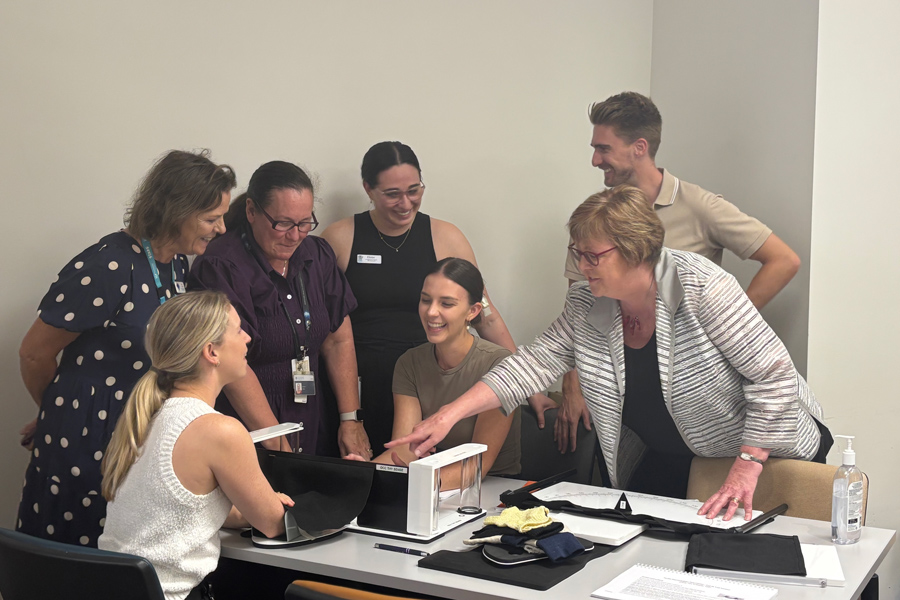
Metro North occupational therapists receiving SENSe training with Professor Leeanne Carey.
Every year Metro North cares for ~1500 stroke survivors, of which 50-80% will suffer impaired sensation (altered or lost touch or feeling). Patients may have a reduced ability to feel touch, pain, temperature or position or they may become hypersensitive with even a light touch feeling painful or irritating.
Sensory impairment significantly affects a person’s quality of life, limiting their ability to sense the world and use their arms and hands to do activities. Altered sensation can impact patient safety (e.g. burns risk) and often prolongs hospital stays.
Occupational Therapy Director at Surgical, Treatment and Rehabilitation Service (STARS) Tamsin Mahoney is excited that a new therapy for sensory impairment will soon be available for Metro North patients, with funding from the RBWH Foundation.
“SENSe is a systematic, goal-directed therapy, designed and developed in Australia to target sensory rehabilitation for stroke patients. It has been shown to significantly increase sensory capacity and improve functioning and quality of life,” explains Tamsin.
“A key barrier to implementation of SENSe at Metro North was the lack of trained SENSe clinicians as SENSe requires specialised training.
“With RBWH Foundation funding, 12 occupational therapists from STARS, RBWH and TPCH received training from Professor Leeanne Carey, creator of SENSe and world leader in evidence-based stroke rehabilitation.”
The RBWH Foundation grant will also be used to purchase essential SENSe equipment for the three Metro North facilities.
The initiative was consumer-led by patient John and his wife Bridget who have a lived experience of sensory impairment following a stroke.
“John didn’t like being touched when I hugged him… it was like he was being ‘shocked’ by my touch. I didn’t understand why and felt hurt at first, until I understood why… John had sensory changes,” explains Bridget.
Through their involvement in the STARS consumer network, John and Bridget initiated the professional connection between Professor Carey, and Metro North clinicians and researchers with this partnership leading to the co-development of the funding proposal.
John and Bridget also partnered to co-create an educational video which features themselves and Metro North clinicians about sensory impairment and SENSe rehabilitation. The video will be used to compliment the delivery of SENSe rehabilitation to patients and clinician training in SENSe.