
Lung cancer research truck transports early detection technology to regional Queensland
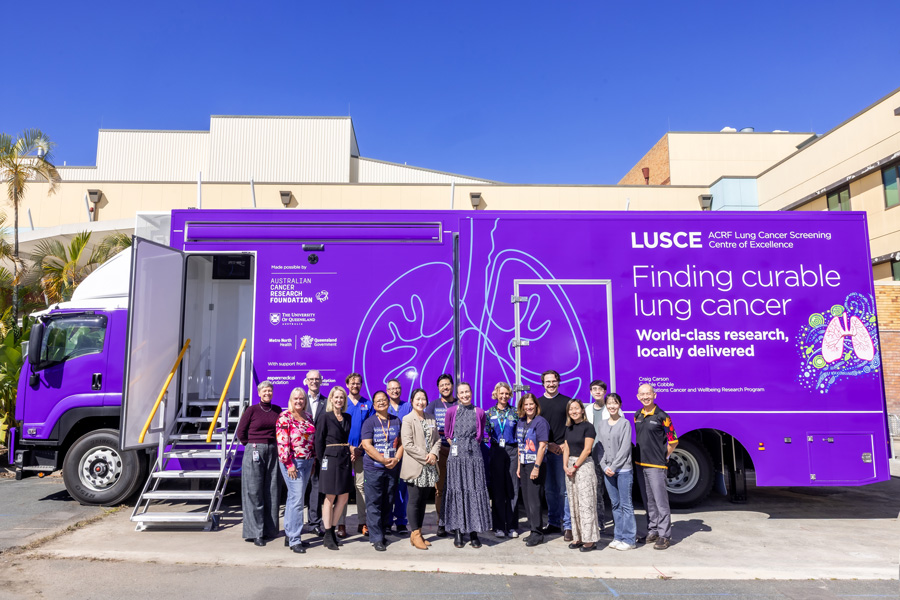
Thoracic Physician Professor Kwun Fong and team celebrate the ACRF LUSCE launch
Queensland’s only lung cancer research truck has hit the road, delivering a chance for people living in regional and remote communities to participate in early detection research without leaving home.
The Australian Cancer Research Foundation Lung Screening Centre of Excellence (ACRF LUSCE) will trial state-of-the-art technology such as low-dose CT scanning and AI-enabled X-ray imaging alongside breath and blood biomarker testing.
Professor Kwun Fong from The Prince Charles Hospital and the University of Queensland Thoracic Research Centre said the ACRF LUSCE would help address significant access inequities to lung cancer research for people living in regional and remote areas – particularly Aboriginal and Torres Strait Islander communities and people experiencing socioeconomic disadvantage.
“The goal is to ensure all Australians who may be at risk of lung cancer can access the latest research technologies, regardless of where they live,” Prof Fong said.
“About one-third of Australians live in regional, rural and remote areas, and many can’t take days away from work or family responsibilities to travel to major centres where research and healthcare is more abundant.
“This truck allows us to take advanced screening and research directly to communities, reducing the burden of travel and distance.
“We know that lung-cancer outcomes for people in regional communities are generally poorer than for those living in cities, while outcomes for Indigenous Australians are also poorer than for non-Indigenous Australians.”
Lung cancer remains Australia’s leading cause of cancer death in both men and women, despite having a high potential for cure when detected early.
While national screening programs exist for breast, bowel and cervical cancers, lung cancer screening has not been available on a national scale.
ACRF Chief Executive Officer Kerry Strydom said early detection was critical to improving outcomes after diagnosis.
“We believe everyone in Australia should have the opportunity to benefit from the latest advances in cancer research and we’re proud to support Professor Fong and his team as they bring this pioneering research initiative to communities across regional Queensland,” she said.
“Backing the technology and cutting-edge equipment will help achieve this.”
Lung Foundation Australia Chief Executive Officer Mark Brooke said the initiative was an important example of how collaboration and research could help drive earlier detection and improve outcomes for Australians affected by lung cancer.
“This initiative represents the very best of what can be achieved when researchers, clinicians and community organisations come together with a shared goal of improving outcomes for Australians affected by lung cancer,” Mr Brooke said.
“Australia has made significant progress in lung cancer screening in recent years, and ongoing collaboration between researchers, clinicians and the community is essential to delivering the next generation of advances in early detection and lung cancer care.”
Professor Fong said the truck would incorporate new diagnostic technology like breath analysis and biomarker research along with conventional and AI-enabled chest imaging.
“While there is not yet a robust blood test for early lung cancer detection, breath may contain biomarkers that indicate the presence of cancer because it comes directly from the lungs,” Prof Fong said.
The lung cancer screening truck will be based at The University of Queensland Thoracic Research Centre at The Prince Charles Hospital in Brisbane and initially deployed in Southwest Queensland.
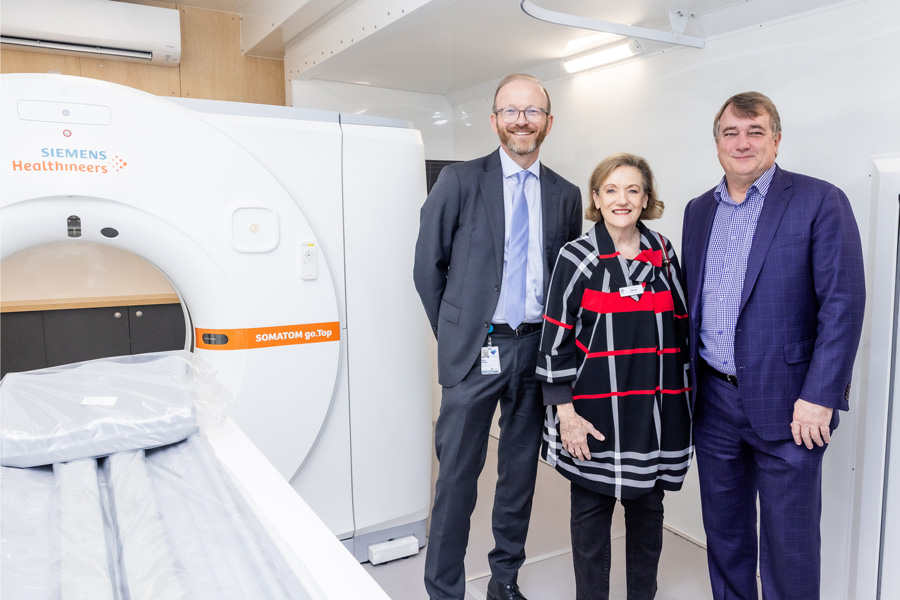
Metro North Chief Executive Nick Steele and Board Member Hon Jane Prentice with CEO Aspen Medical Craig Fitzgerald in the new lung cancer screening mobile clinic