
How can we prevent overdose related harm?
International Overdose Awareness Day is held annually across the world on 31 August.
International Overdose Awareness Day, held annually on 31 August, helps raises awareness about how overdose-related harm can be prevented.
While this year’s theme 25 Years On. Still Needed recognises 25 years of global action to prevent overdose, it also acknowledges that overdose continues to affect individuals, families and communities across all walks of life.
The Metro North Mental Health Alcohol and Other Drugs Melaleuca Clinic is located on the grounds of The Prince Charles Hospital. This outpatient clinic offers opioid treatment services, short term ambulatory withdrawal services, as well as counselling, education and information for patients.
Nurse Unit Manager Margo Hickman said overdose was preventable when people had access to evidence-based information, education, treatment options, care and support.
“An overdose occurs when a person takes more of a drug or medicine than their body can safely process or takes a combination of substances that produces dangerous side effects,” Margo said.
“While overdose is often associated with illicit drug use, it can also involve prescription medications and other legal substances taken incorrectly.
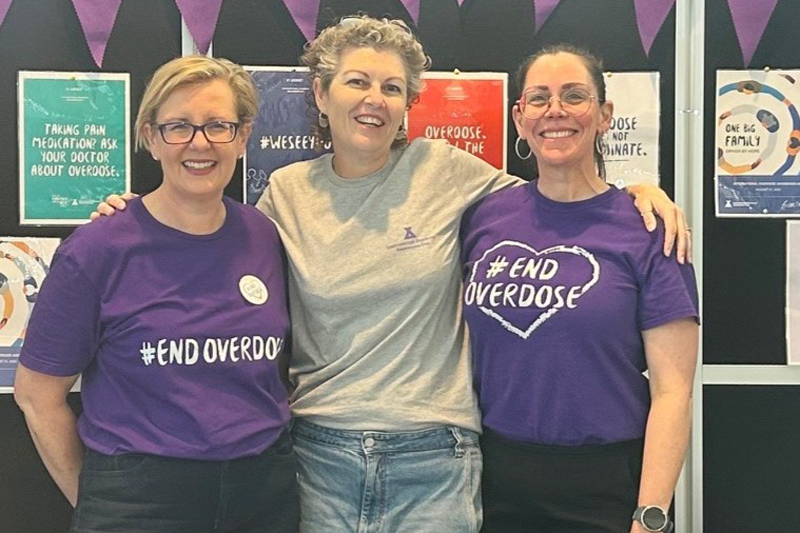
Melaleuca Clinic Nurse Unit Manager Margo Hickman with Clinical Nurse Ashley Mayer and Social Worker Emma Armitage at last year’s International Overdose Awareness Day event.
“It can be accidental or intentional and involve prescribed medications, over-the-counter medicines, alcohol and other legal substances.
“Whatever the source, we know the impact of overdose reaches far beyond the individual, affecting families, friends, colleagues and communities.
“By increasing awareness, encouraging conversations, and supporting evidence-based approaches to care, we can all contribute to reducing overdose-related harm.”
Overdose is a medical emergency. If you suspect someone has overdosed on medication or other drugs, the Health Direct website recommends calling an ambulance and following these steps:
- Stay with the person who has overdosed
- Lay them on their side
- Talk to them if they’re conscious and try to keep them awake
- Loosen any tight clothes
- Open a window or take them outside for air
- Be aware they may need CPR.
“By speaking openly, learning from one another, and treating each other with care and respect, we build a world where fewer lives are lost to overdose,” Margo said.
For more details, visit the International Overdose Awareness Day website.