
Queensland Trophoblast Centre celebrates Gabby’s happy baby news
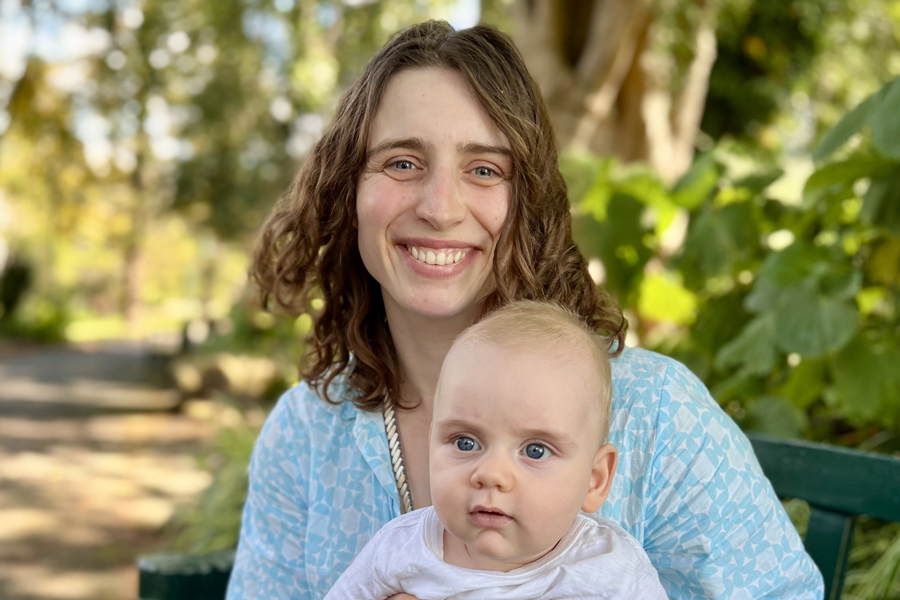
Queensland Trophoblast Centre patient Gabby and baby Sullivan.
Gabby Marosz had never heard of Gestational Trophoblast Disease (GTD) when she went to her 12-week pregnancy scan and got the devastating news that her pregnancy was non-viable due to the condition.
It was 2024, and Gabby’s pregnancy was revealed to be a molar pregnancy, which is a rare occurrence affecting roughly 1 in 1,000 – 2,000 pregnancies.
Gabby had an ultrasound which showed the pregnancy was non-viable and then faced surgery.
She was connected with the team at the Queensland Trophoblast Centre at RBWH, where they would provide support and monitor her pregnancy hormone levels until a time when she was able to fall pregnant again.
Sadly, it would not be the last time she would see the team – with her second pregnancy in late 2024 also forming as a molar pregnancy.
“It was rough, but earlier this year I was fortunate enough to have a healthy, happy boy – Sullivan is now four months old,” Gabby said.
“It was a bit of a waiting game to fall pregnant again, and I was just really unlucky to have this twice in a row.”
The chances of having a second molar pregnancy after the first one increases to 1 in 100, with no real known cause for this.
While Gabby only required surgery and monitoring through the RBWH team, a select number of women with GTD will develop persistent disease and may also need chemotherapy.
RBWH Gynaecologic Oncologist Dr Andrea Garrett said the Queensland Trophoblast Centre would see approximately 250 patients a year, ranging from all parts of Queensland, as well as New South Wales and Tasmania.
“It’s very uncommon to have two molar pregnancies back-to-back like Gabby did. For 85 per cent of our patients, they’ll be monitored by our service and they will have testing every week to two weeks, until their pregnancy hormone levels return to normal and they can go on to try to fall pregnant again,” Dr Garrett said.
“But a small proportion of women will develop persistent disease, and this then behaves like a cancer with deposits going to other places like the lungs, and those women need chemotherapy.
“It’s very treatable, even if they have metastatic disease to their lungs and most women do very well on chemotherapy.
“But we are always so excited and pleased for our patients when they do fall pregnant and have a baby like Gabby – we love to know if they’ve been successful in their pregnancy.”