
Stop The Bleed training equipping everyday Queenslanders with lifesaving skills
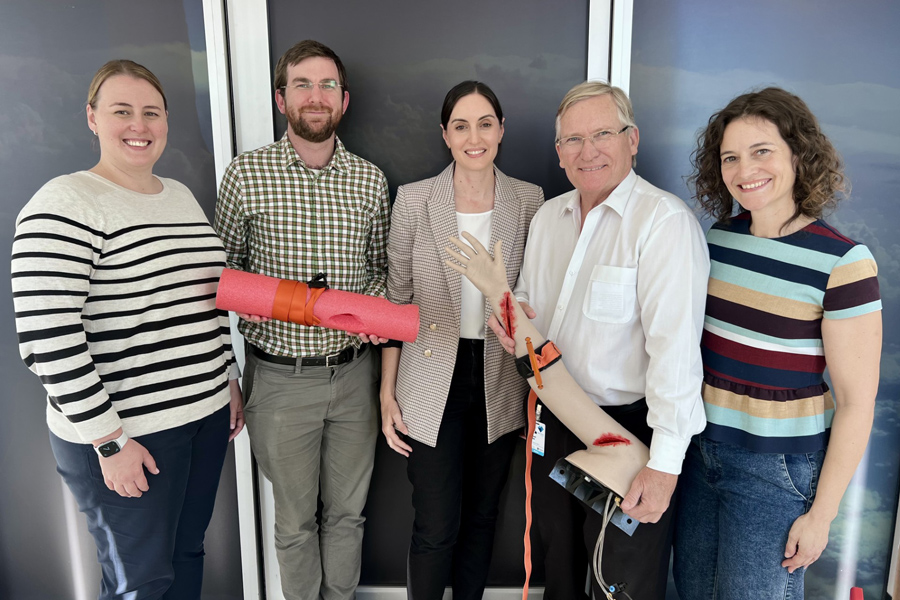
Stop The Bleed Study Investigators (l to r): Jourdy Sweeney – Clinical Nurse, Prevent Alcohol and Risk Related Trauma In Youth (P.A.R.T.Y.) program; Isaac Salisbury – Research Officer JTI; Sarah Pearce – Clinical Nurse JTI and RBWH Trauma Service; Prof Michael Muller – Co-Lead Education and Training Theme JTI, and surgeon, RBWH Trauma Service; A/Prof Silvia Manzanero – Research Coordinator JTI
Metro North Health’s Jamison Trauma Institute (JTI) is implementing new ways for Queenslanders to learn the skills to stop life-threatening uncontrolled bleeding.
Stop The Bleed® training is an international initiative designed to empower as many people as possible with the knowledge and ability to use techniques to stop serious bleeding and save a life.
In 2025, RBWH recorded 2,732 trauma presentations, representing a 4.55% increase compared with 2024. The leading mechanism of injury was road traffic accidents, with haemorrhage identified as the primary cause of preventable mortality in people with traumatic injuries, estimated to be responsible for 40% of all deaths related to trauma.
Evidence indicates that appropriate training to identify and manage major bleeding could improve the frequency and quality of roadside injury care provided by bystanders, potentially saving more lives.
Stop The Bleed training is typically delivered by an in-person instructor, however JTI wanted to maximise the reach of the program to regional Queenslanders, developing a digital training session and assessing whether it was as effective as in person training.
JTI Director and study lead Professor Michael Muller said their vision is that no-one should die of uncontrolled bleeding resulting from trauma.
“We want to introduce every Queenslander to effective bleeding control techniques and give injury scene bystanders the confidence to become immediate responders and save lives,” he said.
“Stop The Bleed is even more applicable in Queensland due to our vast distances. You only have to look at the spate of shark bite injuries in Sydney to know that this could certainly happen on our coastline as well.
“Just one death prevented by Stop The Bleed techniques makes the program worthwhile.”
101 people participated in the study to evaluate the digital training materials, which were co-created with consumers, and clinicians and researchers from JTI, RBWH and Griffith University.
“From the study, we found that both instructor-led and digital training resulted in significantly increased self-rated ability to stop life-threatening bleeding, and participants in both groups were highly knowledgeable of what to do to stop life threatening bleeding after training,” Professor Muller said.
“People who received in-person training were better at physically demonstrating wound packing and tourniquet application techniques. An analysis of the common mistakes made by those who received digital training was conducted, and we are using these findings to improve the digital materials.
“Now that we know that in person skills training is required to ensure a high standard of application, we will be pursuing sufficient trainers to teach the course.
“We will also be improving our digital training based on feedback to allow people from rural and remote areas to benefit from the training, where in-person training would be difficult to access.”
Thanks to Dr Frances Williamson, Dr Rebekah Young, Sarah Pearce and Jourdy Sweeney from RBWH Trauma Service, consumer Matt Jennings, and Associate Professor Silvia Manzanero, Dr Chiara Santomauro, Isaac Salisbury and others for their contributions to digital training materials.