
TPCH raises awareness of sun safety for transplant recipients
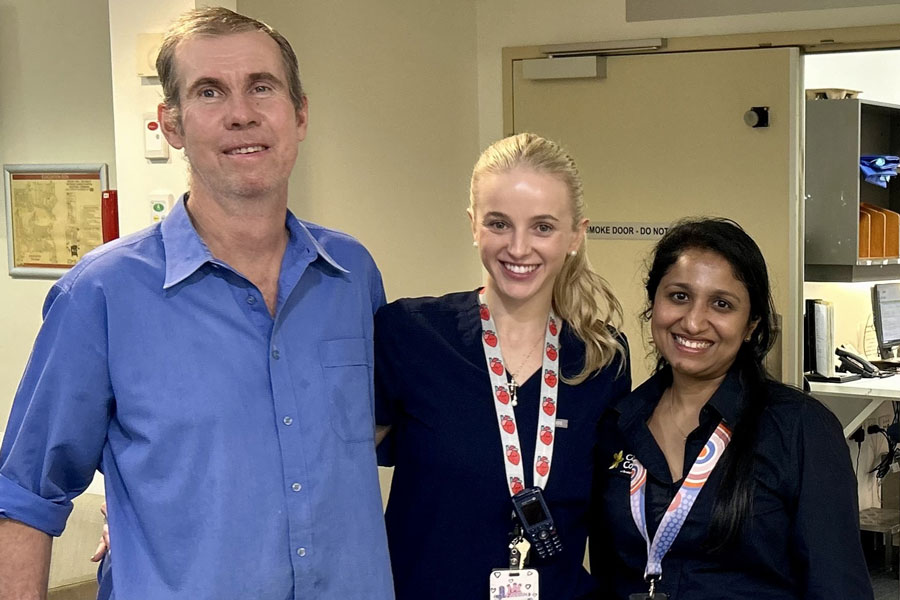
Heart Transplant Consumer John Brennan, Heart Transplant Clinical Nurse Consultant Amber Adamson with Athira Varghese from Cancer Council Queensland at the skin cancer awareness event for transplant recipients.
Queensland has the highest rate of skin cancer in Australia, but did you know skin cancer rates in organ transplant recipients are between 30 and 80 per cent higher than in the general population?
The medicines that stop the body rejecting a new heart or lungs also weaken the skin’s defence against sun damage.
The Prince Charles Hospital (TPCH) is home to Queensland’s primary heart and lung transplant service. It provides hope for patients from Queensland, Northern Territory and northern New South Wales.
Heart Transplant Clinical Nurse Consultant Amber Adamson said skin cancer was one of the most common cancers seen after transplantation, particularly in Queensland where UV levels are high throughout much of the year.
For example, lung transplant patients are 77 per cent more likely to develop an aggressive skin cancer compared to general population in Queensland.
“With organ transplant recipients experiencing significantly higher rates of skin cancer than the general population, making prevention and early detection especially important,” Amber said.
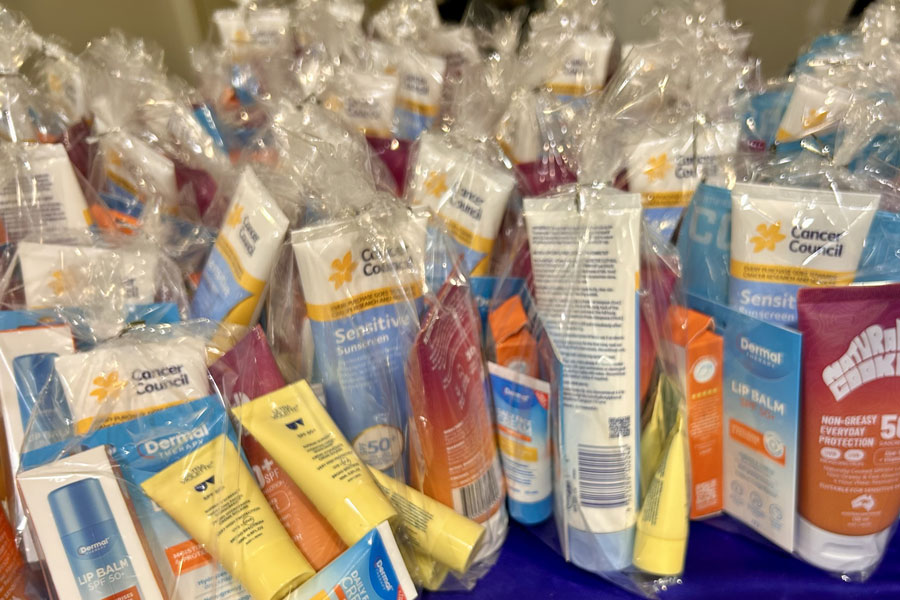
Sun safety packs were provided to patients.
That’s why heart and lung transplant teams at TPCH hosted two skin cancer awareness events during National Skin Cancer Action Week, for transplant patients to learn more about protecting their skin and reducing their risk of skin cancer.
Patients were able to access educational stalls and resources with information about skin cancer prevention.
Sun safety packs with donations from Cancer Council Queensland and sunscreen companies were provided to patients, helping to reinforce important health messages in a positive and engaging way.
A representative from Cancer Council Queensland was also on hand to provide special education and practical advice on skin cancer prevention, sun protection and early detection.
Amber said the awareness stalls focused on practical ways patients could protect themselves every day.
“This includes applying SPF 50 or higher broad-spectrum sunscreen, wearing protective clothing and a hat, seeking shade, checking daily UV levels, and performing regular self-checks of their skin,” Amber said.
“We encourage patients to look for any new or changing spots, sores that do not heal, or areas that bleed, itch or grow quickly and to report these changes promptly to their healthcare team.
“By working together and making sun-safe habits part of everyday life, we can help protect the health and wellbeing of our transplant community for many years to come.”