
Why do I feel exhausted after a good night sleep?
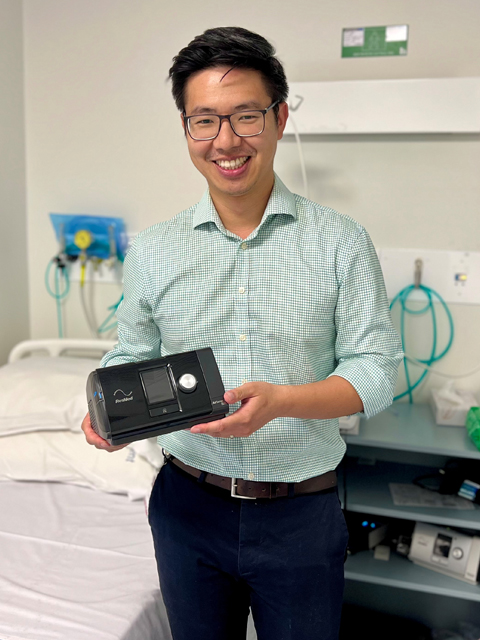
RBWH Director Thoracic Medicine Hervey Lau
If you’ve ever woken up from a seemingly good night’s sleep feeling exhausted, you might have wondered whether there is a deeper underlying issue at play.
Royal Brisbane and Women’s Hospital (RBWH) Director Thoracic Medicine Hervey Lau specialises in sleep disorders and said that while it is important to listen to your body, there is a balance between encouraging people to be mindful of their sleep and avoiding medicalising the issue.
“No one wakes up feeling 100 percent every single day, even after a good night’s sleep, and so that alone is not necessarily a sign of a problem,” Dr Lau said.
“If you’re feeling persistently exhausted despite getting what should be an adequate amount of sleep, or if tiredness is clearly affecting your life, then it may point to an underlying medical or mental health condition.
“Often it is something quite straightforward such as disrupted sleep from young children or pets, or the effects of stress, mood, or a demanding day.
“However, if feeling exhausted after a good night sleep becomes a recurring issue and those factors do not explain it, then it’s sensible to seek medical advice.”
Dr Lau said that there are a range of conditions which could result in someone not feeling well rested, including sleep conditions such as obstructive sleep apnoea or restless legs, mood conditions such as depression, or medical issues such as an underactive thyroid or low iron and vitamin B12 levels.
“If we focus on obstructive sleep apnoea, we traditionally have seen this in middle aged and older men who are overweight,” he said.
“However, that picture is changing. With better access to testing, we are diagnosing it more often in women and younger people.
“They may present differently, which can lead to it being missed. Rather than loud snoring or a partner noticing pauses in breathing, women in particular may present with insomnia or describe ongoing poor sleep quality as their main concern.”
Overarchingly, Dr Lau said that insufficient sleep is still the most common cause of sleepiness and that making sleep a priority without stressing over it should be everyone’s priority.
“If you’re experiencing ongoing issues, a sleep study is often a good place to start,” he said.
“Through RBWH’s partnership with the Hospital in the Home service, many sleep studies can now be done in a patient’s own home. A trained scientist sets up the equipment in the evening and it is collected the next morning by the team for analysis. This has made testing much more accessible than ever before.
“A sleep study gives us detailed information about breathing during sleep, oxygen levels, sleep stages, and movement. Depending on the diagnosis, there are several treatment options available.
“One myth worth dispelling is that treatment for obstructive sleep apnoea is limited to CPAP. There are now a number of approaches, and treatment can often be tailored to the individual.”
For more information, visit Thoracic Medicine | Royal Brisbane and Women’s Hospital