
Getting back to the basics of back pain
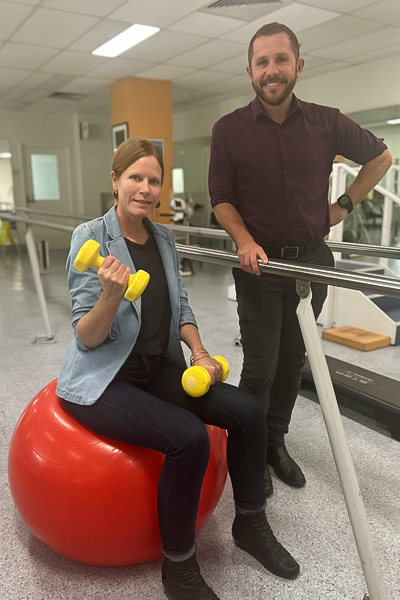
Physiotherapy researchers Assoc Prof Samantha Bunzli and Dr Peter Window say it’s important for people to be aware of the misconceptions around low back pain that can be unhelpful during recovery.
Low back pain is the leading cause of disability worldwide, with over 600 million people living with low back pain at any one time.
Approximately 90% of low back pain is non-specific, meaning there is no clear pathology or anatomical cause.
In many cases, it can be highly debilitating and can impact a person’s physical and emotional wellbeing, and is a leading cause of work absenteeism among people of working age.
Researchers from the Royal Brisbane and Women’s Hospital (RBWH) are working to reduce the gap between common beliefs about low back pain and what evidence actually says, highlighting various myths and misconceptions that can be unhelpful during a person’s recovery.
RBWH Physiotherapist Assoc Prof Samantha Bunzli said it is important for people to be aware of the various misconceptions relating to low back pain. She explains these are called ‘misconceptions’ because they don’t align with what the science tells us:
Misconception 1: Low back pain is usually a serious medical condition
Misconception 2: Low back pain will become persistent and deteriorate in later life
Misconception 3: Persistent low back pain is always related to tissue damage
Misconception 4: Scans are always needed to detect the cause of low back pain
Misconception 5: Pain related to exercise and movement is always a warning that harm is being done to the spine and a signal to stop or modify activity.
Assoc Prof Bunzli explains that back pain often results from a lack of movement and should not cause alarm.
“When someone is sedentary this can lead to their back muscles tightening and becoming overly stiff. Often people will feel like they’ve pulled something or ‘put their back out’ from simple movement such as bending over or even just sneezing,” she said.
“In most cases, the person has simply experienced a muscle spasm – it might be a simple cause, but it doesn’t take away from how painful it can feel.
“When someone experiences back pain, it is very common for them to feel worried they have damaged their back. Their natural reaction is often to ‘protect the area’ by bracing the body and stopping moving.
“While reducing the amount of movement for a couple of days is okay, ceasing movement completely can actually make the pain worse and prolong recovery.”
RBWH Physiotherapist and Metro North Clinical Research Fellow Dr Peter Window outlines some common steps people should take if they experience an episode of back pain:
Managing back pain
- Avoid bed rest where possible
- Remain active, find gentle ways to move that don’t increase your pain. Some movement is better than no movement.
- Try to relax the muscles in the back and torso
- Avoid bracing – remember the back is strong
- Reassure yourself your back is okay, and back pain is not dangerous
- Try gentle walking
- Consider a short trial of non-steroidal anti-inflammatories (e.g. ibuprofen) if you are able to take these.
When to see a health professional
Dr Window says that while the majority of back pain can be self-managed, there are some symptoms which are serious and require a visit to the emergency department or health professional:
- Loss of bowel and/or bladder function
- Inability to walk
- Noticeable muscle weakness e.g. foot drop
- Loss of sensation in saddle or genital area
- Pain from high impact injury such as a fall or sporting injury
- Family history of cancer
- Night-time related back pain
- Back pain that extends beyond 3 months with little or no improvement.
“While it is natural to be worried that back pain is serious, less than 1% of individuals with back pain require surgery,” Dr Window said.
“The good news is that most people improve substantially within 6 to 12 weeks.”
Prevention is key
Dr Window explains that physical movement is key to preventing back pain.
“Our bodies including our backs were made to move, so it’s essential people keep up with regular movement, to help maintain strength and flexibility, as well as avoid injury,” he said.
“Having varied exercise is important where possible, to help the body get used to moving in different ways. Finding an activity, you enjoy will help keep you motivated to move.”
Assoc Prof Bunzli says that lifestyle factors also play an underappreciated role when it comes to preventing back pain.
“Sleep, stress and diet are important contributors as they directly affect the environment our body operates in. If one or more of these factors are not balanced, this can increase our risk of developing ailments like colds and flu, and our risk of physical ailments such as low back pain also,” she said.
“The right information, regular movement and healthy lifestyle habits can help people recover from an episode of back pain and prevent reoccurrence.”