
Metro North innovation graduates are taking their learning to a higher level
Leading Health Innovation Program graduates
PhD graduate
PhD candidates
Masters candidates
Metro North Leading Health Innovation graduates are taking their implementation science and innovation knowledge to new heights with further academic study.
The Metro North Leading Health Innovation program has proven to be a pivotal career turning point for 188 health service innovation students since the program started in 2018. As each cohort of students tackles new challenges in health service innovation, an increasing number of graduates are choosing to take on further their higher education studies.
For Assistant Director (Innovation and Implementation) Safety and Quality Dr Champika Pattullo, what started as a quality improvement activity at the RBWH has grown into a groundbreaking opioid stewardship program and a completed PhD.
“The graduate certificate program opened my eyes to the world of implementation science and innovation. It gave me the confidence to explore my questions through a PhD,” Dr Pattullo said.
Across Metro North, graduate certificate alumni are driving patient-focused innovation across the health service and beyond, applying their big picture systems thinking to make bold decisions and deliver big outcomes for our patients and the health service.
The Metro North Graduate Certificate program continues to foster a network of like-minded clinicians who are leading innovation, research, healthcare improvement and knowledge translation.
RBWH and STARS head and neck surgeon Dr Sarju Vasani completed the program in 2023.
“When I walk into meetings focused on improvement or change, I am often greeted by another Graduate Certificate alumnus. There is an immediate sense of shared perspective – we speak a common language and approach problems in similar ways,” Dr Vasani said.
He is among the many graduates who are taking their lessons learnt through practical, real-world application to tackling new challenges every day and making bold changes underpinned by rigorous academic training in implementation science and innovation methodologies.
In their own words – Metro North innovators are leaders in driving sustainable change
Dr Irene Szollosi
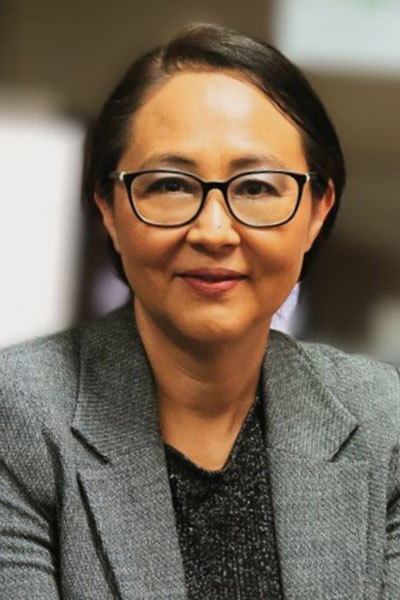
Dr Irene Szollosi
Metro North Director of Sleep Sciences Dr Irene Szollosi is taking her new toolbox of theories, models and frameworks to improve the way we organise and manage our teams, workflows and models of clinical care.
Dr Irene Szollosi has built an impressive career as a clinician researcher dedicated to advancing the way we deliver sleep disorder services.
Through completing the Graduate Certificate in Health Services Innovation, her approach to clinical care and research has evolved.
“Since undertaking the Graduate Certificate, my thinking has shifted from asking where an intervention is effective, to considering how can we ensure effective interventions are successfully adopted?” Dr Szollosi said.
“What I have learned has really allowed me to shift my focus from efficacy to real-world effectiveness.”
A key outcome of this shift has been a deeper appreciation and understanding of the broader systems in which healthcare operates, including organisational culture, individual behaviours and system constraints that influence the adoption and sustainability of an intervention.
“This systems view is particularly important in how we organise and manage our teams, workflows and models of care,” she said.
“Understanding these barriers has really enabled me to develop tailored strategies to support change at both the individual and organisational level.”
As the Director of Sleep Sciences at The Prince Charles Hospital and Honorary Senior Research Fellow with the University of Queensland School of Biomedical Sciences, Dr Szollosi is a strong advocate for research and innovation as drivers of continuous service improvement.
“The Graduate Certificate gave me a whole new toolbox of theories, models and frameworks which I have used to expand my research skills into qualitative, mixed methods and health economics research.”
Dr Irene Szollosi completed the Graduate Certificate in Health Services Innovation in 2023. The Leading Health Services Innovation program was sponsored by Metro North Health. The program was collaboratively developed and delivered by QUT.
Sharon Hodby
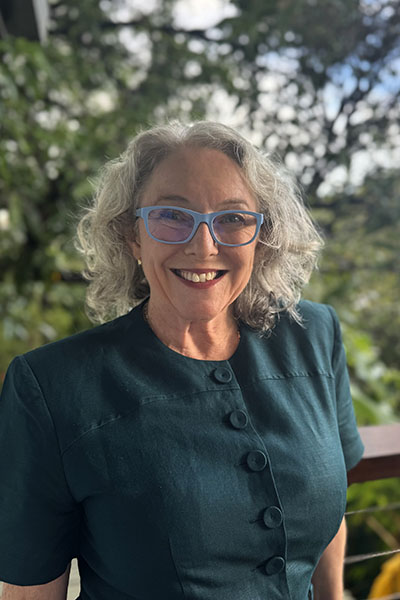
Sharon Hodby
Leading meaningful, system-level change across Metro North is the goal for Sharon Hodby, and sharing her knowledge and skills is the inspiration for new generations of innovators.
The Leading Health Services Innovation Program has equipped Sharon Hodby with the skills and experience to lead meaningful, system-level change across Metro North.
As the project lead responsible for establishing the HELIX Hub and in her current work as a Research Nurse Coordinator with the Older Persons Emergency Network (OPEN), Sharon has applied the practical implementation science skills gained through the program to shape how innovation is designed, evaluated and embedded into everyday practice.
“Like so many other graduates of the program, I have really enjoyed not only applying my learnings to my own practice but also sharing this knowledge and skills with countless other Metro North change markers,” Ms Hodby said.
The Leading Health Services Innovation program has also marked the beginning of a PhD journey for Ms Hodby, inspiring her to delve deeper into her innovation expertise.
“The Graduate Certificate gave me the tools and confidence to lead innovation from idea to impact, and it marked the start of my PhD research journey focused on embedding evidence into everyday practice,” Ms Hodby said.
Her PhD program seeks to build on her current work with the Older Persons Emergency Network (OPEN) to ensure innovation remains grounded in the needs of the older people, clinicians and teams delivering care across the health care system.
In recent years, the Graduate Certificate has supported Sharon to move innovation from concept to sustained reality – underpinning award recognised initiatives, strengthening her evaluation and data capability, and building shared ways of working that support evidence informed improvement.
Sharon Hodby completed the Graduate Certificate in Health Services Innovation in 2023. The Leading Health Services Innovation program was sponsored by Metro North Health. The program was collaboratively developed and delivered by QUT.
Dr Sarju Vasani
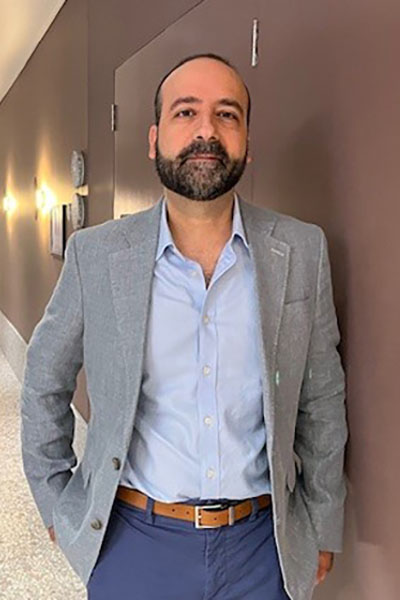
Dr Sarju Vasani
Metro North change maker Dr Sarju Vasani is providing a bridge between the bedside and the boardroom to ensure the voices of patients and clinicians inform decision-making at the highest level.
As an experienced Head and Neck surgeon at the RBWH and STARS, Dr Sarju Vasani is committed to shaping a better future for his patients. As a Leading Health Services Innovation program graduate, Dr Vasani has not only acquired tools and frameworks to innovate and implement change, but also a new lens to view health care through.
“The graduate certificate did more than teach me about innovation – it connected me to a community, a purpose, and a responsibility to help shape a better future for my patients,” Dr Vasani said.
“The Graduate Certificate in Health Services Innovation at QUT reshaped how I see my role within the health service – and my capacity to create meaningful change within it.”
“I no longer see myself as simply working within the existing constraints of the organisation, but as someone who can question and shape the systems around me.
One of the most valuable shifts for Dr Vasani has been learning to act as a bridge between the bedside and the boardroom.
“The program gave me the confidence and language to translate frontline experiences into strategic conversations, ensuring that the voices of patients and clinicians inform decision-making at the highest level,” he said.
“Innovation became less about abstract concepts and more about aligning purpose, people, and practice in the most effective ways.”
An unexpected but powerful outcome from undertaking the graduate certificate has been the network of like-minded change makers it has created.
“Now, when I walk into meetings focused on improvement or change, I am often greeted by another Graduate Certificate alumnus. There is an immediate sense of shared perspective – we speak a common language and approach problems in similar ways. That network continues to support me and reinforces that meaningful change happens collaboratively, not in isolation,” he said.
Perhaps most importantly, the program has shaped how he supports and teaches the next generation of change-makers.
“It reinforced my belief that innovation is not confined to leadership roles – it can be learned and embedded at every level. Real change is driven from the bottom up, by individuals who are empowered to question, improve, and act within their own clinical environments. Innovation thrives when individuals have the confidence to express their ideas openly.
Dr Sarju Vasani completed the Graduate Certificate in Health Services Innovation in 2023. The Leading Health Services Innovation program was sponsored by Metro North Health. The program was collaboratively developed and delivered by QUT.
Leonie Beakey
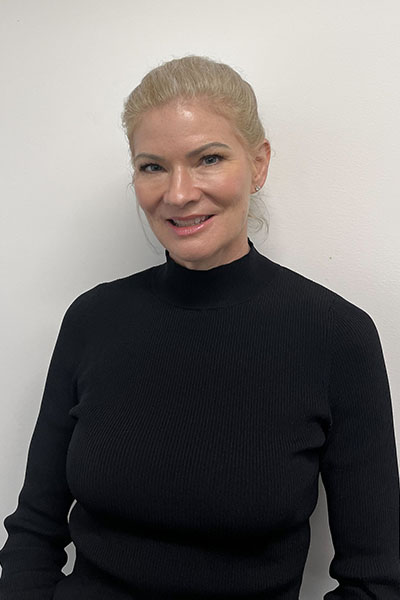
Leonie Beakey
Health services innovation program provides the academic structure and analytical rigour needed to elevate health information management practice and innovation.
As a Health Information Manager, Leonie Beakey has always been committed to improving the systems and processes that support quality health data.
“The impact of the evolving demands placed on clinical coding teams was something I was passionate about addressing,” she said.
The program enabled me to apply evidence-based frameworks in real time to my project aimed at understanding and addressing the challenges of managing Clinical Coding teams in high audit environments.”
Completing the Graduate Certificate provided her with the academic structure and analytical rigour she needed to elevate her work.
“For me, studying innovation science as a non-clinical professional was an invaluable experience,” Ms Beakey said.
“Implementation science offers a clear pathway for identifying opportunities, testing ideas, and implementing sustainable improvements.”
Ms Beakey believes innovation science reinforces that progress comes from learning through both success and failure, and from approaching complex problems with curiosity and discipline.
“I have come to appreciate that leaving a legacy in your chosen field is not only about the outcomes we achieve but also about the knowledge we share, the people we mentor, and the innovative approaches we model,” she said.
“I have benefitted from the enduring relationships, the continued connections and mutual mentorship with peers from the Leading Health Services Innovation program. There is a network of supportive alumni contributing to the continued improvement of our health services.
“It has been my privilege to continue to support this network from a Health Information Management perspective while in roles at Caboolture Hospital, then as the Queensland Health State Coding Educator and now as the Principal Analyst for the department Health Funding Information Systems team.”
Leonie Beakey completed the Graduate Certificate in Health Services Innovation in 2020. The Leading Health Services Innovation program was sponsored by Metro North Health. The program was collaboratively developed and delivered by QUT.
Dr Kumar Raghav
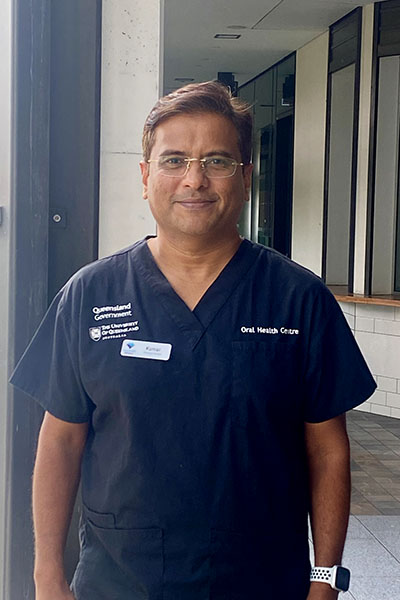
Dr Kumar Raghav
Building upon a strong foundation of research, Dr Kumar Raghav has leveraged his newfound skills and expertise to move beyond identifying problems to designing scalable, measurable solutions.
The Graduate Certificate in Health Services Innovation program has had a transformative impact on the careers of many graduates, including recent graduate Dr Kumar Raghav.
“This program strengthened my ability to lead evidence-based service improvement at both clinical and organisational levels” he said.
“The program has enabled me to move beyond identifying problems to designing scalable, measurable solutions.”
The impact of the program goes beyond structured methodologies, implementation plans and theories, and really fosters leadership in innovation.
“This program has enhanced my leadership capability in delivering projects that improve patient outcomes, workforce efficiency, and value-based care, shifting my career from being solely clinically focused to becoming a clinician leader in real-world health service transformation,” Dr Raghav said.
As a program designed to enhance the capability of students in implementation science, service redesign, and change leadership, it is no surprise that Dr Raghav and other graduates have applied their skills and knowledge to translate evidence into practical quality improvement initiatives.
“The program has enabled me to secure funding for projects that have streamlined clinical workflows, reduced treatment delays, and improved patient comfort and outcomes,” he said.
With a strong research background in behavioural dentistry, Dr Raghav gained extensive experience in generating and applying evidence through systematic reviews and research methodologies thanks to his PhD.
“The Graduate Certificate has helped me build on this in a more practical way. It has strengthened my ability to generate local, service-level evidence and better understand how to apply implementation science in real clinical settings,” he said.
“It has also improved my confidence in using health economics when evaluating clinical decisions and improvement projects. Overall, it has helped me bridge the gap between academic research and practical, value-based improvements in health services.”
Dr Kumar Raghav completed the Graduate Certificate in Health Services Innovation in 2025. The Leading Health Services Innovation program was sponsored by Metro North Health. The program was collaboratively developed and delivered by Griffith University.
Dr Katrina Dunn
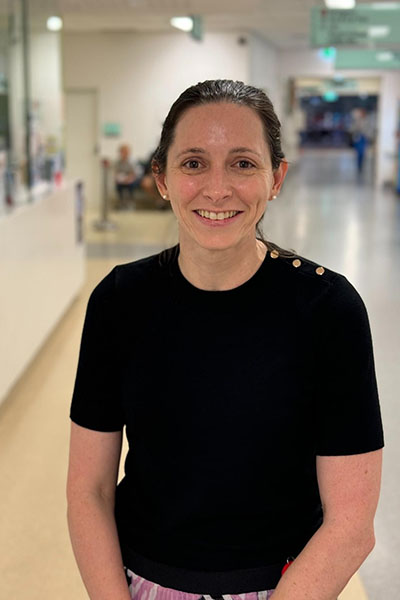
Dr Katrina Dunn
Graduate Certificate program turns pivotal career transition point into a health care leadership and innovation success story for Dr Katrina Dunn.
As Director of Allied Health at Redcliffe Hospital, Dr Katrina Dunn knows all too well the importance of strengthening the quality and efficiency of the health care services we provide.
“The Graduate Certificate in Health Services Innovation consolidated and extended my leadership capability at a pivotal career transition point,” she said.
“The program strengthened my system level perspective and enhanced my confidence in leading complex change across multidisciplinary services.”
With an Honorary Research Fellow appointment with the University of Queensland School of Health and Rehabilitation Sciences, Dr Dunn models the importance of embedding research within clinical practice and service delivery.
Her PhD studies investigated dysphagia following non-traumatic subarachnoid haemorrhage, and her research interests are diverse across neurogenic swallowing and communication impairments, as well as optimising health service delivery.
“The program complimenting my research experience with practical innovation, implementation, and health system design skills,” Dr Dunn said.
“The course has directly influenced my professional practice by strengthening my ability to translate improvement initiatives into practice.”
An added benefit of the Graduate Certificate in Health Services Innovation program for many recent graduates is the opportunity to develop strong peer network.
“My Graduate Certificate peer network, or ‘FabCerties’ as we call ourselves, continue to provide a trusted forum for shared learning, problem solving and cross sector perspectives,” Dr Dunn said.
“The program has also enabled me to better equip teams with the right evidence at the right time, support clinically led innovation, and promote evidence informed practice that is feasible, meaningful, and sustainable within complex health system contexts.
“The graduate certificate has strengthened my ability to apply evidence pragmatically within real world health system constraints.”
Dr Katrina Dunn completed the Graduate Certificate in Health Services Innovation in 2025. The Leading Health Services Innovation program was sponsored by Metro North Health. The program was collaboratively developed and delivered by Griffith University.
Perry Judd
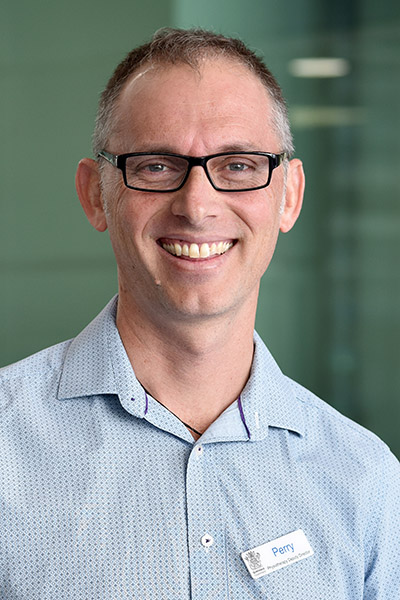
Perry Judd
Emerging leader leverages the depth of skills and vast opportunities cast by the Graduate Certificate program to build a strong leadership career.
As Director of Allied Health at The Prince Charles Hospital (TPCH), Perry Judd is seeing the benefit of his Graduate Certificate in Health Services Innovation studies extend beyond his own professional career.
“Completing the Grad Cert in Health Innovation definitely had a positive impact on my career,” he said.
“As an experienced but still emerging leader, it gave me the tools, connections and confidence to take the next step into executive roles.”
The program is designed to upskill students in health services innovation and implementation science.
“The course improved my critical thinking, allowing me to ask the right questions: ‘how do we know this is a problem, and will the proposed solution address it?’” Mr Judd said.
“It also taught me to articulate implementation science concepts to senior leaders. I have no doubt that these skills made a significant difference in my ability to secure more senior roles in the organisation.”
Mr Judd said he constantly uses the skills gained through the program to support innovation, model of care development and the introduction of new technology.
“Our strategic plans are underpinned by system level thinking, prioritising translation of evidence using robust methodologies,” he said.
“The result is that our patients have benefited from the improved sustainability of implemented service models and innovative applications of technology as well as the de-implementation of low value care.”
The TPCH Allied Health Research Collaborative (AHRC) group includes Implementation Science and Health Economics experts. Mr Judd feels one of the best aspects of his work guiding and championing their work.
“The Graduate Certificate program has given me the ability to ‘speak their language’ and contribute to robust and energising discussions to develop our research strategy,” he said.
“I have supported them to generate new research project ideas, and see them through to successful completion (and translation).
“This has resulted in the AHRC achieving over $10M in grant funding last year, 90 publications and currently supporting almost 220 active research projects.”
Perry Judd completed the Graduate Certificate in Health Services Innovation in 2019. The Leading Health Services Innovation program was sponsored by Metro North Health. The program was collaboratively developed and delivered by QUT.
Ansuyah Padayachee

Ansuyah Padayachee
As Director of Allied Health for the Caboolture Kilcoy Woodford Directorate, Ansuyah Padayachee believes the Graduate Certificate of Health Services Innovation program has had a significant and positive impact on her career and made her a more strategic Director of Allied Health.
“The program has strengthened my ability to apply implementation science principles to complex health system challenges, sharpened my critical thinking, and gave me greater confidence in engaging with executive and senior clinical leaders,” Ms Padayachee said.
“It has strengthened how I lead, design and sustain change across allied health services, innovate within local health system constraints and pivot around healthcare priorities.”
“What I have learned has shifted my approach from focusing on what to implement to how evidence based practice is effectively embedded in real world clinical settings.”
As a graduate of the program, Ms Padayachee has been provided with invaluable opportunities to build relationships and networks across Metro North, connecting with a high performing alumnus of leaders from diverse areas of health.
“These connections continue to influence my practice, enabling shared learning, collaboration, and a more strategic approach to leading sustainable change across the organisation,” she said.
“Importantly, it enhanced my ability to articulate implementation concepts to senior leaders, supporting informed decisions around sustainability, resource allocation, and scalable improvements.”
The program reinforces the importance of stakeholder engagement across clinicians, consumers and executive leaders, improving team ownership, capability, and engagement in change initiatives.
“I try to ensure that staff have a clearer understanding of purpose, success measures, and their contribution to patient outcomes, fostering a culture of continuous improvement and evidence-based decision making,” Ms Padayachee said.
As an academic program, the knowledge and skills gained in practical tools, theories and frameworks is making a difference every day in her own leadership and practice.
“The application of theory driven frameworks such as CFIR and RE AIM enhanced my ability to clearly define interventions, understand context, and proactively address barriers and enablers, resulting in more rigorous planning, clearer governance, and greater confidence in leading complex system level change,” Ms Padayachee said.
It enhanced my confidence and capability to bridge research and clinical practice by equipping teams with the right evidence at the right time, supporting clinically led innovation, and engaging effectively with researchers and clinicians to drive feasible, sustainable, and high impact implementation.
Ansuyah Padayachee completed the Graduate Certificate in Health Services Innovation in 2022. The Leading Health Services Innovation program was sponsored by Metro North Health. The program was collaboratively developed and delivered by QUT.