Home2026-06-23T15:32:34+10:00

Community and Oral Health

Connecting care for better health.

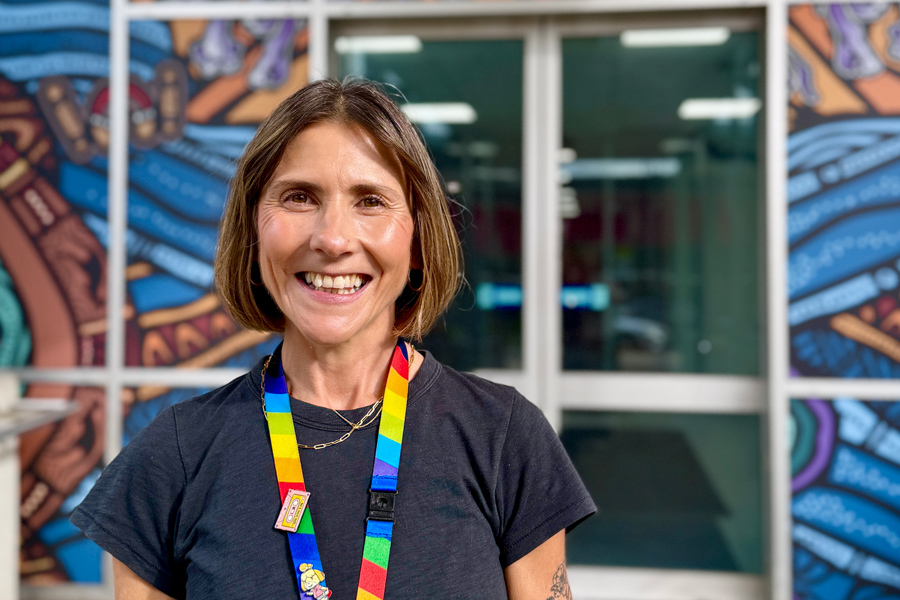
Healthcare services

A list of available community healthcare services.

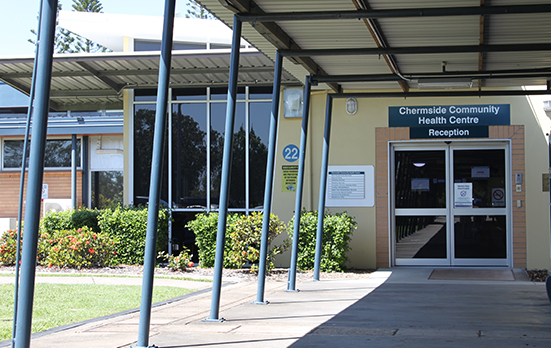
Locations

Location information for our healthcare services.

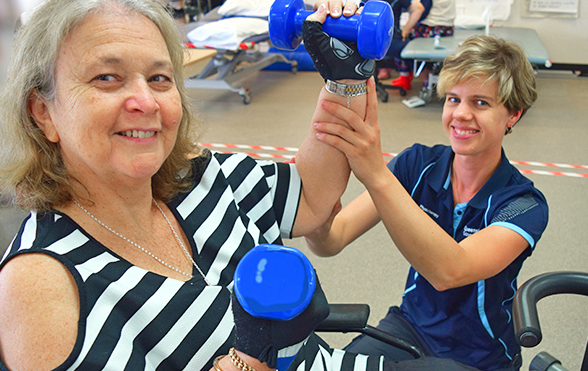
Healthcare professionals

Referral processes and information for GPs and other health professionals.

Careers

We are delivering the best care by the brightest healthcare professionals.

Latest news

Events

26
Aug
2026

Advanced Life Support – Level 1 Course

Time: TBC
Venue: The Prince Charles Hospital

Level 1 courses are for those clinicians who want general competence in airway management and basic life support for a deteriorating patient and cardiac arrest. Suitable if you normally are part of team rather than the lead.

Professional development

9
Sep
2026

Advanced Life Support – Level 1 Course

Time: TBS
Venue: The Prince Charles Hospital

Level 1 courses are for those clinicians who want general competence in airway management and basic life support for a deteriorating patient and cardiac arrest. Suitable if you normally are part of team rather than the lead.

Professional development

/ MetroNorthHHS

Comments Box SVG iconsUsed for the like, share, comment, and reaction icons
In honour of her late nanna, TPCH Registered Nurse Maddy has recently returned from swimming the English Channel in just 10 hours and 26 minutes! 🏊❤️‍🩹

Maddys desire to pursue nursing was born out of wanting to care her for nanna in her last years - with the swim an added dedication to her special relative, having undertaken the gruelling challenge on her late nannas birthday.

I stopped competitive swimming when I started nursing in 2021 just because it was quite hard to do shift work and do competitive swimming. So when my nanna passed away, I wanted to do something her for which was to swim the channel and also raise money for Dementia Australia, Maddy said. 

I had a window from the 21st to the 28th and her birthday was the 22nd. They were going to send me on the first day but decided the second day was looking way better - it was pretty special to do it this day.

My nanna always wanted everyone around her to be a nurse as she wanted to be a nurse herself. I wanted to learn how to help my nanna with her Alzheimers Disease because she had it for 20 years before she died at 94, it progressively got worse and I wanted to help her out as best I can.

#ShoutoutSaturday to Maddy and her dedication to helping her nanna, and others at TPCH.
22 August 2026

In honour of her late nanna, TPCH Registered Nurse Maddy has recently returned from swimming the English Channel in just 10 hours and 26 minutes! 🏊❤️‍🩹

Maddy's desire to pursue nursing was born out of wanting to care her for nanna in her last years - with the swim an added dedication to her special relative, having undertaken the gruelling challenge on her late nanna's birthday.

"I stopped competitive swimming when I started nursing in 2021 just because it was quite hard to do shift work and do competitive swimming. So when my nanna passed away, I wanted to do something her for which was to swim the channel and also raise money for Dementia Australia," Maddy said.

"I had a window from the 21st to the 28th and her birthday was the 22nd. They were going to send me on the first day but decided the second day was looking way better - it was pretty special to do it this day.

"My nanna always wanted everyone around her to be a nurse as she wanted to be a nurse herself. I wanted to learn how to help my nanna with her Alzheimer's Disease because she had it for 20 years before she died at 94, it progressively got worse and I wanted to help her out as best I can."

#ShoutoutSaturday to Maddy and her dedication to helping her nanna, and others at TPCH.
... See MoreSee Less

Comment on Facebook

Nice work Maddy! What an incredible achievement!

Well done!

Go Maddy!! Make your Nana and TPCH proud!🥰💪💪💪❤️

Good job beautiful young lady go well keep safe all nurses are valued.

Well done, what a fantastic achievement 👏

Well done Maddy! What an amazing achievement.

Amazing!

Nursing is the most rewarding work. Especially caring for a nana

Good on you, Nurse Maddy!

🌟🌟🌟

Well done.

👏👏👏👏👏👏👏👏👏👏👏👏👏👏👏👏👏👏👏👏

Well done 🎉👏💐

Wooo go girl 🥰

View more comments

From prosthetic legs to spinal braces, this team gets creative when it comes to helping patients get back on their feet. 🦿
 
Prosthetist Orthotists Rachel and Alyssa work with patients to find their perfect fit of a prosthetic or orthotic device to help them kick goals on their recovery journey.
 
It is a pretty niche profession, and each day is different. We see outpatients where we assess them and make something custom, but we are also on the wards fitting off the shelf devices and we also do specialty clinics, Alyssa said.
 
There is a lot more to orthotics than just foot orthotics which is what people think of firstly, orthotics is any externally applied supportive device so that could be a knee brace, or an abdominal binder or a halo, Rachel said.
 
One of my favourite parts of the job is that we do our assessment, make the patient a device and typically the patient feels the effects of our work instantly, someone could come in in a wheelchair not being able to walk, you give them a prosthesis or an orthosis and they can walk that day, Rachel added. 🤍
21 August 2026

From prosthetic legs to spinal braces, this team gets creative when it comes to helping patients get back on their feet. 🦿

Prosthetist Orthotists Rachel and Alyssa work with patients to find their perfect fit of a prosthetic or orthotic device to help them kick goals on their recovery journey.

"It is a pretty niche profession, and each day is different. We see outpatients where we assess them and make something custom, but we are also on the wards fitting off the shelf devices and we also do specialty clinics," Alyssa said.

"There is a lot more to orthotics than just foot orthotics which is what people think of firstly, orthotics is any externally applied supportive device so that could be a knee brace, or an abdominal binder or a halo," Rachel said.

"One of my favourite parts of the job is that we do our assessment, make the patient a device and typically the patient feels the effects of our work instantly, someone could come in in a wheelchair not being able to walk, you give them a prosthesis or an orthosis and they can walk that day," Rachel added. 🤍
... See MoreSee Less

Comment on Facebook

In our primary school class we had a kid with a crude form of prothesis,(early 70s). He used to bop us over the head with it. He would say he never felt a thing.

How do you become an orthotist?

Always so helpful with our custom requests 🫶🙌

Well done ladies! Maybe I will get to meet you soon with a new patient. 🙏

View more comments

Did you know that not every stroke looks the same? Whilst you may think you know what a stroke looks like, it can present differently in different people. 

Claire who is a Senior Staff Specialist (Stroke) at the RBWH says that whilst there are common symptoms that are well recognised as a stroke, patient demographics like age or gender may play a part in a diagnosis. 

The most common and recognisable symptoms of a stroke is that weakness on one side, heavy bruises, slurring your words or having trouble speaking, words coming out as nonsense words and facial droop is also probably a common and recognisable one, Claire said. 

To a certain degree, symptoms in younger people can present a little bit differently, so when were talking someone under the age of 40, doctors arent always expecting to see a stroke. However, younger people may also compensate better for the symptoms, such as milder weakness whereas in the older population it is clearer.

Because of the difference in presentation, Claire and her colleagues are skilled at detecting strokes in any age group.
20 August 2026

Did you know that not every stroke looks the same? Whilst you may think you know what a stroke looks like, it can present differently in different people.

Claire who is a Senior Staff Specialist (Stroke) at the RBWH says that whilst there are common symptoms that are well recognised as a stroke, patient demographics like age or gender may play a part in a diagnosis.

"The most common and recognisable symptoms of a stroke is that weakness on one side, heavy bruises, slurring your words or having trouble speaking, words coming out as nonsense words and facial droop is also probably a common and recognisable one," Claire said.

"To a certain degree, symptoms in younger people can present a little bit differently, so when we're talking someone under the age of 40, doctors aren't always expecting to see a stroke. However, younger people may also compensate better for the symptoms, such as milder weakness whereas in the older population it is clearer."

Because of the difference in presentation, Claire and her colleagues are skilled at detecting strokes in any age group.
... See MoreSee Less

Comment on Facebook

Such a powerhouse of a physician!

Looking beautiful Claire 💗🥰 you are amazing!

Brilliant, compassionate and dedicated - you are so inspiring Claire!

Such a wonderful neurologist and mentor to junior doctors 😊😊😊

I was sent relieving to emergency one night. I was assigned to a young female patient in her twenties who had a stroke and ended up with aphasia. She was so frightened. Thankfully her parents were there, and they were a huge help in calming her. Those parents were real champions and a big help to the patient and the staff.

Very nice meeting you last weekend in Sydney. Great work

My husband had a stroke in his 30s. He was fit and healthy. He described it at the time as one side of him was in darkness and there was a fear in his eyes. His speech wasn’t impacted and his face didn’t droop. When the ambulance arrived, considering his age they thought he’d torn a muscle in his neck or something but luckily they still took him to hospital. It turned out his stroke was caused by a hole in his heart.

View more comments

19 August 2026

Anaesthetic Healthcare Practitioner trainees Nick and Holly have gained invaluable experience during their first year, working alongside surgeons, anaesthetists and nurses inside the operating theatre.

If you are currently completing your Diploma of Anaesthetic Technology and want to gain hands-on experience or have recently graduated and are looking to launch your perioperative career as an AHP, check out the opportunities linked below and apply today. #WorkforusWednesday

apply-springboard.health.qld.gov.au/jobs/QLD-RBH689518
apply-springboard.health.qld.gov.au/jobs/QLD-RBH689453
... See MoreSee Less

Comment on Facebook

Great work Nick and Holly!

Well done Holly and Nick 😁 great to see young techs out there!

"Listen, I'm just going to get a cuppa. Can ya Keep an eye on these gadgets until I get back - thanks."..............................(What!? Don't leave me here alone!)...."Yeah sure, no problem."

Can you pls tell me where you are studying? Thx 🤗

Emergency theatre is interesting. A tarp full of empty blood product containers. I looked over my shoulder one day when I was scrubbed in the emergency theatre and all the empty blood product containers were on a large theatre cloth behind the anesthetist and his offsiders. We had three surgical teams working in that theatre that day - bad car accident.

View more comments

World-first research being conducted at TPCH offers hope for earlier diagnosis of occupational lung diseases including silicosis. 🫁

Australias first dedicated PExA (Particles in Exhaled Air) machine was funded by The Prince Charles Hospital Foundation through its Tradie Health Institute initiative.

Professor Dan Chambers, Senior Thoracic Physician and Head of Research at the Queensland Lung Transplant Service said this technology represents a significant change in what is possible for workers at risk. 

“We’re trialling a new technology that can detect tiny particles from the deepest part of the lungs using a breath sample, and this could allow us to identify disease much earlier, before serious damage occurs, he said.

“Positioning Queensland at the forefront of global efforts to detect occupational lung disease earlier, more safely and more precisely than ever before, our research has the potential to reshape how these conditions are identified, monitored, treated, and ultimately prevented.
 
“What excites us is not just better diagnosis, but the possibility of earlier intervention. If we can identify disease at a much earlier stage, we have a real opportunity to change outcomes.
18 August 2026

World-first research being conducted at TPCH offers hope for earlier diagnosis of occupational lung diseases including silicosis. 🫁

Australia's first dedicated PExA (Particles in Exhaled Air) machine was funded by The Prince Charles Hospital Foundation through its Tradie Health Institute initiative.

Professor Dan Chambers, Senior Thoracic Physician and Head of Research at the Queensland Lung Transplant Service said this technology represents a significant change in what is possible for workers at risk.

“We’re trialling a new technology that can detect tiny particles from the deepest part of the lungs using a breath sample, and this could allow us to identify disease much earlier, before serious damage occurs," he said.

“Positioning Queensland at the forefront of global efforts to detect occupational lung disease earlier, more safely and more precisely than ever before, our research has the potential to reshape how these conditions are identified, monitored, treated, and ultimately prevented.

“What excites us is not just better diagnosis, but the possibility of earlier intervention. If we can identify disease at a much earlier stage, we have a real opportunity to change outcomes."
... See MoreSee Less

Comment on Facebook

Amazing work Prof Chambers.

The great man doing great things. Well done Prof Chambers.

Fabulous Dr and man

Congrats Dan!

Lenore Bufi, pity it’s too late for your mum xx

To the Drs that saved my wife's life after she presented with 3rd degree full depth burns incurred during a colonoscopy at maryborough hospital thanks again ,but as you know it has been covered up with an" in house investigation " that states " a helper lent on her during the procedure trapping heat between his hand a blanket and her breast" of coarse we all no that is laughable and science free especially when they add " the helper doesn't recall doing so or experiencing any heat " .(google Bovie Burn ) But now as it is being noted there are multiple colonoscopy patients in Wide Bay hospitals that have suffered severe electrical burns during colonoscopies, WHY ARENT YOU DRS IN THE BURNS UNIT JUMPING UP AND DOWN DEMANDING A REVIEW OF CLINICAL PROCEDURES IN WIDE BAY COLORECTAL UNITS? Inaction can be seen as complicity . Thanks again Dr Brown Dr Betar and Dr Miller who consulted. Oh and Dr Brown you were right my wife did incur heart damage ,with recently noted " cold area necrosis" on the bottom of the heart .

View more comments

Load more

Latest news


Events


  • Advanced Life Support Level 1 Course

Advanced Life Support - Level 1 Course

Date: 26 August 2026
Time: TBC
Venue: The Prince Charles Hospital

Level 1 courses are for those clinicians who want general competence in airway management and basic life support for a deteriorating patient and cardiac arrest. Suitable if you normally are part of team rather than the lead.

Reset

Community, Indigenous and Subacute Services

#Nextcare Health Conference - Click for more information and to register

/ MetroNorthHHS

Comments Box SVG iconsUsed for the like, share, comment, and reaction icons
In honour of her late nanna, TPCH Registered Nurse Maddy has recently returned from swimming the English Channel in just 10 hours and 26 minutes! 🏊❤️‍🩹

Maddys desire to pursue nursing was born out of wanting to care her for nanna in her last years - with the swim an added dedication to her special relative, having undertaken the gruelling challenge on her late nannas birthday.

I stopped competitive swimming when I started nursing in 2021 just because it was quite hard to do shift work and do competitive swimming. So when my nanna passed away, I wanted to do something her for which was to swim the channel and also raise money for Dementia Australia, Maddy said. 

I had a window from the 21st to the 28th and her birthday was the 22nd. They were going to send me on the first day but decided the second day was looking way better - it was pretty special to do it this day.

My nanna always wanted everyone around her to be a nurse as she wanted to be a nurse herself. I wanted to learn how to help my nanna with her Alzheimers Disease because she had it for 20 years before she died at 94, it progressively got worse and I wanted to help her out as best I can.

#ShoutoutSaturday to Maddy and her dedication to helping her nanna, and others at TPCH.
22 August 2026

In honour of her late nanna, TPCH Registered Nurse Maddy has recently returned from swimming the English Channel in just 10 hours and 26 minutes! 🏊❤️‍🩹

Maddy's desire to pursue nursing was born out of wanting to care her for nanna in her last years - with the swim an added dedication to her special relative, having undertaken the gruelling challenge on her late nanna's birthday.

"I stopped competitive swimming when I started nursing in 2021 just because it was quite hard to do shift work and do competitive swimming. So when my nanna passed away, I wanted to do something her for which was to swim the channel and also raise money for Dementia Australia," Maddy said.

"I had a window from the 21st to the 28th and her birthday was the 22nd. They were going to send me on the first day but decided the second day was looking way better - it was pretty special to do it this day.

"My nanna always wanted everyone around her to be a nurse as she wanted to be a nurse herself. I wanted to learn how to help my nanna with her Alzheimer's Disease because she had it for 20 years before she died at 94, it progressively got worse and I wanted to help her out as best I can."

#ShoutoutSaturday to Maddy and her dedication to helping her nanna, and others at TPCH.
... See MoreSee Less

Comment on Facebook

Nice work Maddy! What an incredible achievement!

Well done!

Go Maddy!! Make your Nana and TPCH proud!🥰💪💪💪❤️

Good job beautiful young lady go well keep safe all nurses are valued.

Well done, what a fantastic achievement 👏

Well done Maddy! What an amazing achievement.

Amazing!

Nursing is the most rewarding work. Especially caring for a nana

Good on you, Nurse Maddy!

🌟🌟🌟

Well done.

👏👏👏👏👏👏👏👏👏👏👏👏👏👏👏👏👏👏👏👏

Well done 🎉👏💐

Wooo go girl 🥰

View more comments

From prosthetic legs to spinal braces, this team gets creative when it comes to helping patients get back on their feet. 🦿
 
Prosthetist Orthotists Rachel and Alyssa work with patients to find their perfect fit of a prosthetic or orthotic device to help them kick goals on their recovery journey.
 
It is a pretty niche profession, and each day is different. We see outpatients where we assess them and make something custom, but we are also on the wards fitting off the shelf devices and we also do specialty clinics, Alyssa said.
 
There is a lot more to orthotics than just foot orthotics which is what people think of firstly, orthotics is any externally applied supportive device so that could be a knee brace, or an abdominal binder or a halo, Rachel said.
 
One of my favourite parts of the job is that we do our assessment, make the patient a device and typically the patient feels the effects of our work instantly, someone could come in in a wheelchair not being able to walk, you give them a prosthesis or an orthosis and they can walk that day, Rachel added. 🤍
21 August 2026

From prosthetic legs to spinal braces, this team gets creative when it comes to helping patients get back on their feet. 🦿

Prosthetist Orthotists Rachel and Alyssa work with patients to find their perfect fit of a prosthetic or orthotic device to help them kick goals on their recovery journey.

"It is a pretty niche profession, and each day is different. We see outpatients where we assess them and make something custom, but we are also on the wards fitting off the shelf devices and we also do specialty clinics," Alyssa said.

"There is a lot more to orthotics than just foot orthotics which is what people think of firstly, orthotics is any externally applied supportive device so that could be a knee brace, or an abdominal binder or a halo," Rachel said.

"One of my favourite parts of the job is that we do our assessment, make the patient a device and typically the patient feels the effects of our work instantly, someone could come in in a wheelchair not being able to walk, you give them a prosthesis or an orthosis and they can walk that day," Rachel added. 🤍
... See MoreSee Less

Comment on Facebook

In our primary school class we had a kid with a crude form of prothesis,(early 70s). He used to bop us over the head with it. He would say he never felt a thing.

How do you become an orthotist?

Always so helpful with our custom requests 🫶🙌

Well done ladies! Maybe I will get to meet you soon with a new patient. 🙏

View more comments

Did you know that not every stroke looks the same? Whilst you may think you know what a stroke looks like, it can present differently in different people. 

Claire who is a Senior Staff Specialist (Stroke) at the RBWH says that whilst there are common symptoms that are well recognised as a stroke, patient demographics like age or gender may play a part in a diagnosis. 

The most common and recognisable symptoms of a stroke is that weakness on one side, heavy bruises, slurring your words or having trouble speaking, words coming out as nonsense words and facial droop is also probably a common and recognisable one, Claire said. 

To a certain degree, symptoms in younger people can present a little bit differently, so when were talking someone under the age of 40, doctors arent always expecting to see a stroke. However, younger people may also compensate better for the symptoms, such as milder weakness whereas in the older population it is clearer.

Because of the difference in presentation, Claire and her colleagues are skilled at detecting strokes in any age group.
20 August 2026

Did you know that not every stroke looks the same? Whilst you may think you know what a stroke looks like, it can present differently in different people.

Claire who is a Senior Staff Specialist (Stroke) at the RBWH says that whilst there are common symptoms that are well recognised as a stroke, patient demographics like age or gender may play a part in a diagnosis.

"The most common and recognisable symptoms of a stroke is that weakness on one side, heavy bruises, slurring your words or having trouble speaking, words coming out as nonsense words and facial droop is also probably a common and recognisable one," Claire said.

"To a certain degree, symptoms in younger people can present a little bit differently, so when we're talking someone under the age of 40, doctors aren't always expecting to see a stroke. However, younger people may also compensate better for the symptoms, such as milder weakness whereas in the older population it is clearer."

Because of the difference in presentation, Claire and her colleagues are skilled at detecting strokes in any age group.
... See MoreSee Less

Comment on Facebook

Such a powerhouse of a physician!

Looking beautiful Claire 💗🥰 you are amazing!

Brilliant, compassionate and dedicated - you are so inspiring Claire!

Such a wonderful neurologist and mentor to junior doctors 😊😊😊

I was sent relieving to emergency one night. I was assigned to a young female patient in her twenties who had a stroke and ended up with aphasia. She was so frightened. Thankfully her parents were there, and they were a huge help in calming her. Those parents were real champions and a big help to the patient and the staff.

Very nice meeting you last weekend in Sydney. Great work

My husband had a stroke in his 30s. He was fit and healthy. He described it at the time as one side of him was in darkness and there was a fear in his eyes. His speech wasn’t impacted and his face didn’t droop. When the ambulance arrived, considering his age they thought he’d torn a muscle in his neck or something but luckily they still took him to hospital. It turned out his stroke was caused by a hole in his heart.

View more comments

19 August 2026

Anaesthetic Healthcare Practitioner trainees Nick and Holly have gained invaluable experience during their first year, working alongside surgeons, anaesthetists and nurses inside the operating theatre.

If you are currently completing your Diploma of Anaesthetic Technology and want to gain hands-on experience or have recently graduated and are looking to launch your perioperative career as an AHP, check out the opportunities linked below and apply today. #WorkforusWednesday

apply-springboard.health.qld.gov.au/jobs/QLD-RBH689518
apply-springboard.health.qld.gov.au/jobs/QLD-RBH689453
... See MoreSee Less

Comment on Facebook

Great work Nick and Holly!

Well done Holly and Nick 😁 great to see young techs out there!

"Listen, I'm just going to get a cuppa. Can ya Keep an eye on these gadgets until I get back - thanks."..............................(What!? Don't leave me here alone!)...."Yeah sure, no problem."

Can you pls tell me where you are studying? Thx 🤗

Emergency theatre is interesting. A tarp full of empty blood product containers. I looked over my shoulder one day when I was scrubbed in the emergency theatre and all the empty blood product containers were on a large theatre cloth behind the anesthetist and his offsiders. We had three surgical teams working in that theatre that day - bad car accident.

View more comments

World-first research being conducted at TPCH offers hope for earlier diagnosis of occupational lung diseases including silicosis. 🫁

Australias first dedicated PExA (Particles in Exhaled Air) machine was funded by The Prince Charles Hospital Foundation through its Tradie Health Institute initiative.

Professor Dan Chambers, Senior Thoracic Physician and Head of Research at the Queensland Lung Transplant Service said this technology represents a significant change in what is possible for workers at risk. 

“We’re trialling a new technology that can detect tiny particles from the deepest part of the lungs using a breath sample, and this could allow us to identify disease much earlier, before serious damage occurs, he said.

“Positioning Queensland at the forefront of global efforts to detect occupational lung disease earlier, more safely and more precisely than ever before, our research has the potential to reshape how these conditions are identified, monitored, treated, and ultimately prevented.
 
“What excites us is not just better diagnosis, but the possibility of earlier intervention. If we can identify disease at a much earlier stage, we have a real opportunity to change outcomes.
18 August 2026

World-first research being conducted at TPCH offers hope for earlier diagnosis of occupational lung diseases including silicosis. 🫁

Australia's first dedicated PExA (Particles in Exhaled Air) machine was funded by The Prince Charles Hospital Foundation through its Tradie Health Institute initiative.

Professor Dan Chambers, Senior Thoracic Physician and Head of Research at the Queensland Lung Transplant Service said this technology represents a significant change in what is possible for workers at risk.

“We’re trialling a new technology that can detect tiny particles from the deepest part of the lungs using a breath sample, and this could allow us to identify disease much earlier, before serious damage occurs," he said.

“Positioning Queensland at the forefront of global efforts to detect occupational lung disease earlier, more safely and more precisely than ever before, our research has the potential to reshape how these conditions are identified, monitored, treated, and ultimately prevented.

“What excites us is not just better diagnosis, but the possibility of earlier intervention. If we can identify disease at a much earlier stage, we have a real opportunity to change outcomes."
... See MoreSee Less

Comment on Facebook

Amazing work Prof Chambers.

The great man doing great things. Well done Prof Chambers.

Fabulous Dr and man

Congrats Dan!

Lenore Bufi, pity it’s too late for your mum xx

To the Drs that saved my wife's life after she presented with 3rd degree full depth burns incurred during a colonoscopy at maryborough hospital thanks again ,but as you know it has been covered up with an" in house investigation " that states " a helper lent on her during the procedure trapping heat between his hand a blanket and her breast" of coarse we all no that is laughable and science free especially when they add " the helper doesn't recall doing so or experiencing any heat " .(google Bovie Burn ) But now as it is being noted there are multiple colonoscopy patients in Wide Bay hospitals that have suffered severe electrical burns during colonoscopies, WHY ARENT YOU DRS IN THE BURNS UNIT JUMPING UP AND DOWN DEMANDING A REVIEW OF CLINICAL PROCEDURES IN WIDE BAY COLORECTAL UNITS? Inaction can be seen as complicity . Thanks again Dr Brown Dr Betar and Dr Miller who consulted. Oh and Dr Brown you were right my wife did incur heart damage ,with recently noted " cold area necrosis" on the bottom of the heart .

View more comments

Load more

Reset
#Nextcare Health Conference - Click for more information and to register

Latest news


Events


  • Advanced Life Support Level 1 Course

Advanced Life Support - Level 1 Course

Date: 26 August 2026
Time: TBC
Venue: The Prince Charles Hospital

Level 1 courses are for those clinicians who want general competence in airway management and basic life support for a deteriorating patient and cardiac arrest. Suitable if you normally are part of team rather than the lead.

/ MetroNorthHHS

Comments Box SVG iconsUsed for the like, share, comment, and reaction icons
In honour of her late nanna, TPCH Registered Nurse Maddy has recently returned from swimming the English Channel in just 10 hours and 26 minutes! 🏊❤️‍🩹

Maddys desire to pursue nursing was born out of wanting to care her for nanna in her last years - with the swim an added dedication to her special relative, having undertaken the gruelling challenge on her late nannas birthday.

I stopped competitive swimming when I started nursing in 2021 just because it was quite hard to do shift work and do competitive swimming. So when my nanna passed away, I wanted to do something her for which was to swim the channel and also raise money for Dementia Australia, Maddy said. 

I had a window from the 21st to the 28th and her birthday was the 22nd. They were going to send me on the first day but decided the second day was looking way better - it was pretty special to do it this day.

My nanna always wanted everyone around her to be a nurse as she wanted to be a nurse herself. I wanted to learn how to help my nanna with her Alzheimers Disease because she had it for 20 years before she died at 94, it progressively got worse and I wanted to help her out as best I can.

#ShoutoutSaturday to Maddy and her dedication to helping her nanna, and others at TPCH.
22 August 2026

In honour of her late nanna, TPCH Registered Nurse Maddy has recently returned from swimming the English Channel in just 10 hours and 26 minutes! 🏊❤️‍🩹

Maddy's desire to pursue nursing was born out of wanting to care her for nanna in her last years - with the swim an added dedication to her special relative, having undertaken the gruelling challenge on her late nanna's birthday.

"I stopped competitive swimming when I started nursing in 2021 just because it was quite hard to do shift work and do competitive swimming. So when my nanna passed away, I wanted to do something her for which was to swim the channel and also raise money for Dementia Australia," Maddy said.

"I had a window from the 21st to the 28th and her birthday was the 22nd. They were going to send me on the first day but decided the second day was looking way better - it was pretty special to do it this day.

"My nanna always wanted everyone around her to be a nurse as she wanted to be a nurse herself. I wanted to learn how to help my nanna with her Alzheimer's Disease because she had it for 20 years before she died at 94, it progressively got worse and I wanted to help her out as best I can."

#ShoutoutSaturday to Maddy and her dedication to helping her nanna, and others at TPCH.
... See MoreSee Less

Comment on Facebook

Nice work Maddy! What an incredible achievement!

Well done!

Go Maddy!! Make your Nana and TPCH proud!🥰💪💪💪❤️

Good job beautiful young lady go well keep safe all nurses are valued.

Well done, what a fantastic achievement 👏

Well done Maddy! What an amazing achievement.

Amazing!

Nursing is the most rewarding work. Especially caring for a nana

Good on you, Nurse Maddy!

🌟🌟🌟

Well done.

👏👏👏👏👏👏👏👏👏👏👏👏👏👏👏👏👏👏👏👏

Well done 🎉👏💐

Wooo go girl 🥰

View more comments

From prosthetic legs to spinal braces, this team gets creative when it comes to helping patients get back on their feet. 🦿
 
Prosthetist Orthotists Rachel and Alyssa work with patients to find their perfect fit of a prosthetic or orthotic device to help them kick goals on their recovery journey.
 
It is a pretty niche profession, and each day is different. We see outpatients where we assess them and make something custom, but we are also on the wards fitting off the shelf devices and we also do specialty clinics, Alyssa said.
 
There is a lot more to orthotics than just foot orthotics which is what people think of firstly, orthotics is any externally applied supportive device so that could be a knee brace, or an abdominal binder or a halo, Rachel said.
 
One of my favourite parts of the job is that we do our assessment, make the patient a device and typically the patient feels the effects of our work instantly, someone could come in in a wheelchair not being able to walk, you give them a prosthesis or an orthosis and they can walk that day, Rachel added. 🤍
21 August 2026

From prosthetic legs to spinal braces, this team gets creative when it comes to helping patients get back on their feet. 🦿

Prosthetist Orthotists Rachel and Alyssa work with patients to find their perfect fit of a prosthetic or orthotic device to help them kick goals on their recovery journey.

"It is a pretty niche profession, and each day is different. We see outpatients where we assess them and make something custom, but we are also on the wards fitting off the shelf devices and we also do specialty clinics," Alyssa said.

"There is a lot more to orthotics than just foot orthotics which is what people think of firstly, orthotics is any externally applied supportive device so that could be a knee brace, or an abdominal binder or a halo," Rachel said.

"One of my favourite parts of the job is that we do our assessment, make the patient a device and typically the patient feels the effects of our work instantly, someone could come in in a wheelchair not being able to walk, you give them a prosthesis or an orthosis and they can walk that day," Rachel added. 🤍
... See MoreSee Less

Comment on Facebook

In our primary school class we had a kid with a crude form of prothesis,(early 70s). He used to bop us over the head with it. He would say he never felt a thing.

How do you become an orthotist?

Always so helpful with our custom requests 🫶🙌

Well done ladies! Maybe I will get to meet you soon with a new patient. 🙏

View more comments

Did you know that not every stroke looks the same? Whilst you may think you know what a stroke looks like, it can present differently in different people. 

Claire who is a Senior Staff Specialist (Stroke) at the RBWH says that whilst there are common symptoms that are well recognised as a stroke, patient demographics like age or gender may play a part in a diagnosis. 

The most common and recognisable symptoms of a stroke is that weakness on one side, heavy bruises, slurring your words or having trouble speaking, words coming out as nonsense words and facial droop is also probably a common and recognisable one, Claire said. 

To a certain degree, symptoms in younger people can present a little bit differently, so when were talking someone under the age of 40, doctors arent always expecting to see a stroke. However, younger people may also compensate better for the symptoms, such as milder weakness whereas in the older population it is clearer.

Because of the difference in presentation, Claire and her colleagues are skilled at detecting strokes in any age group.
20 August 2026

Did you know that not every stroke looks the same? Whilst you may think you know what a stroke looks like, it can present differently in different people.

Claire who is a Senior Staff Specialist (Stroke) at the RBWH says that whilst there are common symptoms that are well recognised as a stroke, patient demographics like age or gender may play a part in a diagnosis.

"The most common and recognisable symptoms of a stroke is that weakness on one side, heavy bruises, slurring your words or having trouble speaking, words coming out as nonsense words and facial droop is also probably a common and recognisable one," Claire said.

"To a certain degree, symptoms in younger people can present a little bit differently, so when we're talking someone under the age of 40, doctors aren't always expecting to see a stroke. However, younger people may also compensate better for the symptoms, such as milder weakness whereas in the older population it is clearer."

Because of the difference in presentation, Claire and her colleagues are skilled at detecting strokes in any age group.
... See MoreSee Less

Comment on Facebook

Such a powerhouse of a physician!

Looking beautiful Claire 💗🥰 you are amazing!

Brilliant, compassionate and dedicated - you are so inspiring Claire!

Such a wonderful neurologist and mentor to junior doctors 😊😊😊

I was sent relieving to emergency one night. I was assigned to a young female patient in her twenties who had a stroke and ended up with aphasia. She was so frightened. Thankfully her parents were there, and they were a huge help in calming her. Those parents were real champions and a big help to the patient and the staff.

Very nice meeting you last weekend in Sydney. Great work

My husband had a stroke in his 30s. He was fit and healthy. He described it at the time as one side of him was in darkness and there was a fear in his eyes. His speech wasn’t impacted and his face didn’t droop. When the ambulance arrived, considering his age they thought he’d torn a muscle in his neck or something but luckily they still took him to hospital. It turned out his stroke was caused by a hole in his heart.

View more comments

19 August 2026

Anaesthetic Healthcare Practitioner trainees Nick and Holly have gained invaluable experience during their first year, working alongside surgeons, anaesthetists and nurses inside the operating theatre.

If you are currently completing your Diploma of Anaesthetic Technology and want to gain hands-on experience or have recently graduated and are looking to launch your perioperative career as an AHP, check out the opportunities linked below and apply today. #WorkforusWednesday

apply-springboard.health.qld.gov.au/jobs/QLD-RBH689518
apply-springboard.health.qld.gov.au/jobs/QLD-RBH689453
... See MoreSee Less

Comment on Facebook

Great work Nick and Holly!

Well done Holly and Nick 😁 great to see young techs out there!

"Listen, I'm just going to get a cuppa. Can ya Keep an eye on these gadgets until I get back - thanks."..............................(What!? Don't leave me here alone!)...."Yeah sure, no problem."

Can you pls tell me where you are studying? Thx 🤗

Emergency theatre is interesting. A tarp full of empty blood product containers. I looked over my shoulder one day when I was scrubbed in the emergency theatre and all the empty blood product containers were on a large theatre cloth behind the anesthetist and his offsiders. We had three surgical teams working in that theatre that day - bad car accident.

View more comments

World-first research being conducted at TPCH offers hope for earlier diagnosis of occupational lung diseases including silicosis. 🫁

Australias first dedicated PExA (Particles in Exhaled Air) machine was funded by The Prince Charles Hospital Foundation through its Tradie Health Institute initiative.

Professor Dan Chambers, Senior Thoracic Physician and Head of Research at the Queensland Lung Transplant Service said this technology represents a significant change in what is possible for workers at risk. 

“We’re trialling a new technology that can detect tiny particles from the deepest part of the lungs using a breath sample, and this could allow us to identify disease much earlier, before serious damage occurs, he said.

“Positioning Queensland at the forefront of global efforts to detect occupational lung disease earlier, more safely and more precisely than ever before, our research has the potential to reshape how these conditions are identified, monitored, treated, and ultimately prevented.
 
“What excites us is not just better diagnosis, but the possibility of earlier intervention. If we can identify disease at a much earlier stage, we have a real opportunity to change outcomes.
18 August 2026

World-first research being conducted at TPCH offers hope for earlier diagnosis of occupational lung diseases including silicosis. 🫁

Australia's first dedicated PExA (Particles in Exhaled Air) machine was funded by The Prince Charles Hospital Foundation through its Tradie Health Institute initiative.

Professor Dan Chambers, Senior Thoracic Physician and Head of Research at the Queensland Lung Transplant Service said this technology represents a significant change in what is possible for workers at risk.

“We’re trialling a new technology that can detect tiny particles from the deepest part of the lungs using a breath sample, and this could allow us to identify disease much earlier, before serious damage occurs," he said.

“Positioning Queensland at the forefront of global efforts to detect occupational lung disease earlier, more safely and more precisely than ever before, our research has the potential to reshape how these conditions are identified, monitored, treated, and ultimately prevented.

“What excites us is not just better diagnosis, but the possibility of earlier intervention. If we can identify disease at a much earlier stage, we have a real opportunity to change outcomes."
... See MoreSee Less

Comment on Facebook

Amazing work Prof Chambers.

The great man doing great things. Well done Prof Chambers.

Fabulous Dr and man

Congrats Dan!

Lenore Bufi, pity it’s too late for your mum xx

To the Drs that saved my wife's life after she presented with 3rd degree full depth burns incurred during a colonoscopy at maryborough hospital thanks again ,but as you know it has been covered up with an" in house investigation " that states " a helper lent on her during the procedure trapping heat between his hand a blanket and her breast" of coarse we all no that is laughable and science free especially when they add " the helper doesn't recall doing so or experiencing any heat " .(google Bovie Burn ) But now as it is being noted there are multiple colonoscopy patients in Wide Bay hospitals that have suffered severe electrical burns during colonoscopies, WHY ARENT YOU DRS IN THE BURNS UNIT JUMPING UP AND DOWN DEMANDING A REVIEW OF CLINICAL PROCEDURES IN WIDE BAY COLORECTAL UNITS? Inaction can be seen as complicity . Thanks again Dr Brown Dr Betar and Dr Miller who consulted. Oh and Dr Brown you were right my wife did incur heart damage ,with recently noted " cold area necrosis" on the bottom of the heart .

View more comments

Load more