
Advancing post ICU care
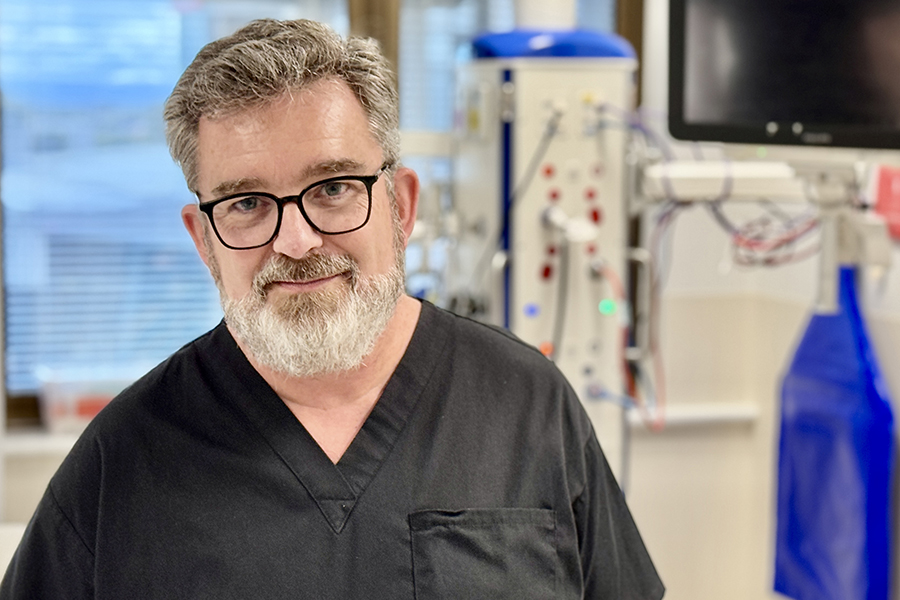
Redcliffe Hospital Intensivist Dr Stuart Baker
A Redcliffe Hospital clinic is supporting patients experiencing Post Intensive Care Syndrome (PICS) while also advancing research in what remains a relatively new field of study in Australia.
Redcliffe Hospital’s Post ICU Follow-up Clinic specialises in supporting patients who have been discharged from an intensive care unit (ICU), identifying psychological, cognitive, physical, or psychosocial issues and helping patients to improve their quality of life.
Along with supporting patients, the clinic team are also heavily involved in research into the causes and impact of PICS.
Dr Stuart Baker is an intensivist with the ICU at Redcliffe Hospital and one of the clinicians involved in the Post ICU clinic and said the clinic team have two major studies soon to commence – including an audit of morbidity among ICU survivors in the Australian context.
“It’s something that has not been done before,” Dr Baker said.
“We have data on nearly 300 patients seen in our clinic in 2024 and 2025. From that data we’ll be able to describe the incidence of physical, cognitive and mental health morbidities and see if there are broad predictors of difficult recovery in patients who survive an ICU admission.”
“Another project we’re soon to commence will use data to correlate how we sedate patients in ICU with subsequent mental health morbidity.
“This study will involve around 500 patients and whether they were sedated, the duration of sedation, depth and agents used in sedation, with later symptoms of anxiety, depression and PTSD in survivors.
“Outcomes from this research will better inform how we sedate patients in an ICU setting, with a view not only to survival of patients, but better functional recovery and quality of life.”
Dr Baker said including consumers in their research design was also important.
“Our patients have been involved in the design and analysis of a study evaluating the effect of a sleep-promoting protocol in the ICU. We have also involved patients in the design of our mental health studies and will continue to include them as very valuable contributors.”
Dr Baker said these studies were in addition to other research work including involvement in the SEXCI study (Sexual Health in Critical Illness), based in Adelaide and looking at incidence and nature of sexual dysfunction in ICU survivors.
“Our clinic provides the support these patients need to improve their quality of life, and our research continues to make that support more effective,” Dr Baker said.