
World-first trial tests efficacy of popular Botox practice
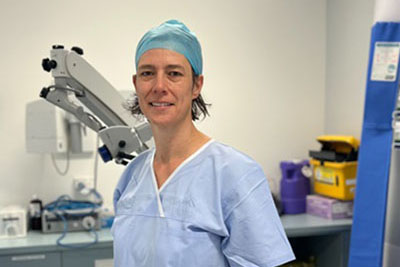
Dr Abigail Walker and her team are testing whether the Haytox procedure safely reduces rhinitis symptoms
Researchers at the Royal Brisbane and Women’s Hospital (RBWH) have put a popular procedure to the test for people with severe allergies in a world-first clinical trial.
Commonly known by the brand name Botox, botulinum toxin type A is a powerful nerve-blocking medication that has also gained popularity as a treatment for rhinitis, inflammation of the nasal lining, a practice sometimes known as ‘Haytox.’
Dr Abigail Walker, Senior Medical Officer at RBWH, led the world-first trial after patients had exhausted all other treatment options for their rhinitis.
“Rhinitis symptoms, which commonly include blocked nose, sneezing and itching, can affect quality of life when left untreated,” Dr Walker said.
“Our study came about after patients noted that ‘Haytox’ was available commercially, and we wanted to learn more about whether it worked.”
Dr Walker and the team’s study tested whether spraying botulinum into the nose was safe and whether it reduced rhinitis symptoms.
“We asked our participants to score their symptoms before and after they received the treatment,” Dr Walker said.
“The results were encouraging, with participants reporting meaningful improvements in their nasal symptoms over 12 weeks.
“While our sample size was small, the improvements were both statistically significant and large enough to be considered clinically important.”
Dr Walker and her fellow researchers are currently investigating further trials with a larger sample group.
“The main value in this first study is that it provides us with the safety data to progress to larger, more rigorous trials in the future,” she said.
“We hope to work with patients in future studies to continue exploring the value of this treatment as a safe and effective way to manage symptoms of rhinitis.”