
Herston Biofabrication Institute takes vascular surgical training to new heights with advanced simulations
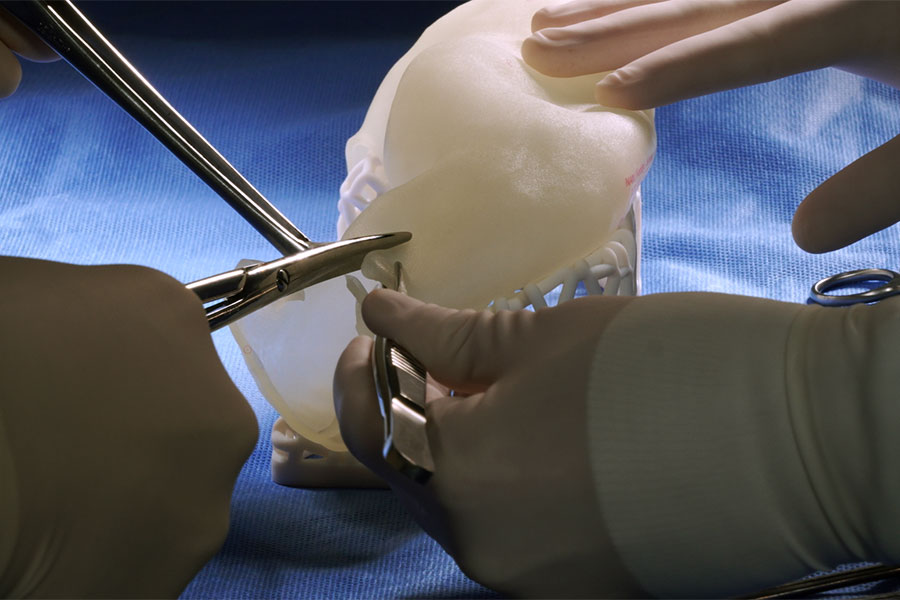
Surgeons training using a 3D printed patient-specific aortic model
Researchers at Herston Biofabrication Institute and RBWH vascular surgeons are creating advanced highly realistic simulation models to enhance surgical planning and patient safety.
The patient-specific aortic models are transforming the way surgeries are approached, using 3D printing and advanced manufacturing to create life-like, patient-specific models for rehearsing complex repairs and procedures ahead of entering the operating theatre.
Each model replicates the patient’s exact anatomy, blood pressure, and vessel movement, allowing for greater precision, increased safety, and greater training opportunity for vascular surgeons.
The team, comprising vascular surgeons Dr Lucy Guazzo, Dr Samantha Peden, Dr Jason Jenkins, industrial designer Liam Georgeson and researcher Dr Nicolas Soro, have designed a workflow that converts CT scans into digital models. The models are then 3D printed and customised – bridging the gap between design, engineering and surgery.
Industrial designer Liam Georgeson said the creative low-cost solution was set to replace outdated methods, emphasising design’s role in surgical planning.
“This project highlights the value of design in healthcare, not only in the making of physical objects, but in shaping better systems, enabling stronger collaboration, and ultimately improving outcomes for patients,” he said.
Researcher Dr Nicolas Soro said the work would have significant flow-on effects for patients.
“For complex vascular cases, small decisions can have big consequences. Being able to test those decisions beforehand in a realistic, patient-specific model gives surgeons a level of clarity and confidence that simply wasn’t possible before,” Dr Soro said.
The project models best-practice in how Herston Biofabrication Institute unites clinicians, engineers and designers to find solutions for better patient outcomes.