
Unlocking the key to healthy ageing for Cystic Fibrosis patients
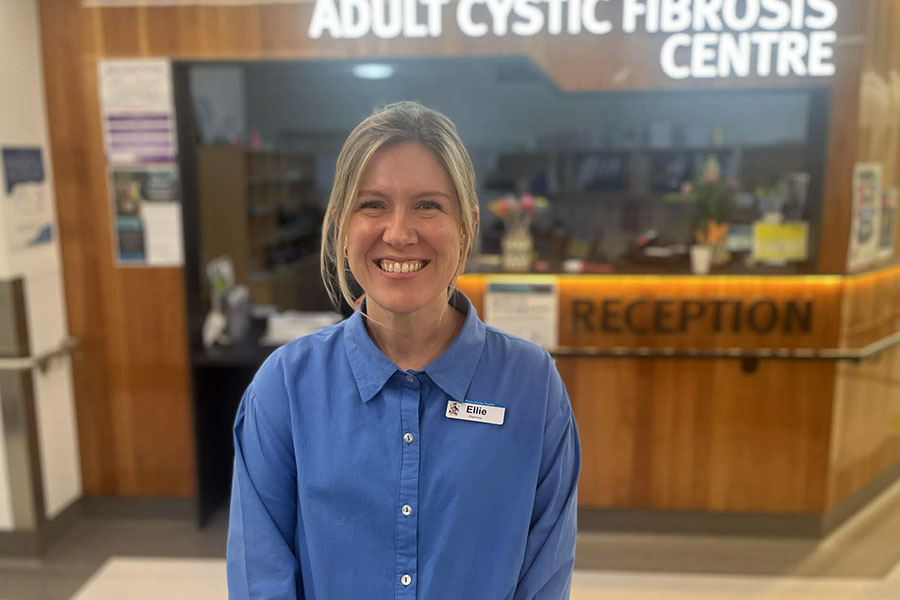
The Prince Charles Hospital Pharmacist Ellie Johnson is undertaking research with ageing Cystic Fibrosis patients that will inform future care.
New medications are extending the lives of people with cystic fibrosis, opening a new field of research into the best way to treat over 65s with the condition and support quality of life.
The widespread use of Cystic Fibrosis Transmembrane Conductance Regulator (CFTR) modulators is significantly extending life expectancy for people born with Cystic Fibrosis (CF). These drugs correct the underlying malfunctioning CFTR protein, rather than just treating symptoms.
However, when The Prince Charles Hospital (TPCH) Pharmacist Ellie Johnson was invited to speak on pharmacokinetic changes associated with ageing Cystic Fibrosis (CF) patients, it quickly became clear there was very limited real-world data available.
“Much of the existing literature focuses on theoretical risks or anticipated changes, rather than describing lived experience or real-world outcomes,” Ms Johnson said.
“At TPCH, we now care for a small but growing cohort of people with CF aged over 65 years.
“This cohort represents a resilient and understudied population. I wanted to capture their experiences in meaningful data that can help inform future CF care.”
For this project, Ms Johnson is working closely with physiotherapists, dietitians, endocrinologists, social workers, nursing staff and respiratory physicians to provide a comprehensive, multi-disciplinary perspective on ageing in CF.
The team is working towards publishing a broad descriptive summary of this ageing population, alongside focused analyses of key areas of interest identified by the MDT.
“All of our participants were diagnosed with CF later in life and spent much of their lives being managed in the community without a clear diagnosis,” Ms Johnson said.
“Despite universal use of CFTR modulators, participants continue to have a high medication burden, with an average of 16 medications per person.
“We’ve identified a strong negative correlation between total medication burden and lung function.”
The research has also reinforced that TPCH’s ageing CF cohort is geographically dispersed across Queensland and northern New South Wales, emphasising a strong need for telehealth services and clinical outreach clinics.
Ms Johnson said the multi-disciplinary team now planned to benchmark TPCH’s ageing CF cohort against Australian national CF registry data to provide a national snapshot of ageing in CF.
“We will also conduct patient interviews to capture lived experience and seek consumer input to help shape future models of care for ageing with CF,” Ms Johnson said.
“As pharmacists, we are often required to work as generalists, particularly as comorbidities emerge and interact with CF and its treatments.
“People with CF may experience age-related chronic diseases alongside CF and clinicians need a strong evidence base to help these patients thrive as they age.
“Finally, I wanted to thank The Prince Charles Hospital Foundation for the New Investigator Grant, The Shelley Shepard Memorial and Supporters of 65 Roses Inc for the research grant, which have all supported this work towards care for ageing CF patients.”