
Jamieson Trauma Institute steps up rehabilitation success with new sensor technology
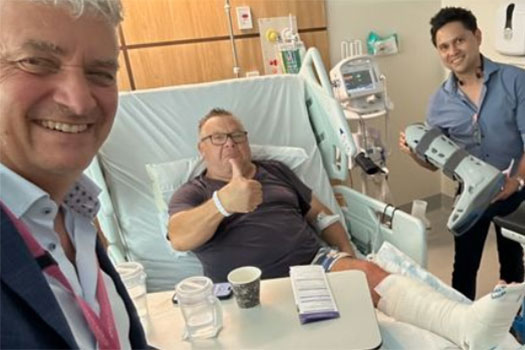
JTI Director Professor Michael Schuetz, Alejandro Melendez Calderon and a SMART Ankle participant
Jamieson Trauma Institute (JTI) researchers are paving the way for tech integration in healthcare using a new sensor boot in an ankle fracture treatment feasibility study.
The state-of-the-art moon boot is just the beginning for using sensors in rehabilitation technology, with the boot designed to monitor load bearing and steps during the first 4-6 weeks post ankle fracture surgery.
Led by JTI Director Professor Michael Schuetz alongside a team of JTI physiotherapists, orthopaedic surgeons, engineers and researchers, as well as colleagues at the Wesley Hospital – the SMART ankle feasibility study saw significant benefit for the 13 patients in the study.
Each patient wore a moon boot for six weeks equipped with a sensor from BIOS Medical AG Switzerland.
The results pointed to promising use for future projects of this nature, to improve patient care and clinician insights in tracking recovery.
Professor Schuetz said the project was just the start for JTI researchers, who plan to further embrace sensor technology in a larger ankle fracture study, as well as in future projects.
“This sensor technology can revolutionise trauma care, by empowering the patient and better understanding of the recovery phase leading ultimately to better patient outcomes,” Prof Schuetz said.
“We have seen excellent results in this patient cohort, but this is just the beginning, with a clear vision at Jamieson Trauma Institute for the future of sensor technology in healthcare.”
There are plans to expand this project to a larger clinical trial in future, integrating a patient-facing feedback app to improve adherence to weight-bearing protocols.
The project was made possible by a seed grant from the Wesley Research Institute.