
Expanding non-invasive treatments for children’s oral health care
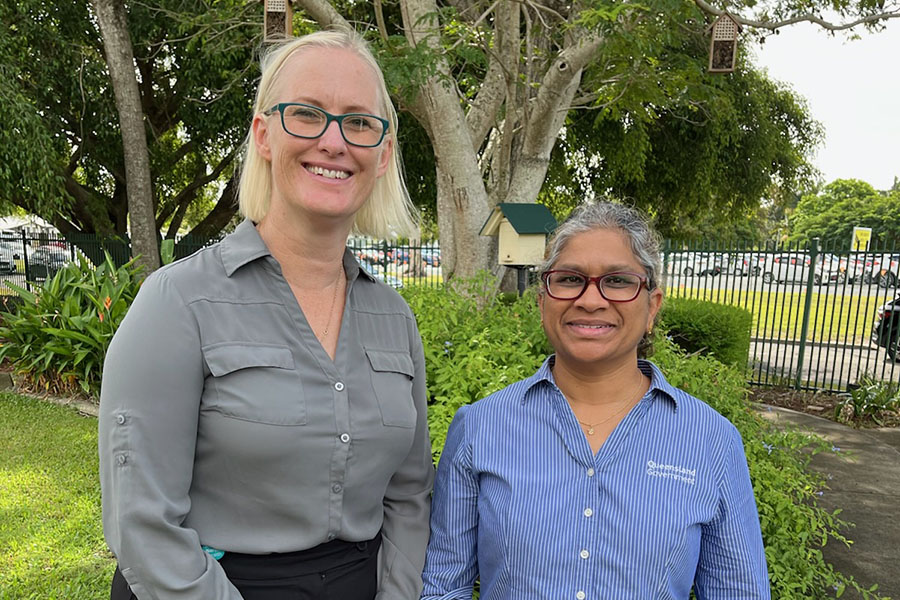
Senior Research Assistants Margaret Herzig and Oral Health Therapist Sarah Chittareddy
Access to a non-invasive treatment for tooth decay is being expanded to children across north Brisbane.
Tooth decay remains a significant and widespread problem affecting a large portion of the community, particularly children and adolescents.
Silver fluoride is a non-invasive and safe procedure for treating tooth decay and highly sensitive teeth but was discontinued in Australia in the 1980s when it was no longer commercially viable.
As part of a research led implementation project, the use of silver fluoride is being broadened as a safe and effective treatment option to support dental practitioners in managing tooth decay in children.
The project is being is delivered by Community and Oral Health Principal Research Fellow Dr Nicole Stormon and Senior Research Assistants Margaret Herzig and Sarah Chittareddy whose contributions have been critical in the development, validation and implementation of the silver fluoride clinical assessment tool.
“Silver fluoride is effective in stabilising dental decay and preventing its progression, though review appointments and reapplication is required in most cases,” Ms Herzig said.
“It is highly effective for young children, older adults and patients needing a gentle and non-invasive alternative to traditional fillings.
Ms Herzig said since the reintroduction of silver fluoride, there was a clear need to establish, test and standardise guidelines around its broader application and use.
“We now have clear case selection criteria, structured treatment planning guidelines and standardised post-treatment reviews intervals for children who receive this treatment,” she said.
“As part of this work, we are developing and validating a silver fluoride clinical assessment tool to support clinicians with appropriate case selection, treatment and follow up.
“This tool will provide clinicians with clearance guidance and practical resources, enabling the expanded and consistent use of silver fluoride in their everyday clinical practice.”
The tool aims to decrease reliance on general anaesthesia and invasive procedures, while enhancing innovative paediatric care through the translation of research into practice.
The research project, Developing and Implementing an Evidence-Based Aqueous Silver Fluoride Tool to Address Unmet Oral Health Needs in Children included two phases of investigation and validation.
This work will empower dental practitioners through evidence-based protocols, to support more consistent and effective care and will contribute to improved oral health outcomes.