
New tool to help adolescents recover after climate disasters
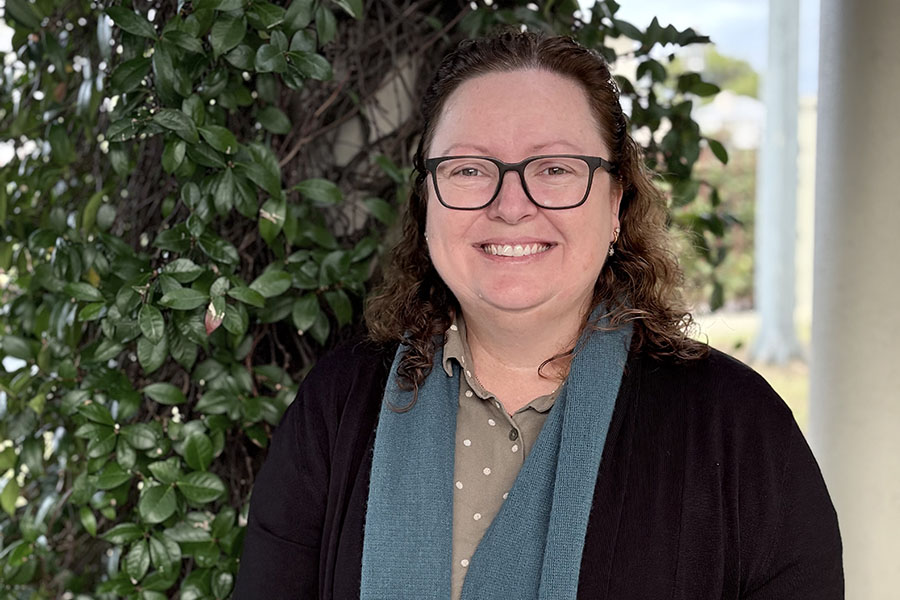
Community Resilience Coordinator – Senior Psychologist Wendy-Kaye Rodgers with the STARRT tool
Metro North Mental Health clinicians have developed a resource to help adolescents cope with the mental and emotional challenges brought on by climate disasters.
The Strong Adolescents: Resilient Recovery Tool (STARRT) is a paper-based, universal tool that supports young people through the promotion of helpful coping strategies and sense-making during and after a climate disaster when internet access is disrupted or unavailable.
STARRT comprises a compact, lightweight A5 envelope containing a packet of coloured pencils, a set of activity cards, and a workbook with interactive exercises. The cards are designed to encourage conversations with trusted peers and adults. They also include practical coping strategies and contact details for key mental health support services such as Kids Helpline, 13YARN, and Beyond Blue.
Community Resilience Coordinator – Senior Psychologist Wendy-Kaye Rodgers said that climate disasters pose unique challenges for adolescents, whose developmental stage often makes them particularly vulnerable.
“Young people are not only dealing with disrupted education, fractured social networks, and family financial strain, but also with heightened feelings of insecurity, anxiety and grief,” Ms Rodgers said.
“These experiences can be exacerbated when adult caregivers are also struggling with the effects of a disaster, limiting the support they can provide.”
Ms Rodgers said although many adolescents are naturally resilient, their unique developmental stage can often make it harder for them to fully comprehend and manage the long-term impacts of climate disasters.
“When these disasters disrupt internet access, adolescents often lose their connection to digital learning platforms, social networks, and virtual mental health support systems,” she said.
“This makes paper-based tools like STARRT invaluable. STARRT is designed to be useful in various settings, from temporary shelters to disaster recovery centres, without relying on technological infrastructure.”
“STARRT provides adolescents with a sense of control during a period that may feel uncertain and overwhelming.
“It aims to reduce the impact of potentially traumatic events, hopefully preventing the onset of mental health difficulties while strengthening a young person’s resilience to cope following these natural hazards.”
Funding assistance for the initial development of the STARRT tool was provided through the jointly funded Commonwealth-State Disaster Funding Arrangements (DRFA) with Metro North Health. Future research will evaluate the effectiveness of STARRT within the post-disaster environment and best practice implementation models.